مع تصاعد ألعاب Web3 وMetaverse، شهد السوق ظهور نماذج بيئية متنوعة. تركز بعض المشاريع على الإبداع المفتوح واقتصادات الأراضي الافتراضية، بينما يركز البعض الآخر على الملكية الفكرية الترفيهية، وثقافة المجتمع، وتجربة اللعب التفاعلية.
يعد كل من BabyShark وSandbox مثالين بارزين على هذين المسارين المختلفين، حيث يبرزان تطور Metaverse Web3 من نموذج أحادي إلى نظام بيئي متعدد الأبعاد.
BabyShark مقابل Sandbox: نظرة عامة والفروق الجوهرية
BabyShark هو نظام ألعاب Web3 بيئي قائم على عالم Baby Shark، ويعتمد على الرموز غير القابلة للاستبدال (NFTs)، وعالم مفتوح، ومحتوى من إنتاج المستخدمين (UGC)، ونظام أصول رقمية لإنشاء منصة تفاعلية على السلسلة. من خلال دمج الملكية الفكرية الترفيهية مع تقنية البلوكشين، يتيح BabyShark للمستخدمين امتلاك الأصول الرقمية واستخدامها وتداولها في بيئة افتراضية.
وبفضل شهرة علامة Baby Shark التجارية، يتموضع عالم BabyShark كمزيج من "الملكية الفكرية الترفيهية + ألعاب Web3".
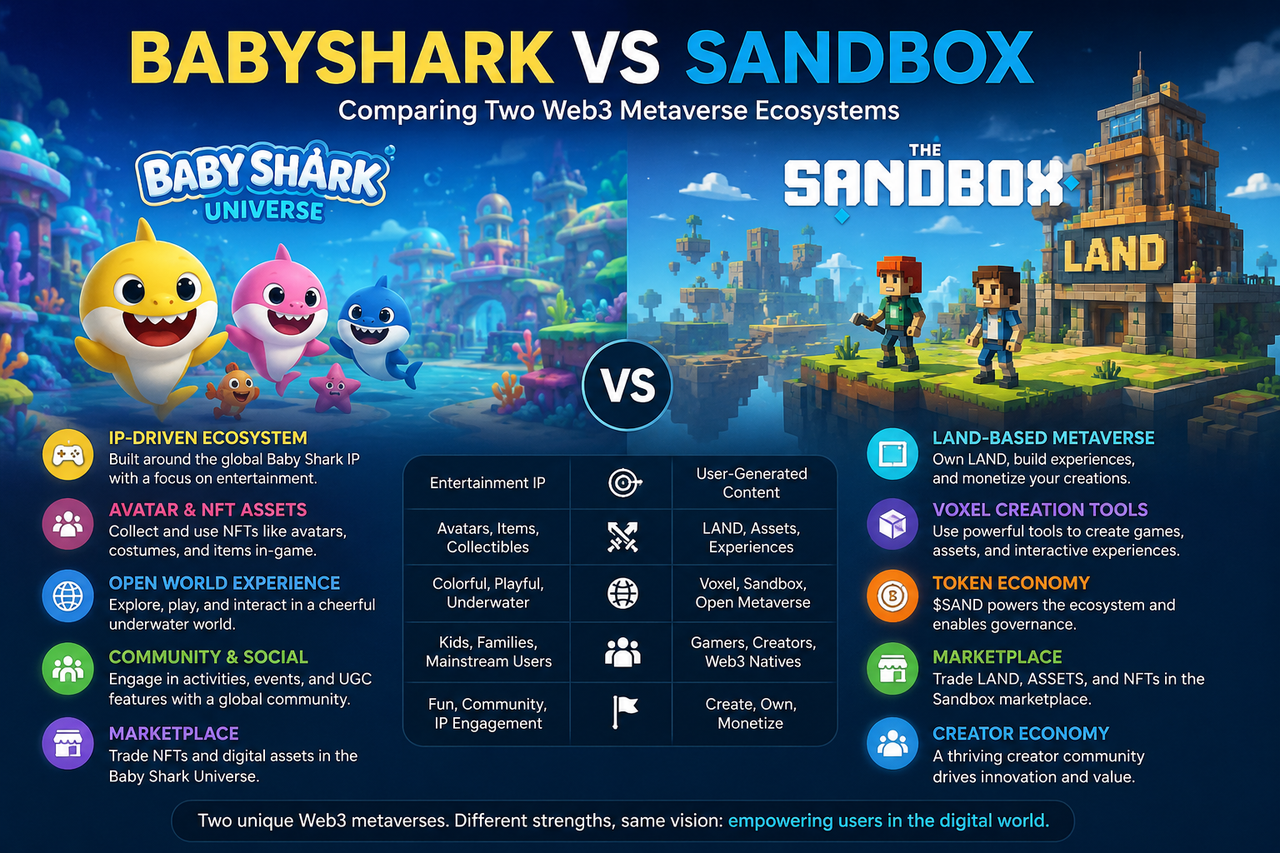
أما Sandbox، كأحد أوائل مشاريع Metaverse Web3، فيركز على عالم افتراضي مفتوح ونظام بيئي قوي للمنشئين. يتيح Sandbox للمستخدمين شراء أراضٍ افتراضية، وتطوير محتوى الألعاب، وبناء اقتصاد رقمي من خلال أنظمة الرموز غير القابلة للاستبدال والرموز (NFTs وtokens).
| بُعد المقارنة |
BabyShark |
Sandbox |
| الجانب الجوهري |
الملكية الفكرية الترفيهية + ألعاب Web3 |
منصة Metaverse مفتوحة |
| تركيز NFT |
أفاتار، أدوات، أصول تفاعلية |
LAND، أصول المنشئ |
| هيكل العالم المفتوح |
ترفيه وتفاعل |
قائم على الأراضي الافتراضية |
| مجموعة المستخدمين |
مستخدمو الترفيه الجماهيري |
منشئو Web3 |
| النظام البيئي الأساسي |
تفاعل المجتمع وتجربة الألعاب |
اقتصاد المنشئين |
| الميزة الرئيسية |
مدفوع بالملكية الفكرية |
مدفوع بـ LAND |
كيف يختلف تموضع BabyShark وSandbox الجوهري؟
رغم أن كلاهما مشروع Metaverse Web3، إلا أن تموضعهما الأساسي مختلف تمامًا.
يولي BabyShark الأولوية للترفيه، والتجارب التفاعلية، ونظام بيئي مدفوع بالملكية الفكرية، مستهدفًا خفض حاجز الدخول للمستخدمين التقليديين من خلال الشخصيات المألوفة وثقافة المجتمع. يركز على الترفيه الرقمي، وتفاعل المستخدمين، وعالم مفتوح غامر.
أما Sandbox، فهو منصة Metaverse مفتوحة تركز على نظام بيئي يقوده المنشئون واقتصاد الأراضي الافتراضية. يمكن للمستخدمين المشاركة وبناء مساحاتهم الافتراضية وتطوير أنظمة محتوى مستقلة.
وبناءً عليه، تستهدف كل منظومة أهدافًا مختلفة: BabyShark ذو توجه ترفيهي، بينما يتموضع Sandbox كمنصة إنشاء رقمية مفتوحة.
كيف تقارن أنظمة NFT في BabyShark وSandbox؟
تعد الرموز غير القابلة للاستبدال (NFTs) محور النظامين البيئيين، لكن طريقة تطبيقها تختلف.
في BabyShark، ترتبط الرموز غير القابلة للاستبدال أساسًا بالأفاتار، وأدوات اللعب، وتفاعل المجتمع، والهوية الرقمية. وتُستخدم لتعزيز تجربة اللعب التفاعلية وتأسيس محافظ الأصول على السلسلة للمستخدمين.
أما إطار NFT في Sandbox، فيركز على LAND، والمساحات الافتراضية، وأصول المنشئين. يمكن للمستخدمين الحصول على LAND لبناء مناطقهم الافتراضية الخاصة، ونشر المحتوى والتجارب التفاعلية بداخلها.
علاوة على ذلك، تعتبر NFTs في Sandbox أساس اقتصاد المنشئين، بينما تركز NFTs في BabyShark على الملكية الفكرية الترفيهية وتفاعل المجتمع.
كيف تختلف هياكل العالم المفتوح؟
كلا المشروعين يعتمدان تصميم عالم مفتوح، لكن مع أولويات هيكلية متباينة.
تم بناء Sandbox حول مفهوم "الأرض الافتراضية"—حيث يتكون عالمه المفتوح من وحدات LAND متعددة، يمكن للمستخدمين من خلالها الإنشاء أو استضافة الفعاليات أو التعاون تجاريًا. هذا الهيكل يشبه نظام العقارات الرقمية اللامركزي.
أما عالم BabyShark المفتوح، فمصمم ليتناسب مع التفاعل في الألعاب وتجربة المستخدم. يتركز على الأفاتار، والتفاعل الاجتماعي، والمحتوى الترفيهي، بدلاً من بناء اقتصاد قائم على الأراضي الافتراضية.
ومن منظور المستخدم، يعمل Sandbox كمنصة للمنشئين، بينما يقدم BabyShark عالم ألعاب Web3 يركز على الترفيه.
كيف يختلف جمهور المستخدمين؟
يجذب Sandbox لاعبي Web3 الأصليين، وجامعي NFT، ومنشئي المحتوى، والمشاركين في العقارات الافتراضية. يجذب نظامه البيئي المفتوح المستخدمين المهتمين بإنشاء المحتوى وإدارة المساحات الرقمية.
في المقابل، يستهدف BabyShark جمهورًا أوسع وأكثر شمولية. مستفيدًا من الملكية الفكرية الترفيهية وثقافة المجتمع، يهدف إلى خفض حاجز تبني Web3 وجذب اللاعبين التقليديين من خلال الشخصيات المألوفة والميزات التفاعلية.
كيف تختلف النماذج الاقتصادية بينهما؟
يرتبط اقتصاد Sandbox ارتباطًا وثيقًا بنظام LAND الخاص به. فالأراضي الافتراضية هي المورد الأساسي، وندرة LAND إلى جانب اقتصاد المنشئين المزدهر تدفع بقيمتها.
أما BabyShark، فيركز على الرموز غير القابلة للاستبدال (NFTs)، وتفاعل المجتمع، وتجربة الألعاب. يدور نموذجه الاقتصادي حول المحتوى الترفيهي الرقمي ومشاركة المستخدمين، بدلاً من الاعتماد فقط على العقارات الافتراضية.
علاوة على ذلك، يعطي Sandbox الأولوية للأسواق المفتوحة وتحقيق الدخل للمنشئين، بينما يركز BabyShark أكثر على منظومة الملكية الفكرية وتفاعل المجتمع.
رغم التطور المستمر في Metaverse، تواجه مشاريع Web3 تحديات خاصة بها.
يجب على Sandbox الاستمرار في تعزيز نظام منشئين نشط واقتصاد LAND ديناميكي. ففي غياب المحتوى المنتج من المستخدمين، قد يواجه نموذج المنصة المفتوحة تحديات في الاحتفاظ بالمستخدمين.
أما BabyShark، فيعتمد بشكل أكبر على المحتوى الترفيهي وعمليات المجتمع. وبالنسبة لمشاريع Web3 المدفوعة بالملكية الفكرية، فإن الحفاظ على تفاعل المستخدمين وزخم المجتمع أمر أساسي للنمو طويل الأجل.
كما تواجه كلا المشروعين تحديات أوسع في مجال ألعاب Web3، مثل إدارة المحفظة، ورسوم Gas، وتعقيد معاملات NFT.
الملخص
يعد كل من BabyShark وSandbox من أبرز اللاعبين في Metaverse Web3، إلا أن مساراتهما تختلف بشكل كبير. يركز Sandbox على بناء منصة منشئين مفتوحة واقتصاد أراضٍ افتراضية، بينما يتمحور BabyShark حول الملكية الفكرية الترفيهية، وتفاعل المجتمع، وتجربة ألعاب Web3.
ومع تطور Metaverse ونظام NFT، ترسم مشاريع Web3 هويات متمايزة بشكل متزايد. يمثل BabyShark نموذج ألعاب Web3 المدفوع بالملكية الفكرية، بينما يجسد Sandbox منصة المنشئين المفتوحة—ويعكسان معًا التحول الرقمي نحو مزيد من التنوع.
الأسئلة الشائعة
ما الفرق الأكبر بين BabyShark وSandbox؟
يركز BabyShark على الملكية الفكرية الترفيهية وتجربة اللعب التفاعلية، بينما يركز Sandbox على الأراضي الافتراضية ونظام بيئي يقوده المنشئون.
لماذا LAND مهمة جدًا في Sandbox؟
LAND هي الأصل الأساسي في نظام Sandbox البيئي، حيث تتيح للمستخدمين إنشاء المحتوى وبناء المساحات الافتراضية.
هل يدعم BabyShark المحتوى المنتج من المستخدمين؟
نعم. يتضمن نظام BabyShark البيئي UGC (المحتوى المنتج من المستخدمين)، مما يسمح للمجتمع بالمشاركة في إنشاء المحتوى.
هل يستخدم كلا المشروعين الرموز غير القابلة للاستبدال (NFTs)؟
نعم. كلاهما يعتمد على NFTs لإدارة الأصول الرقمية، لكن حالات الاستخدام وأولويات النظام البيئي تختلف.
أيهما أكثر توجهًا نحو GameFi: BabyShark أم Sandbox؟
كلاهما جزء من نظام ألعاب Web3 البيئي. يركز BabyShark أكثر على الترفيه والتفاعل في GameFi، بينما يتوجه Sandbox نحو المنشئين ومنصة Metaverse الأوسع.