أسواق المشتقات على السلسلة تتحول تدريجيًا إلى واحدة من أسرع القطاعات نموًا ضمن نظام التمويل اللامركزي (DeFi). فمع تطور أسواق العملات الرقمية من التداول الفوري البسيط إلى التداول بالرافعة المالية، والتحوط من المخاطر، واستراتيجيات التقلبات، بدأت أعداد متزايدة من البروتوكولات في نقل البنية التحتية المتخصصة للمشتقات المالية من التمويل التقليدي إلى السلسلة. وفي خضم هذا التحول، برزت دفاتر الطلبات، وأنظمة الهامش، ومحركات المخاطر كبنية تحتية حيوية لمنصات المشتقات على السلسلة.
من بين بروتوكولات المشتقات على السلسلة العديدة، يسعى كل من Derive و dYdX إلى تقديم تجربة تداول تضاهي البورصات المركزية في بيئة لا مركزية، وكلاهما يعتمد على نموذج دفتر الطلبات. لكن dYdX يميل نحو أسواق العقود الدائمة عالية السيولة، بينما يذهب Derive إلى أبعد من ذلك بدمج الخيارات وهامش المحفظة وإدارة المخاطر متعددة الأصول.
ملخص Derive و dYdX: نظرة سريعة على الفروق الجوهرية
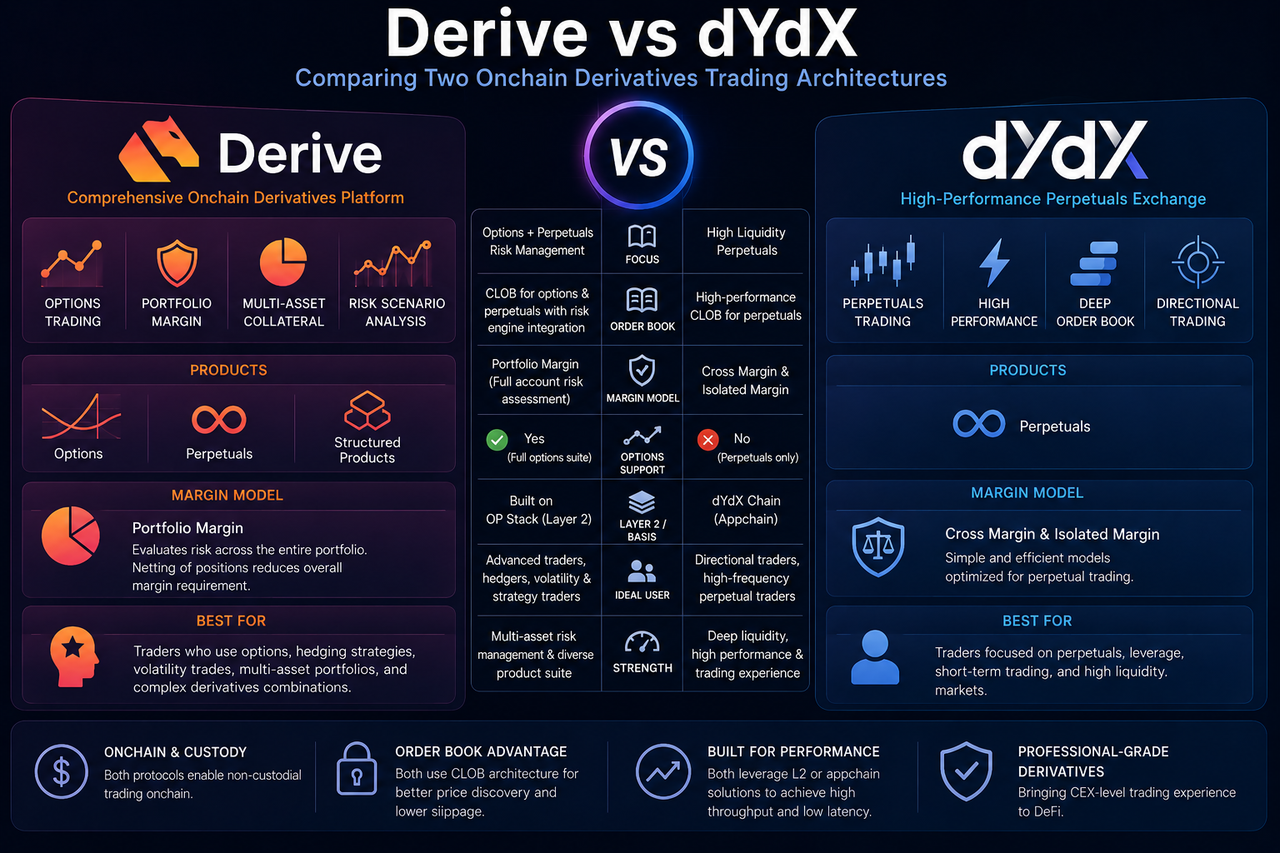
Derive هو بروتوكول مشتقات لامركزي يركز على الخيارات والعقود الدائمة على السلسلة. ومن أبرز ميزاته هامش المحفظة، والضمانات متعددة الأصول، ومحرك المخاطر على السلسلة.
على عكس بروتوكولات المشتقات التقليدية القائمة على AMM، يعطي Derive الأولوية لتجربة تداول احترافية. يستخدم البروتوكول بنية دفتر الطلبات المحدود المركزي (CLOB) ويستفيد من شبكات الطبقة 2 لخفض تكاليف المعاملات وتسريع معالجة الطلبات. بالإضافة إلى العقود الدائمة، يدعم Derive الخيارات ومنتجات العائد المنظمة، مما يعني أن نظام إدارة المخاطر لديه يجب أن يتعامل مع العلاقات المتشابكة المعقدة عبر أنواع متعددة من المشتقات.
كان dYdX من أوائل البروتوكولات في مجال المشتقات على السلسلة التي حققت اعتمادًا واسعًا من المستخدمين وسيولة كبيرة، مع تداول العقود الدائمة كخدمته الأساسية.
يعمل dYdX أيضًا على نموذج دفتر الطلبات، وركز منذ فترة طويلة على التداول عالي الأداء. ومع نضوج البروتوكول، تحرك dYdX نحو بناء سلسلته السيادية الخاصة وبنية تحتية تداول أكثر تخصصًا.
| البعد |
Derive |
dYdX |
| التركيز الأساسي |
منصة مشتقات شاملة |
منصة تداول العقود الدائمة |
| مزيج المنتجات |
خيارات + عقود دائمة |
عقود دائمة |
| إدارة المخاطر |
هامش المحفظة |
متقاطع / معزول |
| الضمانات متعددة الأصول |
مدعومة |
محدودة |
| تعقيد المخاطر |
أعلى |
متوسط |
| المستخدم المثالي |
متداولو المشتقات المحترفون |
متداولو العقود الدائمة عالية التردد |
| الاتجاه الأساسي |
إدارة المخاطر والخيارات |
السيولة وأداء التداول |
ما الفروق الجوهرية بين Derive و dYdX؟
يدعم كل من Derive و dYdX التداول بالرافعة المالية على السلسلة، لذلك غالبًا ما يراهم المستخدمون كمنتجات متشابهة. لكن وضعهما الاستراتيجي يختلف بشكل كبير.
dYdX يشبه بورصة عقود دائمة على السلسلة، بينما Derive يمثل منصة مشتقات شاملة على السلسلة.
التركيز الأساسي لـ Derive يشمل:
- تداول الخيارات
- هامش المحفظة
- الضمانات متعددة الأصول
- تحليل سيناريوهات المخاطر
في المقابل، تركز أولويات dYdX على:
- العقود الدائمة عالية السيولة
- تجربة تداول عالية التردد
- أسواق دفتر طلبات عميقة
- تداول اتجاهي احترافي
هذه الاختلافات تجعل المنصتين تخدمتان فئات مستخدمين متميزة.
كيف تختلف آليات دفتر الطلبات والمطابقة بين Derive و dYdX؟
يستخدم كل من Derive و dYdX نموذج دفتر الطلبات بدلاً من نموذج AMM الشائع في التمويل اللامركزي التقليدي.
قوة دفتر الطلبات تكمن في اكتشاف الأسعار بدقة أكبر وانزلاق سعري أقل للصفقات الكبيرة، مما يجعله أكثر ملاءمة للتداول الاحترافي في أسواق المشتقات عالية التردد.
ومع ذلك، تختلف استراتيجيات دفتر الطلبات بينهما.
يعطي dYdX الأولوية للسيولة العالية والإنتاجية العالية في سوق العقود الدائمة، لذا فإن بنيته محسّنة للتداول الاتجاهي عالي التردد.
أما Derive فيجب أن يستوعب كلاً من أسواق الخيارات والعقود الدائمة. ونظرًا لأن الخيارات تنطوي على أسعار تنفيذ وتواريخ انتهاء صلاحية ومدخلات تقلب متعددة، فإن أنظمة دفتر الطلبات والمخاطر في Derive أكثر تعقيدًا بطبيعتها.
بالإضافة إلى ذلك، يؤكد Derive على تكامل أكثر إحكامًا بين دفتر الطلبات ومحرك المخاطر لدعم نظام هامش المحفظة.
كيف تختلف نماذج الهامش بين Derive و dYdX؟
نظام الهامش هو أحد أهم عوامل التمييز بين Derive و dYdX.
يستخدم dYdX بشكل أساسي نماذج الهامش المتقاطع والهامش المعزول. تعمل هذه النماذج بشكل جيد مع العقود الدائمة، حيث يكون هيكل المخاطر بسيطًا نسبيًا.
أما Derive فيستخدم نموذج هامش المحفظة.
هامش المحفظة يقيم المخاطر من منظور الحساب بأكمله بدلاً من حساب متطلبات الهامش لكل مركز على حدة. على سبيل المثال، عندما يحوز المستخدم مراكز محوّطة، يخفض النظام متطلبات الهامش الإجمالية.
هذا النهج قيم بشكل خاص للخيارات، حيث لا يمكن تقدير المخاطر بدقة من خلال حسابات بسيطة على مستوى المركز.
| البعد |
Derive |
dYdX |
| نموذج الهامش |
هامش المحفظة |
هامش متقاطع / معزول |
| حساب المخاطر |
مخاطر الحساب الإجمالية |
مخاطر الحساب الفردي أو المعزول |
| التعرف على التحوط |
أقوى |
محدود |
| المنتجات المناسبة |
خيارات + عقود دائمة |
عقود دائمة |
كيف يختلف دعم الخيارات بين Derive و dYdX؟
الخيارات تمثل أحد أبرز مجالات الاختلاف.
يركز dYdX حاليًا بشكل شبه كامل على العقود الدائمة، بينما يبني Derive على نظام الخيارات على السلسلة ويولي اهتمامًا أكبر لأسواق التقلبات والبنية التحتية لتداول الخيارات.
سوق الخيارات أكثر تعقيدًا بكثير من العقود الدائمة لأن المخاطر تتأثر ليس فقط بالسعر، بل أيضًا بالقيمة الزمنية والتقلب الضمني والإغريقيات.
ونتيجة لذلك، يتطلب Derive محرك مخاطر ونموذج هامش أكثر تطورًا.
هذا الاختلاف يجعل Derive أكثر ملاءمة لـ:
- تداول التقلبات
- التحوط من المخاطر
- محافظ المشتقات المعقدة
- استراتيجيات العائد المنظمة
بينما dYdX مثالي للتداول الاتجاهي عالي التردد والتداول بالرافعة المالية.
كيف تختلف الطبقة 2 والبنى الأساسية بين Derive و dYdX؟
كلا البروتوكولين يعتمدان على الطبقة 2 أو بنى السلسلة المستقلة لتحسين أداء التداول.
انتقل dYdX تدريجيًا نحو بناء سلسلته السيادية الخاصة لتحقيق إنتاجية أعلى وزمن انتقال أقل.
أما Derive، فيبني شبكة الطبقة 2 الخاصة به على مكدس OP، بهدف تعزيز الأداء مع البقاء متوافقًا مع نظام إيثريوم البيئي.
كلا البروتوكولين يعالجان نفس التحديات الأساسية في أسواق المشتقات على السلسلة:
- ارتفاع تكاليف الرسوم
- زمن انتقال التداول
- سيولة غير فعالة
- تجربة تداول عالية التردد محدودة
لكن Derive يعطي الأولوية لإدارة المخاطر ودعم المنتجات المتعددة، بينما يركز dYdX على أداء سوق العقود الدائمة.
لمن يناسب Derive أكثر؟
Derive مثالي للمستخدمين ذوي الخبرة في المشتقات.
المتداولون الذين يمارسون استراتيجيات الخيارات، والتحوط من المخاطر، وإدارة المحافظ متعددة المراكز، وتداول التقلبات سيستفيدون أكثر من هامش المحفظة والضمانات متعددة الأصول.
بسبب نظامه الأكثر تعقيدًا، فإن منحنى التعلم لـ Derive أكثر انحدارًا من منصات العقود الدائمة النموذجية.
لمن يناسب dYdX أكثر؟
dYdX هو الأفضل للمتداولين الاتجاهيين، بما في ذلك المتداولون عاليو التردد، والمتداولون بالرافعة المالية، ومتداولو العقود الدائمة قصيرة الأجل، والمحترفون الذين يقدرون سيولة السوق العميقة.
نظرًا لأن dYdX بنى سيولة كبيرة بمرور الوقت، فإن عمق دفتر الطلبات ونشاط التداول عادة ما يكونان قويين.
بالنسبة للمستخدمين المهتمين حصريًا بتداول العقود الدائمة، يقدم dYdX مسار منتج أكثر وضوحًا.
الخاتمة
يمثل كل من Derive و dYdX الدفع نحو الاحترافية في المشتقات على السلسلة، لكن منطقهما في المنتج وأهدافهما الأساسية ليست متطابقة.
dYdX يركز على العقود الدائمة عالية السيولة والتداول عالي التردد، بينما يتوسع Derive في الخيارات وهامش المحفظة وإدارة المخاطر متعددة الأصول. بالمقارنة، Derive أقرب إلى منصة مشتقات شاملة تقليدية، بينما dYdX يشبه بورصة عقود دائمة متخصصة على السلسلة.
مع نضوج الأسواق المالية على السلسلة، يوضح هذان الهيكلان مسارات متباينة لفضاء مشتقات التمويل اللامركزي (DeFi).
الأسئلة الشائعة
ما أكبر فرق بين Derive و dYdX؟
Derive يركز أكثر على الخيارات وهامش المحفظة، بينما يتمحور dYdX حول سوق العقود الدائمة.
هل يدعم Derive تداول الخيارات؟
نعم. إحدى الميزات الرئيسية لـ Derive هي نظام الخيارات وإدارة المخاطر على السلسلة.
هل يستخدم dYdX AMM؟
لا. يستخدم dYdX بشكل أساسي نموذج تداول دفتر الطلبات.
لماذا يحتاج Derive إلى هامش المحفظة؟
لأن الخيارات ومحافظ المشتقات المعقدة تحتاج إلى آلية تقييم مخاطر إجمالية أكثر شمولاً.
أي منصة أكثر ملاءمة للمبتدئين؟
بالنسبة للمستخدمين الذين يتداولون العقود الدائمة فقط، فإن هيكل منتج dYdX أسهل للفهم بشكل عام.
هل كلا من Derive و dYdX بروتوكولات لا مركزية؟
كلاهما بروتوكولات مشتقات على السلسلة، لكنهما يختلفان في البنية الأساسية ودرجة اللامركزية.