The on-chain return market requires not only bringing assets on-chain but also capital management, return distribution, and financial collaboration mechanisms. Because different projects adopt different financial structures, their asset management logic and sources of return can vary significantly.
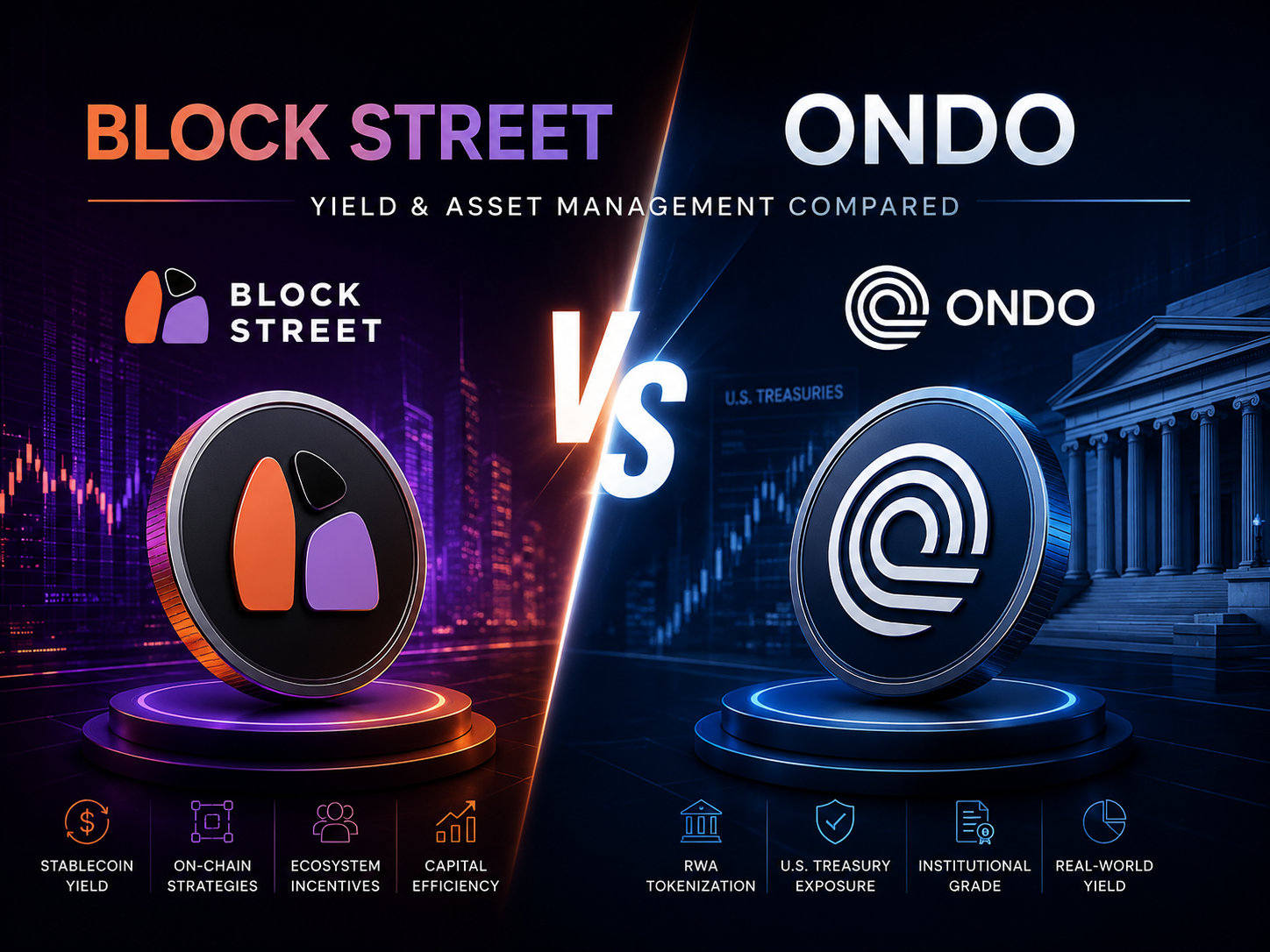
The differences between Block Street and Ondo are primarily reflected in asset structure, yield generation, capital management, and financial ecosystem direction. While both focus on on-chain yield, their financial logic and ecosystem priorities are not aligned.
What Is Block Street?
Block Street is a Web3 financial infrastructure built around stablecoin yield, on-chain financial collaboration, and asset management. Its primary focus is coordinating on-chain yield structures and stablecoin capital flows.
First, users connect their stablecoin assets to Block Street. Then, Block Street coordinates yield strategies and capital management through its on-chain system. After that, yield data enters the on-chain distribution structure.
Ultimately, Block Street maintains on-chain financial collaboration using the BSB ecosystem. Block Street's financial logic fundamentally relies on stablecoin yield and on-chain capital management forming a long-term cycle.
Structurally, Block Street is more of an on-chain yield collaboration platform than a traditional asset tokenization protocol.
What Is Ondo?
Ondo is an RWA platform built around real-world asset tokenization and on-chain yield products. Its primary focus is mapping real-world financial assets onto on-chain systems.
First, Ondo connects real-world assets like U.S. Treasury bonds through its on-chain structure. Then, it generates corresponding on-chain yield products. After that, users can hold yield-bearing assets via on-chain methods.
Finally, returns flow into the on-chain financial structure based on real-world asset performance. Ondo's core logic fundamentally relies on mapping real-world financial assets and their returns on-chain.
Structurally, Ondo emphasizes RWA asset issuance and on-chain financial products.
How Do the Asset Structures of Block Street and Ondo Differ?
The asset structures of Block Street and Ondo differ significantly. Ondo relies more on real-world asset mapping, while Block Street focuses on stablecoin and on-chain yield collaboration.
Ondo's core assets typically come from U.S. Treasury bonds and real-world yield products. Ondo then tokenizes these real-world assets onto the chain.
Block Street's focus is different. It emphasizes stablecoin assets, on-chain yield structures, and financial collaboration systems.
The key differences in their asset structures are:
| Project |
Core Asset Structure |
| Block Street |
Stablecoins and on-chain yield |
| Ondo |
RWAs and Treasury assets |
This difference means Ondo leans toward real-world asset finance, while Block Street leans toward on-chain capital collaboration and yield operations.
How Does Their Yield Generation Logic Differ?
Ondo's yield logic comes primarily from real-world asset returns. U.S. Treasury yields directly impact Ondo's on-chain yield products.
First, Ondo holds real-world financial assets. Then, these assets generate returns. After that, the returns are mapped to users through the on-chain structure.
Block Street's yield logic relies more on stablecoin collaboration and on-chain capital management. It coordinates capital flows and yield distribution through its on-chain yield structure.
From a mechanism perspective, Block Street emphasizes on-chain financial cycles, while Ondo emphasizes real-world asset yield mapping.
This means that although both belong to the on-chain yield ecosystem, their sources of return are entirely different.
How Do Block Street and Ondo Manage On-Chain Capital?
Their capital management approaches also differ significantly. Ondo leans toward asset custody and real-world financial connections, while Block Street focuses on on-chain capital collaboration.
Ondo manages capital through real-world asset structures, and its on-chain yield products correspond directly to those real-world assets.
Block Street's focus is on on-chain yield coordination. It manages on-chain capital through a stablecoin system, yield structure, and ecosystem incentives.
Block Street's capital management priorities include:
- Stablecoin flow
- Yield collaboration
- On-chain distribution
- Ecosystem cycles
This structure means Block Street emphasizes on-chain financial efficiency, while Ondo emphasizes the security of real-world financial assets.
What Are the Different Focal Points of Their Financial Ecosystems?
Ondo's financial ecosystem focuses on building an on-chain RWA yield market. It is primarily concerned with how real-world financial assets enter the Web3 system.
Block Street's focus is different. It emphasizes stablecoin finance, on-chain yield collaboration, and capital cycling capabilities.
Ondo expands its ecosystem around Treasury yield products, then strengthens the connection between real-world finance and on-chain systems.
Block Street expands its ecosystem around stablecoin yield, asset management, and on-chain financial collaboration. Its structure is inherently closer to an on-chain financial operating layer.
This difference means that although both are yield-oriented financial projects, their ecosystem expansion directions diverge.
What Use Cases Are Block Street and Ondo Suitable For?
Ondo is more suitable for scenarios focused on real-world asset returns and low-volatility financial structures. Users often leverage Ondo to access on-chain Treasury yield products.
Block Street is more suitable for scenarios that emphasize on-chain yield collaboration and stablecoin financial operations. Its focus is improving on-chain capital efficiency.
Ondo is ideal for real-world financial yield mapping, then enhancing the financial attributes of its on-chain RWA products.
Block Street is ideal for stablecoin yield collaboration and on-chain financial infrastructure. Its operational logic emphasizes on-chain capital cycles and financial collaboration capabilities.
Structurally, Ondo leans toward RWA financial products, while Block Street leans toward an on-chain financial operating ecosystem.
Summary
Both Block Street and Ondo operate in the on-chain yield and asset management space, but their financial logic differs significantly.
Ondo emphasizes real-world asset tokenization and Treasury yield mapping, while Block Street emphasizes stablecoin yield, on-chain financial collaboration, and capital management structures. Although both run on yield-based ecosystems, their asset structures, sources of return, and ecosystem focus are not the same.
FAQ
What is the biggest difference between Block Street and Ondo?
Block Street focuses on stablecoin yield collaboration and on-chain financial operations, while Ondo focuses on real-world asset tokenization and Treasury yield products.
Where does Ondo's return primarily come from?
Ondo's return primarily comes from returns on real-world financial assets like U.S. Treasury bonds.
What is Block Street's yield logic?
Block Street's yield logic relies mainly on stablecoin capital collaboration, on-chain yield structures, and financial ecosystem operations.
Is Block Street an RWA project?
Block Street has strong ties to the RWA financial ecosystem, but it is more oriented toward on-chain yield collaboration and financial infrastructure.
Which is more real-world finance focused, Ondo or Block Street?
Ondo is more focused on real-world asset mapping; Block Street is more focused on on-chain financial operations.
What scenarios are Block Street and Ondo best suited for?
Ondo is best suited for real-world asset yield scenarios; Block Street is best suited for stablecoin yield collaboration and on-chain financial ecosystem scenarios.