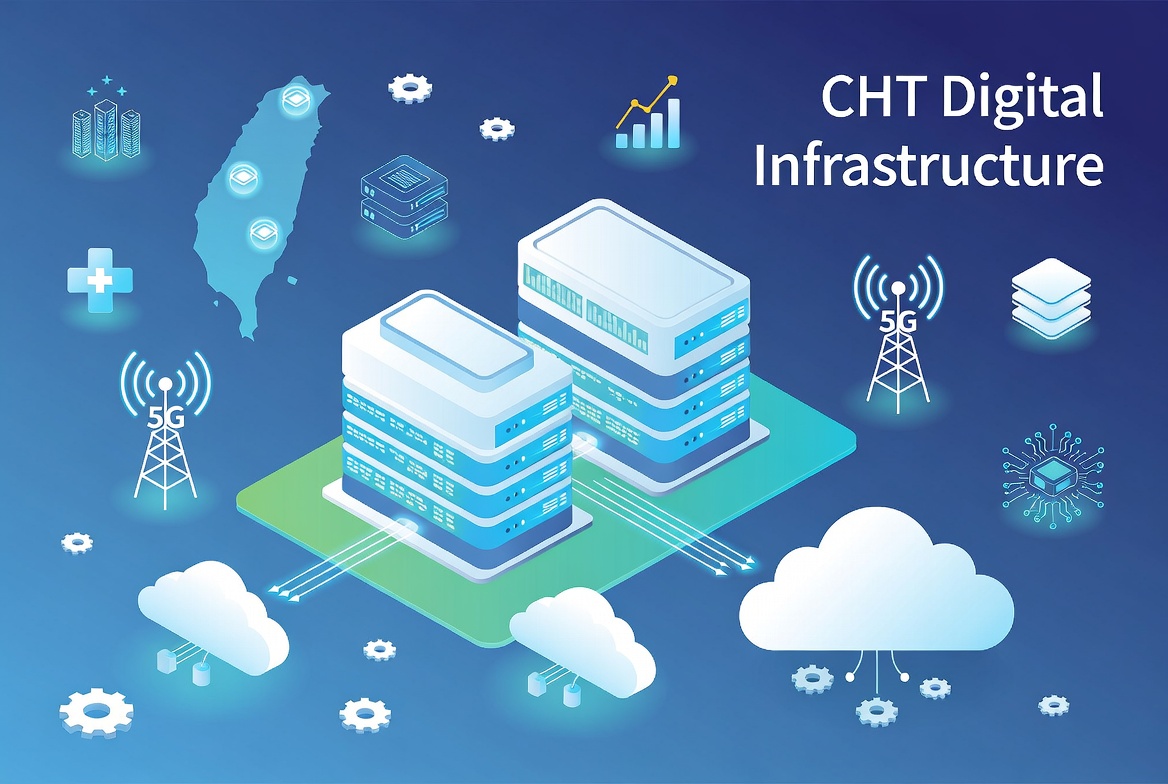
For modern enterprises, network connectivity alone is no longer enough to meet business needs. Data storage, cloud computing resources, cybersecurity, disaster recovery, and AI deployment all depend on underlying digital infrastructure. As one of Taiwan’s leading communications operators, Chunghwa Telecom is using its network resources, data center capabilities, and enterprise service experience to build an integrated digital infrastructure ecosystem that covers connectivity, computing, and data management.
Why Data Centers Have Become Infrastructure for the Digital Economy
A data center is a core facility for storing, processing, and transmitting digital information. When users visit websites, use cloud services, watch online videos, or run enterprise software, the related data usually needs to be processed and managed through data centers.
The development of the digital economy has made data an important factor of production, while data centers have become essential infrastructure for carrying that data.
The main factors driving demand growth for data centers in recent years include:
-
Wider adoption of cloud computing
-
Growth in online services
-
Enterprise digital transformation
-
Demand for artificial intelligence training
-
Expansion of IoT devices
The importance of data centers is similar to that of power systems in the traditional economy. Without stable data center support, modern internet services and digital businesses would struggle to operate normally.
As a result, data centers have become one of the key infrastructure foundations of the digital economy.
How Chunghwa Telecom’s Cloud Service System Is Built
Chunghwa Telecom’s cloud service system is built on its communications network and data center resources. Traditional telecom operators mainly provide network connectivity services, while cloud services extend further into computing resources, storage capabilities, and enterprise digital solutions.
Chunghwa Telecom’s cloud services usually cover several layers:
| Service Type |
Main Function |
| Cloud computing services |
Provide computing resources |
| Cloud storage services |
Data storage and backup |
| Network services |
Network connectivity and management |
| Security services |
Cybersecurity and protection |
| Hybrid cloud solutions |
Integration of private and public clouds |
Through these services, enterprises can obtain the computing power they need without building large scale IT infrastructure on their own.
This model lowers the threshold for enterprise technology investment and improves system scalability.
Enterprise customers are an important user group for Chunghwa Telecom’s cloud services.
Many companies want to migrate traditional on premises servers to cloud platforms to improve operational efficiency and reduce maintenance costs.
In practice, enterprises often use Chunghwa Telecom’s cloud platform for the following tasks:
-
Deploying enterprise resource planning systems
-
Running customer relationship management systems
-
Data backup and recovery
-
Cybersecurity management
-
Website and application hosting
For small and midsize businesses, cloud platforms can reduce hardware procurement costs and the cost of building IT teams.
For large enterprises, cloud platforms can improve system flexibility and cross regional collaboration.
As remote work and digital operations become more common, cloud services have become an important part of enterprise technology infrastructure.
The development of artificial intelligence has further increased the importance of data centers.
AI model training requires substantial computing resources, storage capacity, and high speed network connectivity, and these capabilities are usually supported by data centers.
The main roles of data centers in the artificial intelligence ecosystem include:
-
Providing GPU computing resources
-
Providing large scale data storage capacity
-
Supporting model training and inference
-
Providing high speed network environments
At the same time, enterprise digital transformation also depends on data center capabilities.
Digital transformation usually involves migrating business systems, integrating data, and building automated processes. All of these tasks require stable computing infrastructure.
For telecom operators, data centers have evolved from traditional supporting facilities into an important part of the digital services business.
How Edge Computing and Network Services Work Together
Edge computing is one of the important trends in the development of digital infrastructure.
Traditional cloud computing usually relies on centralized data centers, while edge computing deploys part of the computing capacity closer to users.
This model can reduce data transmission latency and improve real time processing capabilities.
Edge computing is especially suitable for:
-
Autonomous driving
-
Industrial automation
-
Smart cities
-
Video analytics
-
IoT applications
Chunghwa Telecom has extensive communications networks and base station resources, giving it a natural advantage in developing edge computing services.
By combining network connectivity with edge computing resources, telecom operators can provide enterprises with more complete digital infrastructure solutions.
The coordinated development of edge computing and 5G networks is also continuing to upgrade business models across the communications industry.
Why Digital Infrastructure Has Become a New Growth Direction
Digital infrastructure has become an important growth area for the global communications industry.
Traditional telecom businesses mainly rely on revenue from voice services and data traffic, while digital infrastructure businesses cover higher value added markets such as data centers, cloud computing, cybersecurity, and enterprise services.
Digital infrastructure businesses have several characteristics:
| Feature |
Impact |
| Growing enterprise demand |
Expands market potential |
| Long term contract model |
Improves revenue stability |
| Higher technical barriers |
Strengthens competitive advantage |
| Synergy with network resources |
Improves operational efficiency |
As artificial intelligence, cloud computing, and enterprise digital transformation continue to advance, data centers and cloud services are becoming important directions for telecom operators seeking new growth.
For Chunghwa Telecom, its digital infrastructure strategy not only helps diversify revenue sources, but also strengthens the company’s competitiveness in the future digital economy.
CHT is listed on the New York Stock Exchange and is one of the important listed companies through which international investors can understand Taiwan’s communications and digital infrastructure industries.
Investors can buy CHT stock through brokerage accounts that support U.S. stock trading, and participate in the potential returns and risks related to the company’s operating performance and the development of digital infrastructure.
As digital assets and traditional financial markets gradually converge, more trading tools linked to stock price movements have also appeared in the market. For example, some platforms offer CFD products linked to the prices of related assets, allowing users to participate in market movements through price changes without directly holding the underlying shares.
Taking Gate TradFi as an example, users can follow not only the digital asset market, but also traditional financial assets such as stocks, ETFs, indices, and commodities within the same ecosystem. Some markets also offer Gate CFD products, allowing users to participate in price movement trading for related assets through a digital asset account.
No matter how investors choose to participate in the market, they should fully understand the product structure, trading rules, liquidity characteristics, and regulatory requirements in their region.
Conclusion
Chunghwa Telecom’s data center and cloud services businesses are becoming an important part of its digital infrastructure strategy. Supported by communications network resources, data center capabilities, and enterprise service experience, Chunghwa Telecom not only provides network connectivity services, but is also gradually expanding into cloud computing, cybersecurity, edge computing, and enterprise digital transformation solutions. As demand for artificial intelligence and digital transformation continues to grow, digital infrastructure has become an important force driving the development of the communications industry.
FAQs
What Is a Data Center?
A data center is infrastructure used to store, process, and transmit digital information. It provides computing and storage capacity for websites, cloud services, enterprise systems, and artificial intelligence applications.
Cloud services can help enterprises reduce IT infrastructure costs and improve operational efficiency, while also creating new revenue sources and growth opportunities for Chunghwa Telecom.
Enterprises can use Chunghwa Telecom’s cloud platform to deploy business systems, store data, manage network resources, and obtain cybersecurity services.
Why Does AI Need Support from Data Centers?
Artificial intelligence model training and inference require substantial computing resources and storage capacity, and data centers can provide the necessary hardware and network environment.
What Is Edge Computing?
Edge computing is a technology architecture that deploys computing resources closer to users, reducing latency and improving real time data processing capabilities.
How Does the Data Center Business Affect Chunghwa Telecom’s Development?
Data centers and cloud services can help Chunghwa Telecom expand in the enterprise services market, diversify its revenue structure, and strengthen its competitiveness in digital infrastructure.