A Review of How I Profited from the Venus THE Attack

2026-03-17 11:01:29
Intermediate
Blockchain
Venus Protocol, a leading lending protocol on BNB Chain, was hit by a classic Mango Markets-style price manipulation attack. The attacker targeted the low-liquidity asset THE, leveraging recursive borrowing, oracle manipulation, and a “donation attack” to bypass supply caps and artificially push the price above $0.60, extracting around $27 million in assets. In this article, Weilin Li offers an in-depth analysis of the attack mechanics and details how he identified the severe mismatch between the nominal value and liquidity of collateral, ultimately earning $15,000 through a precise short position on THE.

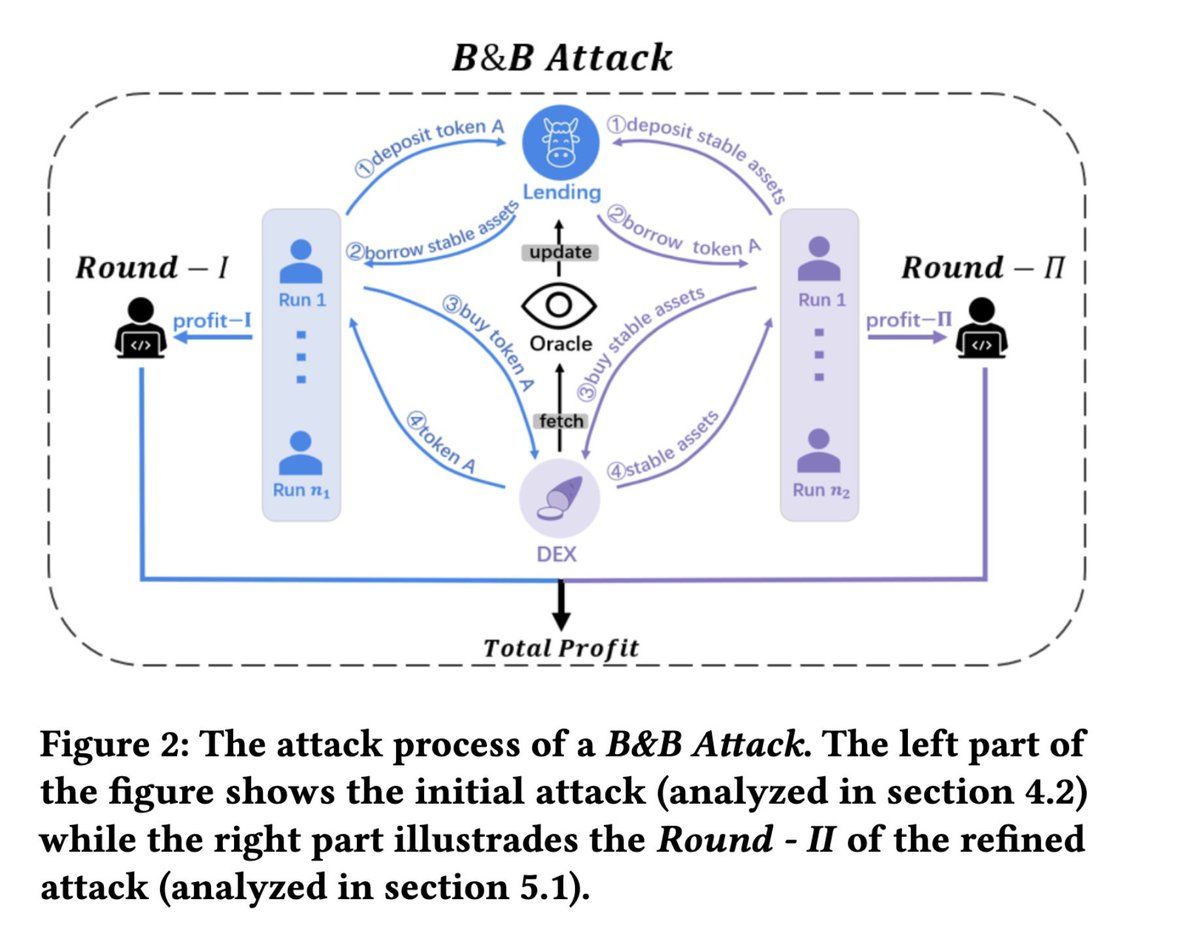
Two hours ago, VenuV's THE token was targeted in a textbook Mango Markets-style price manipulation attack.

The attacker exploited THE, a collateral asset with extremely low liquidity:

  1. First, they supplied THE as collateral.
  2. Next, they borrowed other assets against it.
  3. They then used the borrowed assets to purchase additional THE.
  4. This buying pressure pushed THE’s price even higher.
  5. After the time-weighted average price oracle updated, the attacker gained a higher recognized collateral value.
  6. They repeated this borrow-and-buy cycle to amplify the effect.

Source: My paper, "Unmasking Role-Play Attack Strategies in Exploiting Decentralized Finance (DeFi) Systems"

https://dl.acm.org/doi/10.1145/3605768.3623545

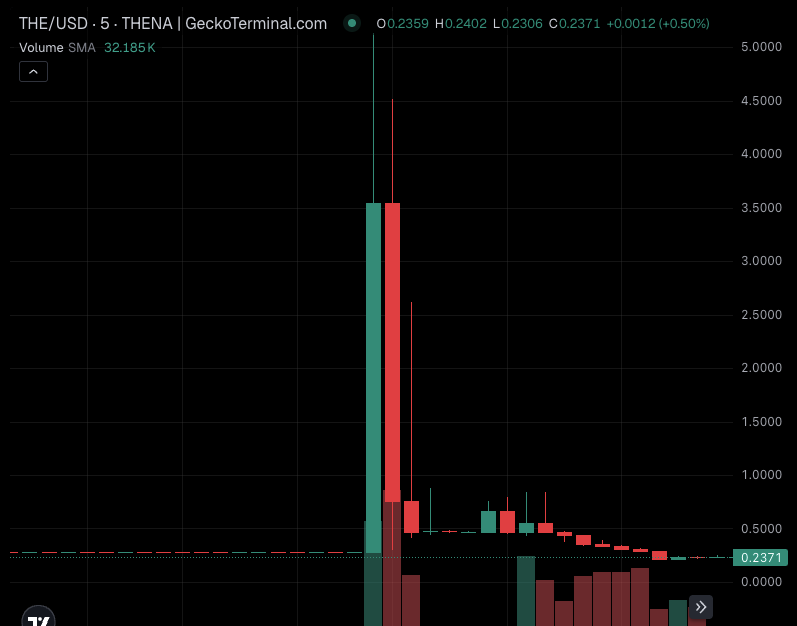
Because THE had extremely poor on-chain liquidity, the attacker was able to force the price up from $0.27 to nearly $5. The oracle later updated to a time-weighted average of $0.5, giving the attacker further room to increase leverage.

More importantly, THE has a supply cap. Under normal circumstances, this would limit the attacker’s ability to further expand their position. However, they bypassed this using a classic strategy: the Compound fork donation attack.

After depositing a large amount of THE, the attacker directly transferred THE to the vTHE contract, effectively “donating” tokens. This tactic artificially inflated the system-recognized collateral value and enabled them to surpass the cap.

Attack transaction: 0x4f477e941c12bbf32a58dc12db7bb0cb4d31d41ff25b2457e6af3c15d7f5663f
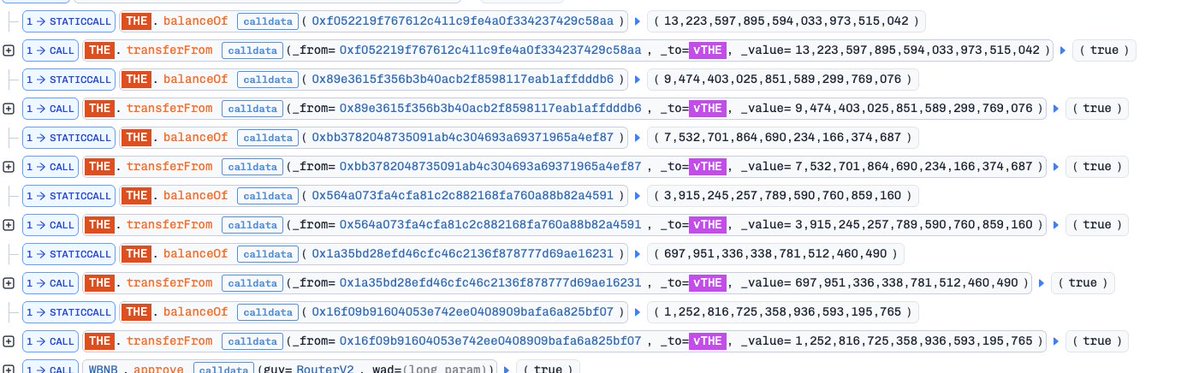
Attack transaction: 0x4f477e941c12bbf32a58dc12db7bb0cb4d31d41ff25b2457e6af3c15d7f5663f. Used donations to further inflate collateral value.

After the initial attack cycle, THE's price stabilized around $0.5. At this stage, the attacker could have exited with the borrowed assets. Instead, they attempted to maximize profits by continuing to use borrowed funds to buy more THE, aiming for another price surge.

Here’s where the plan unraveled:

Although the price remained abnormally high, selling pressure in the market became extreme. The attacker kept buying, but could no longer move the price upward. Eventually, they nearly exhausted their borrowing capacity, and their position health factor dropped to nearly 1, putting them on the brink of liquidation.

THE price changes

At this point, the situation was clear:

The attacker’s collateral—composed of both their initial assets and the THE accumulated during the attack—had a nominal value of roughly $30 million. However, the fundamental problem was a total lack of liquidity for these assets.

Once liquidation began, all of this THE would be dumped onto the market. There was no way the market could absorb such a large amount at artificially inflated prices.

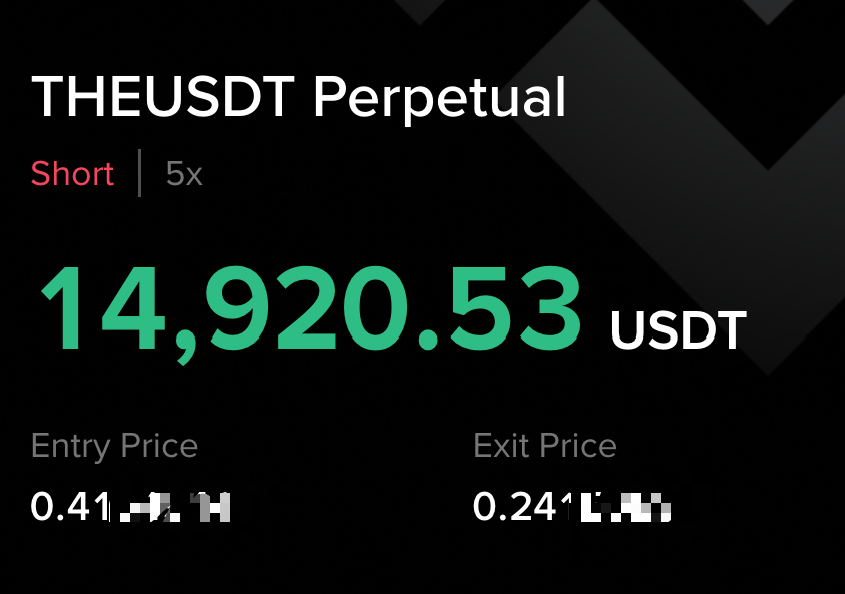
My response: As liquidation started, I opened a short position on THE.

This was actually an ideal opportunity to use higher leverage, due to the combination of overvaluation, low liquidity, massive passive selling pressure, and a lack of buyers.

The result was predictable:

After liquidation, THE's price dropped back to around $0.24— even lower than its pre-attack level, as original holders also sold during the process.

I closed my short position here, realizing a profit of approximately $15,000.

My short position

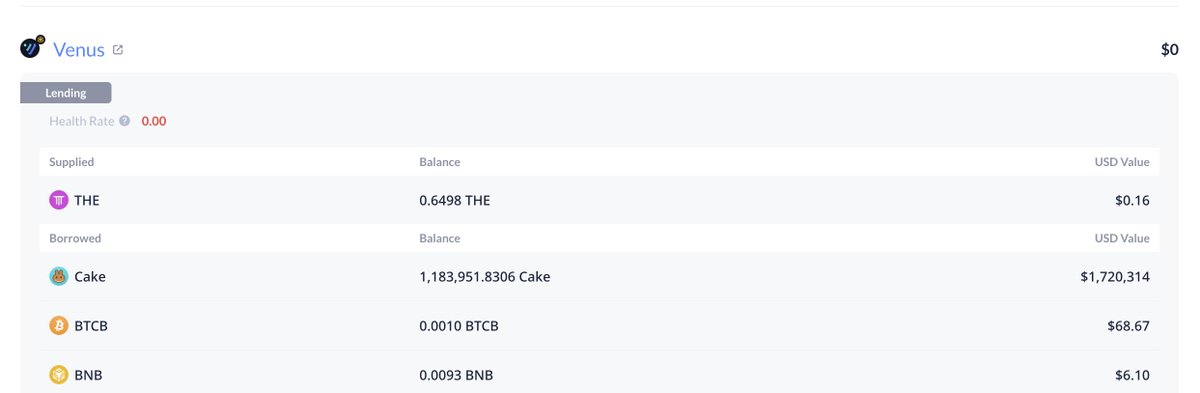
Ultimately, Venus was left with roughly $2 million in bad debt. I haven't completed a full profit analysis for the attacker; however, based on certain wallet activities, it's likely they made little to no profit and may have even liquidated themselves. That said, the attacker may still have held off-chain perpetual positions to profit—similar to my own strategy.

Venus’s approximately $2 million bad debt address:

Venus’s ~$2 million bad debt:

https://debank.com/profile/0x1a35bd28efd46cfc46c2136f878777d69ae16231

This incident highlights once again: in DeFi, “nominal collateral value” does not equal “liquidation value.” When collateral lacks liquidity, the system may record $30 million, but the market may only be able to realize a fraction of that amount.

Share

Crypto Calendar
Tokens Unlock
Wormhole will unlock 1,280,000,000 W tokens on April 3rd, constituting approximately 28.39% of the currently circulating supply.
W
-7.32%
2026-04-02
Tokens Unlock
Pyth Network will unlock 2,130,000,000 PYTH tokens on May 19th, constituting approximately 36.96% of the currently circulating supply.
PYTH
2.25%
2026-05-18
Tokens Unlock
Pump.fun will unlock 82,500,000,000 PUMP tokens on July 12th, constituting approximately 23.31% of the currently circulating supply.
PUMP
-3.37%
2026-07-11
Tokens Unlock
Succinct will unlock 208,330,000 PROVE tokens on August 5th, constituting approximately 104.17% of the currently circulating supply.
PROVE
2026-08-04
sign up guide logosign up guide logo
sign up guide content imgsign up guide content img
Sign Up

Related Articles

The Future of Cross-Chain Bridges: Full-Chain Interoperability Becomes Inevitable, Liquidity Bridges Will Decline
Beginner

The Future of Cross-Chain Bridges: Full-Chain Interoperability Becomes Inevitable, Liquidity Bridges Will Decline

This article explores the development trends, applications, and prospects of cross-chain bridges.
2023-12-27 07:44:05
Solana Need L2s And Appchains?
Advanced

Solana Need L2s And Appchains?

Solana faces both opportunities and challenges in its development. Recently, severe network congestion has led to a high transaction failure rate and increased fees. Consequently, some have suggested using Layer 2 and appchain technologies to address this issue. This article explores the feasibility of this strategy.
2024-06-24 01:39:17
Sui: How are users leveraging its speed, security, & scalability?
Intermediate

Sui: How are users leveraging its speed, security, & scalability?

Sui is a PoS L1 blockchain with a novel architecture whose object-centric model enables parallelization of transactions through verifier level scaling. In this research paper the unique features of the Sui blockchain will be introduced, the economic prospects of SUI tokens will be presented, and it will be explained how investors can learn about which dApps are driving the use of the chain through the Sui application campaign.
2025-08-13 07:33:39
Navigating the Zero Knowledge Landscape
Advanced

Navigating the Zero Knowledge Landscape

This article introduces the technical principles, framework, and applications of Zero-Knowledge (ZK) technology, covering aspects from privacy, identity (ID), decentralized exchanges (DEX), to oracles.
2024-01-04 16:01:13
What is Tronscan and How Can You Use it in 2025?
Beginner

What is Tronscan and How Can You Use it in 2025?

Tronscan is a blockchain explorer that goes beyond the basics, offering wallet management, token tracking, smart contract insights, and governance participation. By 2025, it has evolved with enhanced security features, expanded analytics, cross-chain integration, and improved mobile experience. The platform now includes advanced biometric authentication, real-time transaction monitoring, and a comprehensive DeFi dashboard. Developers benefit from AI-powered smart contract analysis and improved testing environments, while users enjoy a unified multi-chain portfolio view and gesture-based navigation on mobile devices.
2025-05-22 03:13:17
What Is Ethereum 2.0? Understanding The Merge
Intermediate

What Is Ethereum 2.0? Understanding The Merge

A change in one of the top cryptocurrencies that might impact the whole ecosystem
2023-01-18 14:25:24