Orochi Network: Redefining Data Trust with ZK Technology

Beginner
Quick Reads
Last Updated 2026-03-27 06:40:56
Reading Time: 1m
Orochi Network combines ZKP, FHE, and TEE technologies to create a verifiable and confidential data layer. Leveraging zkMemory and the Verifiable Data Pipeline, Orochi enables the Web3 ecosystem to achieve both security and efficiency. This supports trusted data and advances the privacy-focused economy.

Orochi Network: Returning Trust to Data Itself


(Source: orochi.network)

As the crypto world evolves at breakneck speed, the ability to both verify and protect data is shaping the value of tomorrow’s foundational infrastructure. Orochi Network is tackling this challenge head-on, forging a balance between data verifiability and privacy. Built on cutting-edge cryptography, this decentralized system integrates Zero-Knowledge Proofs (ZKP), Fully Homomorphic Encryption (FHE), and Trusted Execution Environments (TEE) to create a secure, trustworthy data pathway.

Verifiable Data Pipeline: A Next-Generation Alternative to Traditional Oracles

Traditional oracle models place trust in the data source itself. Orochi’s Verifiable Data Pipeline disrupts this paradigm. By leveraging Proof Composition, each stage—from data collection and transformation to querying—becomes independently verifiable. This approach eliminates the need for trusted intermediaries, instead relying on mathematical proofs to automate validation, and delivers a truly self-verifying data flow for Web3.

ZK-Data-Rollups: Uniting Compression, Privacy, and Verification

Orochi is redefining the scope of ZK-Rollups. While conventional rollups focus on Layer 2 scalability, Orochi extends their utility to data-layer verification and compression. With ZK-Data-Rollups, vast data computations are condensed into succinct cryptographic proofs, allowing validation without revealing underlying content. This innovation delivers:

  • Efficient validation: Only short proofs are needed to confirm correctness;
  • Privacy protection: External parties cannot access original data;
  • Low-cost verification: The structure mirrors on-chain transaction logic, dramatically reducing computational overhead.

Orochi is establishing itself as the ZK foundation of the Web3 data layer, setting a new standard for scalability and security.

zkMemory: The ZK Virtual Machine Engine for Developers

Beyond data-layer innovation, Orochi’s modular zkMemory engine lowers the barrier to building zkVMs to unprecedented levels. Developers can rapidly deploy verifiable zk virtual machines on zkMemory, without designing complex memory consistency protocols. zkMemory provides:

  • Automated memory proof generation and verification, significantly reducing development costs;
  • Customizable virtual machine architecture, memory size, and instruction set;
  • Modular integration, supporting deployment across multiple blockchains;
  • Full open-source access, promoting collaboration within the zk development community.

This empowers developers to quickly build on-chain verifiable applications, optimizing for both privacy and performance.

Orochi’s Vision for Its Ecosystem

Orochi’s ultimate goal is Data-as-Trust. Within this ecosystem:

  • Developers can leverage Orochi to achieve privacy-preserving data verification;
  • Institutions can build transparent, secure business processes;
  • Every user can prove the authenticity of their actions without exposing personal information.

Orochi’s applications span cross-chain interoperability, AI data marketplaces, DeFi protocols, enterprise privacy computing, and more—laying the trust foundation for the data-driven economy.

$ON-Powered Circular Ecosystem

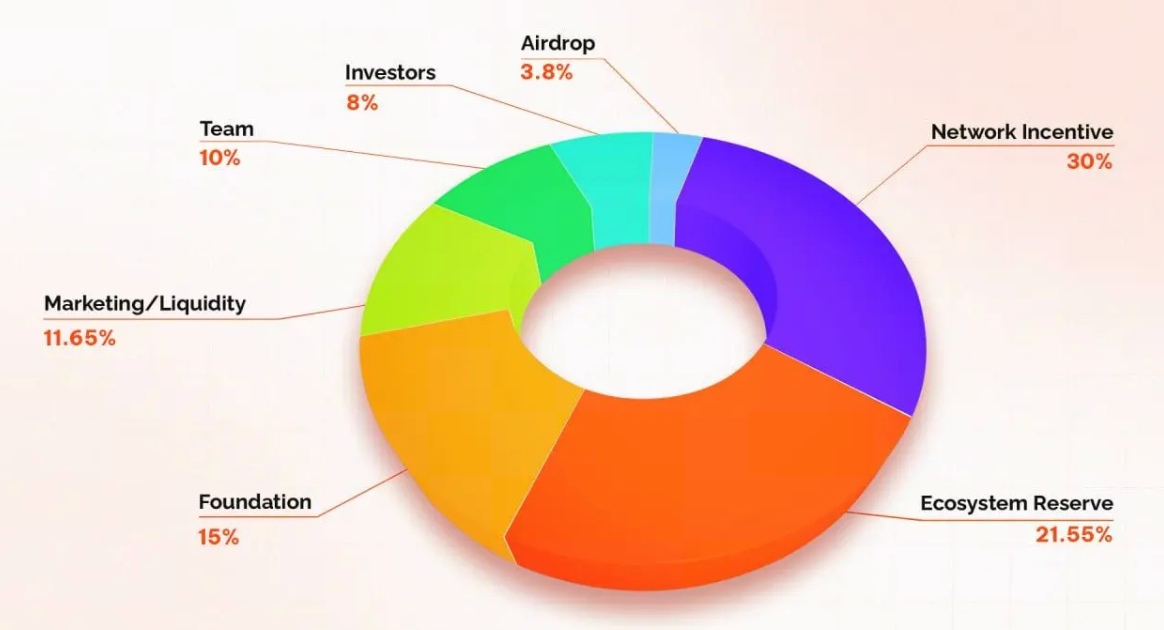
Orochi’s native token, $ON, powers the entire network. With a total supply of 1 billion, it serves validator staking, decentralized storage leasing, ZK Sequencer rewards, and network transaction fees. Key token allocation details:

  • 30% for validator and ZK Sequencer incentives;
  • 21.55% for the ecosystem fund and development grants;
  • 15% for protocol governance and long-term operations;
  • 11.65% for marketing and liquidity building;
  • 10% for the core team and long-term contributors;
  • 8% for strategic investors;
  • 3.8% airdropped to early participants.

(Source: orochi.network/blog)

This structure ensures long-term, balanced development across technology, community, and market, creating a sustainable economic loop.

To discover more about Web3, register here: https://www.gate.com/

Conclusion

In an era of information overload and the convergence of AI with on-chain data, trust is shifting from authority to verifiability. Orochi Network’s mission is to cryptographically secure every piece of data, make every verification traceable, and empower every user to participate in building authenticity. Orochi is restoring trust to data itself.

Author: Allen
Disclaimer
* The information is not intended to be and does not constitute financial advice or any other recommendation of any sort offered or endorsed by Gate.
* This article may not be reproduced, transmitted or copied without referencing Gate. Contravention is an infringement of Copyright Act and may be subject to legal action.

Related Articles

AI-Native Settlement Layers: How United Stables Is Building the Next Financial Rail
Beginner

AI-Native Settlement Layers: How United Stables Is Building the Next Financial Rail

Stablecoins were originally designed as dollar substitutes within exchanges, primarily used for asset pricing and trade settlement. As on-chain financial ecosystems have matured, their role has expanded beyond simple payments to include collateral assets, cross-chain liquidity mediums, and unified settlement units. In particular, as AI systems and automated agents begin to participate directly in economic activity, demand has risen sharply for programmable value units capable of instant settlement. This shift is pushing stablecoins toward the role of foundational financial infrastructure.
2026-03-25 03:16:17
The ve(3,3) Flywheel Explained: How AERO Tokenomics Powers Aerodrome’s DeFi Economy
Beginner

The ve(3,3) Flywheel Explained: How AERO Tokenomics Powers Aerodrome’s DeFi Economy

In the competition for DeFi liquidity, high-inflation mining alone is no longer enough to build lasting advantages. Aerodrome applies the ve(3,3) economic model to redesign token emissions, voting mechanisms, and revenue distribution, creating a liquidity flywheel centered on governance and cash flow. This article examines AERO tokenomics, the veAERO locking mechanism, and protocol revenue models to explain how Aerodrome builds a sustainable DeFi economic system.
2026-03-25 06:41:58
How Does PAXG Work? In-Depth Overview of the Physical Gold Tokenization Mechanism
Beginner

How Does PAXG Work? In-Depth Overview of the Physical Gold Tokenization Mechanism

PAXG (Pax Gold) is a tokenized asset backed by physical gold, issued by the fintech company Paxos and traded on the Ethereum blockchain as an ERC-20 token. The core concept is to tokenize physical gold on-chain, with each PAXG token representing ownership of a certain amount of gold. This structure enables investors to hold and trade gold in the form of a digital asset.
2026-03-24 19:12:51
Aerodrome Tokenomics: How ve(3,3) Powers Base's Most Profitable DEX
Beginner

Aerodrome Tokenomics: How ve(3,3) Powers Base's Most Profitable DEX

AERO is the native token of Aerodrome Finance, a core decentralized exchange and liquidity protocol in the Base ecosystem. It is primarily used for liquidity incentives and ecosystem operations. veAERO is a governance NFT that users receive by locking AERO, representing both voting power and the right to share protocol revenue. Through a dual track structure of AERO as a utility token and veAERO as a governance credential, Aerodrome separates liquidity usage value from long term governance power, allowing participants to act as liquidity providers, governance decision makers, and revenue sharers within the same system.
2026-03-25 06:40:31
How is the price of PAXG determined? Pegging mechanism, trading depth, and influencing factors
Beginner

How is the price of PAXG determined? Pegging mechanism, trading depth, and influencing factors

PAXG (Pax Gold) is a tokenized asset backed by physical gold reserves, launched by fintech firm Paxos and issued as an ERC-20 token on the Ethereum blockchain. The core concept is to digitally represent real-world gold assets, allowing investors to hold and trade gold via the blockchain network. Because each PAXG token corresponds to a specific quantity of physical gold, its price is theoretically expected to closely track the global gold market.
2026-03-24 19:11:40
Hybrid Collateral Stablecoins: Inside United Stables' Stability and Yield Architecture
Beginner

Hybrid Collateral Stablecoins: Inside United Stables' Stability and Yield Architecture

In the early stages of the crypto market, traditional stablecoins mainly relied on single-reserve or single-collateral models. Their primary focus was price stability and payment convenience, which allowed them to become foundational tools for on-chain trading and capital flows. As the market has entered a more mature financial phase, however, this structure has begun to reveal limitations, including high concentration risk and the difficulty of balancing liquidity with yield. These constraints have driven the evolution toward multi-layer collateral and portfolio-based designs, such as the dual-layer hybrid collateral architecture proposed by United Stables, which seeks to redefine the underlying logic of stable assets.
2026-03-25 03:17:39





