The global energy system is undergoing a profound shift. For decades, electricity supply was dominated by centralized generation facilities like large thermal, hydroelectric, and nuclear power plants. But with the massive adoption of solar, wind, electric vehicles, and home battery storage, energy production and storage have become distributed across households, businesses, and communities. This presents a new challenge for traditional grid management: how to efficiently coordinate a vast number of distributed energy resources.
In this context, the Virtual Power Plant (VPP) has emerged as a key infrastructure for the energy industry. By connecting dispersed energy devices through a digital platform, a VPP enables them to participate in energy markets and grid dispatch as if they were a single, large power plant.
What Is a Virtual Power Plant (VPP)?
A Virtual Power Plant (VPP) is an energy system that uses a software platform and intelligent control technology to aggregate and manage a large number of Distributed Energy Resources (DER). It is not a physical power plant, but a digital platform for coordinating and managing energy resources. Through real-time data collection, predictive analytics, and automated control, a VPP integrates energy devices across different locations to form a unified energy supply capability.
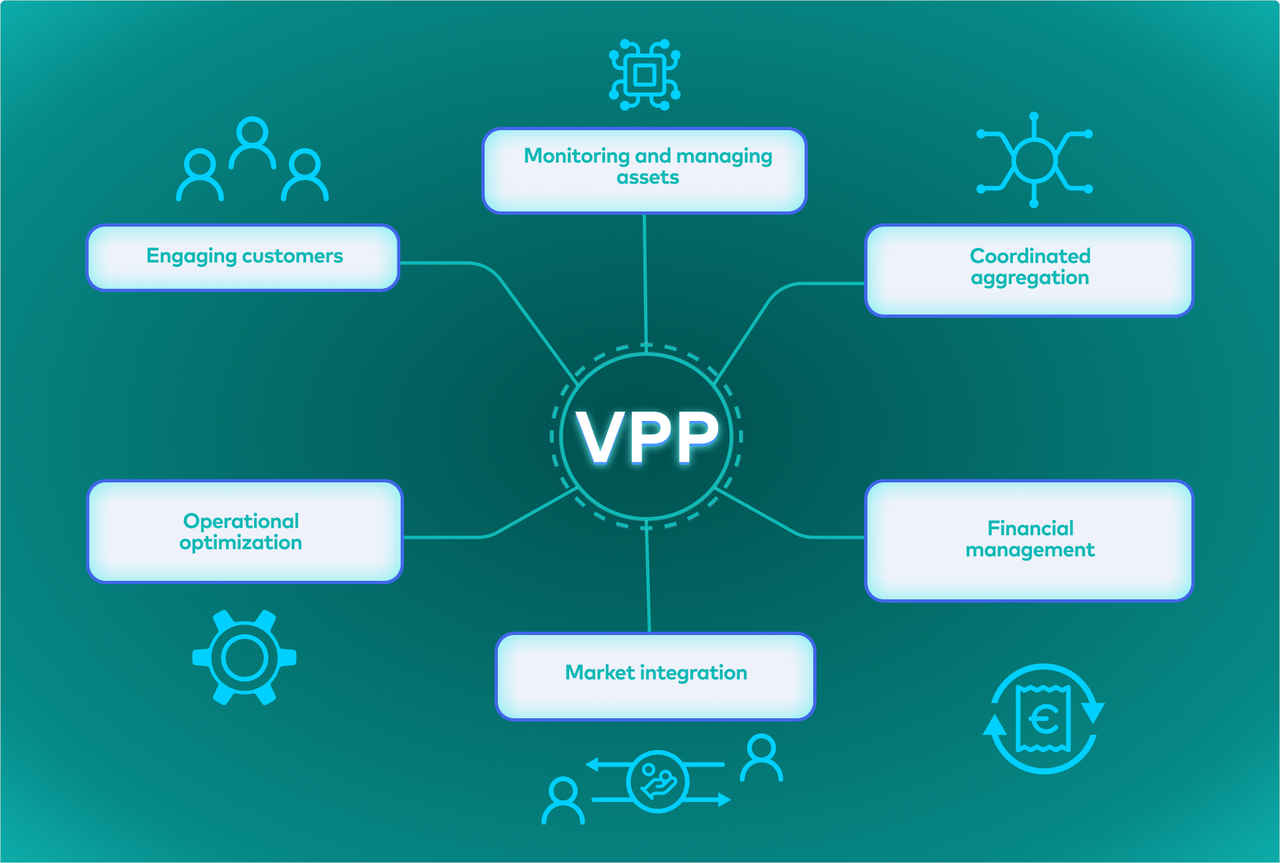
From a grid operator's perspective, a VPP provides regulation capabilities similar to those of a traditional large power plant, but with a more diverse and distributed energy mix.
The Development Background of Virtual Power Plants
Traditional power systems operate on a "centralized generation—transmission—distribution—consumption" model. While this model served industrial-era energy needs effectively, its limitations have become increasingly apparent as the share of renewable energy grows.
Solar and wind energy are intermittent and volatile, requiring the grid to have more flexible regulation capabilities. At the same time, many households and businesses now own their own generation and storage equipment, shifting their role from pure consumers to "prosumers."
To coordinate these distributed resources, the energy industry introduced the concept of VPPs—using digital tools to aggregate and manage energy devices, thereby improving the overall operational efficiency of the energy system.
What Components Make Up a Virtual Power Plant?
A VPP typically consists of several core modules that work together to accomplish energy coordination and management tasks.
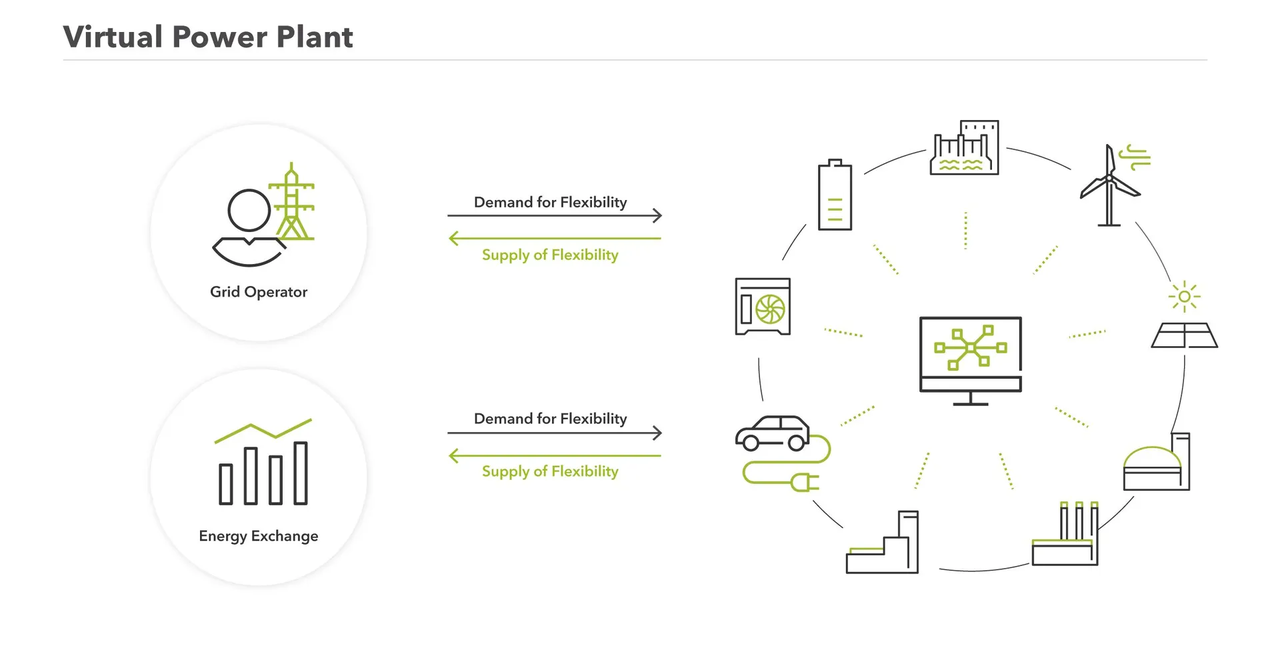
Distributed Energy Resources (DER)
DER are the most fundamental building blocks of a VPP.
Common DER include:
-
Rooftop solar systems
-
Wind turbines
-
Home energy storage batteries
-
Commercial and industrial energy storage systems
-
Electric vehicles and charging stations
-
Micro gas generators
These devices collectively form the energy supply capacity of a VPP.
Data Communication Network
A VPP requires real-time access to device operating status, which necessitates a stable data communication system.
Devices continuously stream data on power generation, consumption, storage status, and device health, providing the basis for dispatch decisions.
Energy Management Platform
The energy management platform handles data analysis and executes dispatch decisions.
This platform typically uses artificial intelligence, big data analytics, and predictive models to optimize energy resource allocation and boost overall efficiency.
How Does a Virtual Power Plant Operate?
The operating logic of a VPP can be broken down into four steps: "monitor, analyze, coordinate, and execute."
First, the system monitors the real-time operating status and energy data of connected devices.
Next, the platform analyzes this data alongside weather forecasts, electricity demand, and electricity price information to assess future energy supply and demand.
When increased demand is detected, the system coordinates battery storage to discharge power or dispatches EV batteries to support the grid.
When energy supply exceeds demand, the platform may schedule storage devices to charge or guide users to adjust their consumption habits.
The entire process is typically automated and does not require human intervention.
How Does a Virtual Power Plant Participate in Electricity Markets?
Traditional energy markets are primarily open to large power generators, making it difficult for small and medium-sized devices to trade directly.
By aggregating a large number of small-scale devices, a VPP achieves the scale needed to enter the energy market.
In practice, a VPP can engage in:
Through these mechanisms, participants earn returns based on their energy contributions, while the grid gains more flexible regulation resources.
What Are the Advantages of Virtual Power Plants?
Improving Energy Utilization Efficiency
VPPs optimize the allocation of energy resources, reducing waste and improving overall generation and consumption efficiency.
Enhancing Grid Stability
By coordinating a large number of energy devices, a VPP can respond quickly during peak demand or energy shortages.
Promoting Renewable Energy Development
Solar and wind energy are inherently volatile, and VPPs use storage systems to balance this volatility, increasing renewable energy utilization rates.
Reducing Infrastructure Investment Pressure
Leveraging existing distributed energy resources is typically more cost-effective than building new large-scale power plants.
What Challenges Do Virtual Power Plants Face?
Despite their promising potential, VPPs still face several challenges.
First, the lack of unified standards across different devices can increase integration and management complexity.
Second, processing and securing vast amounts of energy data requires more sophisticated technology.
Furthermore, energy regulations vary by country and region, requiring VPP business models to adapt to local market conditions.
What Is the Relationship Between OpenVPP and Virtual Power Plants?
OpenVPP is a decentralized energy network built on the VPP concept.
Traditional VPPs are typically centrally operated by energy companies or utilities, whereas OpenVPP introduces an open network architecture using blockchain technology.
In the OpenVPP network, energy devices not only participate in energy coordination but also receive on-chain identities and digital incentives.
This model expands the VPP from an energy management tool into an energy internet infrastructure, offering new possibilities for future energy asset tokenization and value network construction.
What Is the Difference Between a Virtual Power Plant and a Traditional Power Plant?
| Dimension |
Virtual Power Plant (VPP) |
Traditional Power Plant |
| Infrastructure |
Aggregation of distributed devices |
Centralized generation facility |
| Generation Source |
Multiple energy resources |
Single or few energy sources |
| Management Method |
Software platform coordination |
Centralized control |
| Scalability |
High |
Relies on new construction |
| Energy Mix |
Flexible and diverse |
Relatively fixed |
| Degree of Digitalization |
High |
Relatively low |
VPPs are not designed to replace traditional power plants but rather to serve as a vital supplement to the modern energy system, enhancing the flexibility and adaptability of the entire grid.
Summary
A Virtual Power Plant (VPP) is an energy management model that aggregates distributed energy resources via a digital platform. By connecting solar systems, storage devices, electric vehicles, smart meters, and other infrastructure, a VPP coordinates distributed energy capacity and participates in grid dispatch and energy market operations.
As the global energy transition accelerates, VPPs are becoming a key component of smart grids and the energy internet. Their value lies not only in improving energy efficiency and grid stability, but also in laying the groundwork for the digitalization of energy and the networking of energy assets.
FAQs
Does a virtual power plant generate electricity?
A VPP itself does not generate electricity directly. It coordinates and manages existing energy devices, providing energy services by optimizing their operating status.
What are distributed energy resources (DER)?
DER are small-scale energy devices located near end users or on the distribution grid, including solar panels, storage batteries, electric vehicles, and small wind turbines. These resources are the fundamental building blocks of a VPP.
Why are virtual power plants important?
VPPs improve energy utilization efficiency, enhance grid stability, and promote renewable energy development. With the growing share of renewables, VPPs are becoming an essential part of the modern energy system.
What is the relationship between virtual power plants and smart grids?
Smart grids provide the data communication and control infrastructure for VPPs, while VPPs use these capabilities to coordinate energy resources. Together, they drive the digital transformation of the energy system.
Is OpenVPP a virtual power plant?
OpenVPP is a decentralized energy network built on the VPP concept. Unlike traditional VPPs, it introduces blockchain technology to enable energy device identity management, on-chain incentives, and energy value exchange.