Jito constitui a infraestrutura de base de MEV no ecossistema Solana, destacando-se como a “camada de retorno”. Ao otimizar a ordem das transações, o Jito capta MEV e distribui esses retornos aos utilizadores através de staking líquido.
Neste contexto, o JTO não é um ativo gerador de rendimento, mas sim o instrumento de governança das regras operacionais do protocolo. Assim, o JTO assume-se como um “token de infraestrutura de governança”, cujo valor depende da dimensão e influência do protocolo.
Visão geral do token JTO
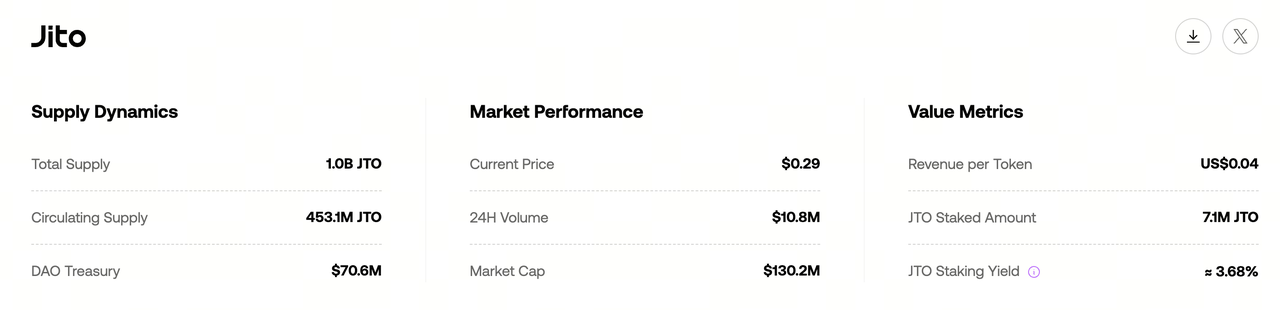
O JTO é o token nativo da rede Jito, com uma oferta total de 1 mil milhão de tokens emitidos na blockchain Solana. Tem como funções principais a governança e os incentivos ao ecossistema. O JTO opera na rede Solana e integra-se com os produtos centrais do Jito, como o JitoSOL.
Ao contrário de muitos tokens DeFi, o JTO não distribui atualmente rendimentos diretos. Em vez disso, influencia a alocação de retornos de forma indireta, através dos direitos de governança. Por isso, o valor do JTO assenta mais em expectativas de longo prazo do que em fluxos de caixa de curto prazo.
 Fonte: JTO Hub
Estrutura de alocação do token JTO
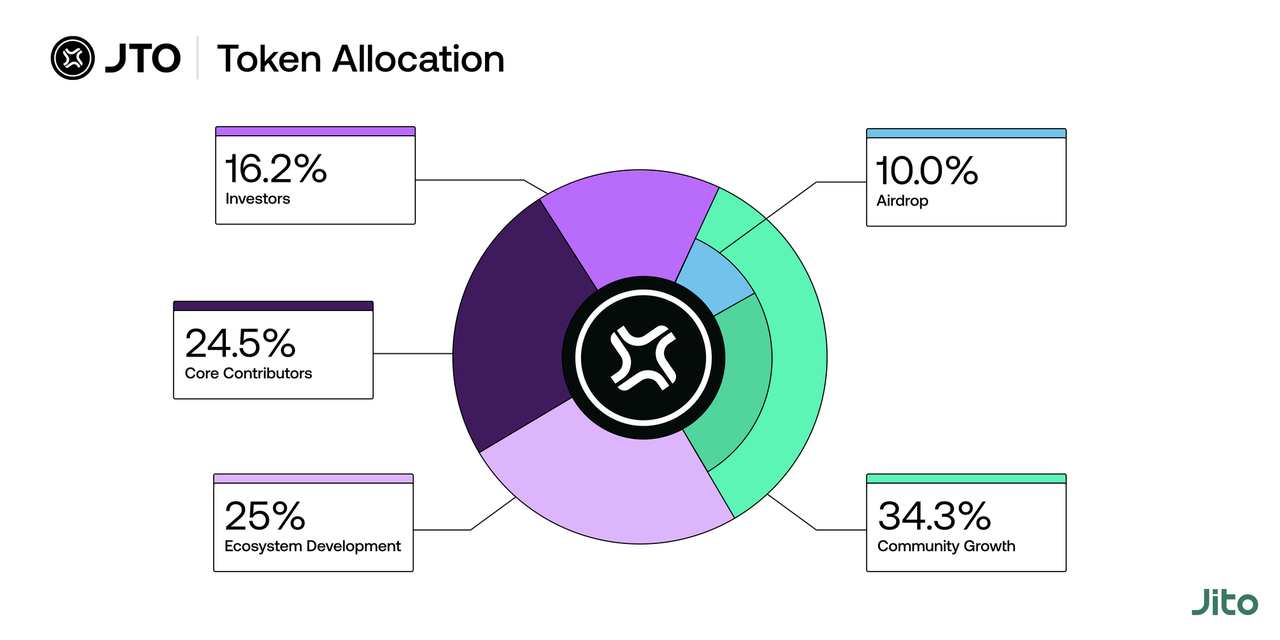
O airdrop inicial de JTO corresponde a 10% da oferta, distribuído da seguinte forma: 80% para utilizadores de JitoSOL (80 milhões de tokens), 15% para validadores Jito-Solana (15 milhões de tokens) e 5% para searchers de MEV (5 milhões de tokens). Os restantes 90% destinam-se aos contribuidores principais (24,5%), investidores, tesouraria da DAO e fundo do ecossistema.
Para a alocação do airdrop, 50% é desbloqueado imediatamente no Evento de Geração de Token (TGE), sendo os restantes 50% libertados de forma linear ao longo de 12 meses.
Em setembro de 2025, a Jito Foundation anunciou um programa de recompra, recorrendo ao Community Strategic Development Fund (CSD) para readquirir JTO através de TWAP, com o objetivo de estabilizar o mercado e reforçar as reservas da DAO.
Funções principais e utilizações do JTO
A principal função do JTO é a votação de governança. Os titulares participam nas propostas da Jito DAO para ajustar parâmetros do protocolo (como taxas do Block Engine ou regras de alocação de tips), aprovar atualizações e gerir a despesa da tesouraria.
Outras utilizações incluem incentivos de staking: o JTO pode potenciar as recompensas de staking líquido ou ser feito staking por validadores para integrarem o ecossistema Proof of Stake do Jito. No futuro, o JTO poderá também garantir prioridade a searchers nos leilões de MEV ou oferecer descontos em swaps de JitoSOL.
Como o JTO capta valor: fontes e vias de crescimento
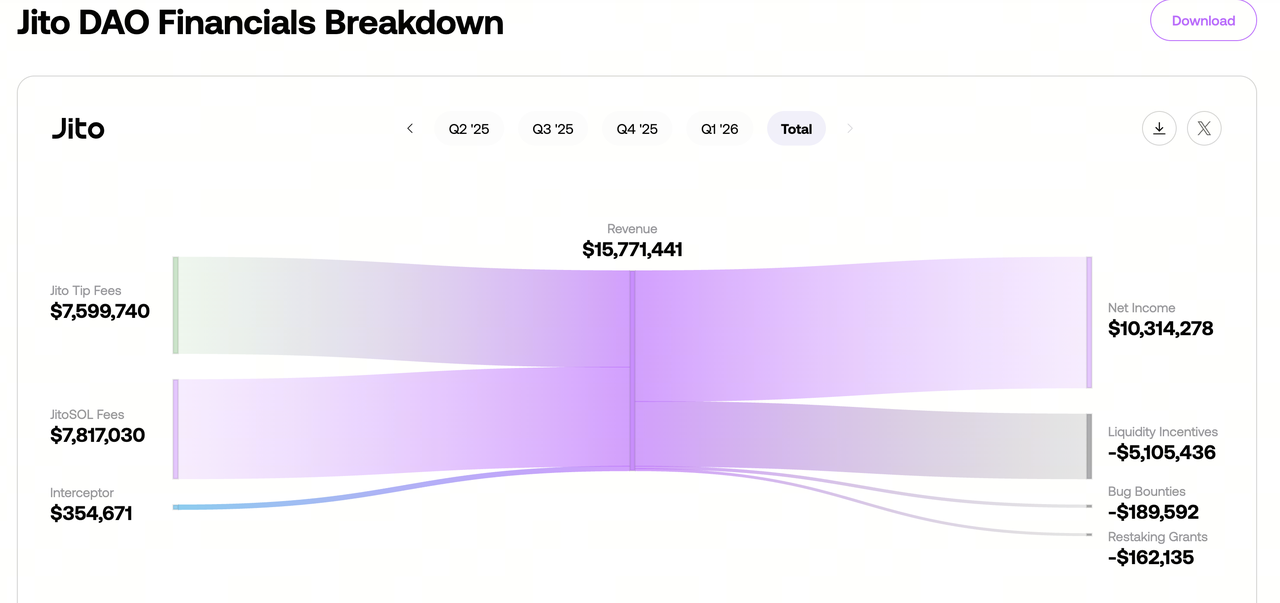
O JTO não obtém valor diretamente de fluxos de caixa, mas sim do crescimento do protocolo.
 Fonte: JTO Hub
À medida que a atividade na Solana aumenta, as transações on-chain crescem e o MEV total expande-se. Isto amplia o pool de retornos do Jito e reforça a sua posição no ecossistema.
O crescimento do TVL do JitoSOL indica a entrada de mais utilizadores no sistema de staking, reforçando os efeitos de rede que posicionam o Jito como escolha de referência e aumentam a relevância do token de governança.
A participação de validadores e searchers alimenta um ciclo de feedback positivo: mais participantes geram maiores retornos, o que atrai mais utilizadores.
Assim, o crescimento do valor do JTO pode ser encarado como um “flywheel”: o crescimento do MEV gera maiores receitas para o protocolo, atraindo mais utilizadores e validadores, o que expande o ecossistema e impulsiona o valor do JTO.
Proposta de valor de longo prazo do JTO
A longo prazo, o valor do JTO depende da sua capacidade para se afirmar como camada central de governança da infraestrutura de MEV e staking da Solana.
Em mercados em alta, o aumento da atividade de trading e dos retornos de MEV pode expandir rapidamente a influência do Jito e impulsionar a procura pelo JTO.
Em mercados em baixa, com a redução dos volumes de trading e dos retornos de MEV, o valor do JTO depende sobretudo das expectativas de governança e do desenvolvimento do ecossistema.
Por isso, o JTO deve ser avaliado pela sua função como infraestrutura, e não pelo rendimento de curto prazo.
Riscos e incertezas do JTO
O JTO apresenta potencial de crescimento, mas subsistem vários riscos.
O primeiro é a captação de valor: caso o protocolo não implemente mecanismos claros de distribuição de retornos, o token poderá ter dificuldade em refletir o crescimento do ecossistema.
Em segundo lugar, o próprio MEV é controverso—questões de equidade e experiência do utilizador podem motivar escrutínio regulatório.
A concorrência é também relevante. Outros protocolos de staking líquido ou soluções de MEV podem reduzir a quota de mercado do Jito.
Por fim, o aumento da oferta de tokens resultante de desbloqueios pode pressionar os preços no curto prazo.
Resumo
O valor do JTO resulta do controlo sobre a alocação dos retornos de MEV e do desenvolvimento do protocolo. Atualmente, o seu valor é impulsionado mais por expectativas e crescimento do ecossistema do que por fluxos de caixa diretos.
O potencial de longo prazo depende de dois fatores essenciais: a posição do Jito no ecossistema Solana e a expansão do mercado de MEV.
Perguntas Frequentes
O JTO distribui retornos ou dividendos?
Atualmente, o JTO é essencialmente um token de governança e não proporciona distribuição direta de rendimento.
O que impulsiona o valor do JTO?
O valor do JTO resulta sobretudo do crescimento do protocolo, da dimensão dos retornos de MEV e da procura por direitos de governança.
Qual é a diferença entre o JTO e o JitoSOL?
O JTO é um token de governança, enquanto o JitoSOL é um ativo de staking líquido utilizado para gerar retornos.
O JTO é adequado para detenção a longo prazo?
Depende da convicção no potencial de longo prazo do Jito no ecossistema Solana.
Qual é o maior risco?
Os principais riscos são a insuficiente captação de valor e as incertezas associadas ao mecanismo de MEV.