What is Axie Infinity (AXS)? A Complete Guide to Its Gameplay Mechanics and Game Economy

Last Updated 2026-05-01 01:54:18
Reading Time: 3m
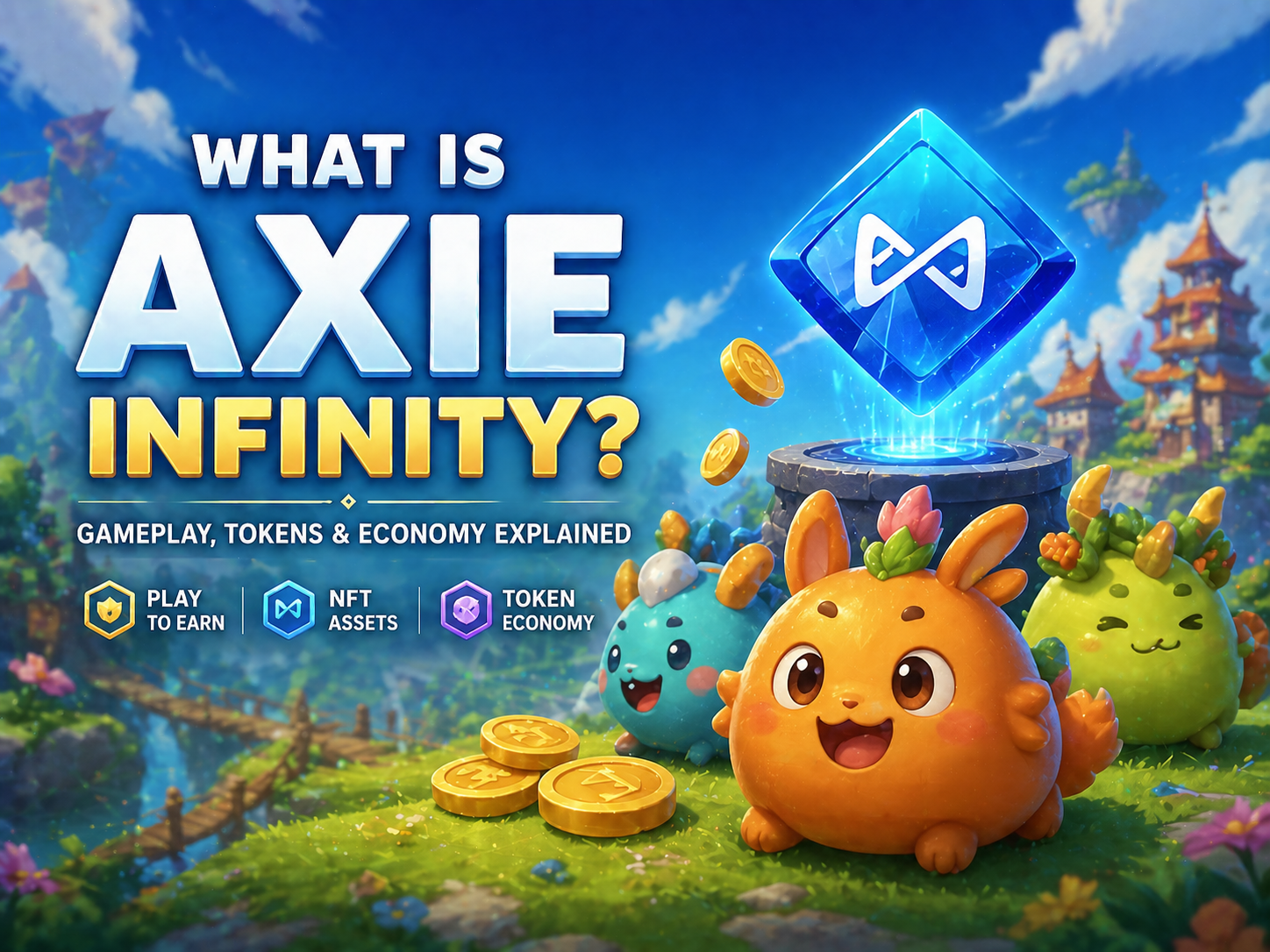
Axie Infinity is a blockchain-based NFT game that combines gameplay with economic incentives, utilizing digital asset ownership and token-based reward systems.

The rise of blockchain gaming stems from the inability to transfer assets and the lack of player-owned earnings in traditional games. As an early leader, Axie Infinity leverages NFT-based ownership and token economics, enabling players to turn in-game actions into tradable value.

This framework typically covers multiple dimensions, including gameplay, NFT assets, token incentives, and market trading—together forming a robust blockchain game economy.

What is Axie Infinity (AXS)? A Complete Guide to Its Gameplay Mechanics and Token Economy

What Is Axie Infinity?

Axie Infinity is a blockchain-based gaming ecosystem where players use NFT characters to battle and earn rewards.

At its core, Axie Infinity uses NFTs to represent both characters and items. Each Axie is a unique on-chain digital asset with distinct ownership and individuality. Blockchain technology ensures players truly own these assets and can freely trade them on the marketplace.

Mechanically, the game merges classic turn-based combat with blockchain asset systems. Players battle, breed, and trade to complete an economic cycle. This approach makes Axie Infinity not just a game, but a blockchain-powered virtual economy.

The key innovation is turning “entertainment activities” into “value-generating actions,” positioning blockchain gaming as a cornerstone of the Web3 ecosystem.

How Axie Infinity’s Core Gameplay Works

Axie Infinity blends “battle + nurturing + economy” into a unified system.

Players first acquire Axie characters—NFTs with unique attributes and skills. By joining PVE or PVP battles, players earn rewards such as tokens or resources.

With these resources, players can breed new Axies, generating additional NFT characters. Breeding costs and scarcity are algorithmically controlled to prevent unchecked asset inflation.

Players can continue optimizing their teams, play the game, or sell assets on the marketplace to realize profits. Throughout, user actions and system incentives create a self-sustaining loop.

This structure is significant because it creates a sustainable in-game economic model, closing the loop between player behavior and asset value.

The Role and Function of AXS in Game Economics

AXS is the core token within the Axie Infinity ecosystem, serving governance, staking, and value capture functions.

AXS acts as the economic backbone, connecting gameplay and platform incentives. Players earn AXS through gameplay or ecosystem participation, and can use it for staking or governance voting.

While AXS is positioned for long-term value accumulation, tokens like SLP serve as short-term incentive tools. AXS holders can also earn rewards by staking, which encourages long-term holding and strengthens ecosystem stability.

This multi-tiered token model is important because it separates short-term incentives from long-term value, enhancing the sustainability of the overall economic system.

In-Game Assets and NFT System Design

Axie Infinity’s NFT system underpins its economic model—core assets exist as NFTs.

Each Axie NFT is a unique character with its own attributes, skills, and rarity, all recorded on-chain for immutability. Players have full control over these assets and can transfer, sell, or hold them as they wish.

Beyond characters, land and items within the game are also NFT-based. These assets impact gameplay and can be traded in the marketplace, driving value flow.

Asset Type Form Utility Tradable Value Source
Axie Characters NFT Battle & Breeding Yes Rarity & Battle Strength
Land Assets NFT Ecosystem Building Yes Utility Value
Game Resources Token Breeding & Upgrading Yes Game Demand

The NFT system establishes value through scarcity and tradability. This approach transforms game content into real digital assets players actually own.

Axie Infinity’s Revenue Model and Player Participation

Axie Infinity follows a “participate-to-earn” blockchain game economy.

Players earn token rewards by engaging in battles, which forms the primary revenue stream. Players can also breed and sell Axies for profit, acting much like digital asset production.

NFT asset trading offers another avenue for profit—players can buy low and sell high depending on market conditions. Prices are determined by supply and demand.

Finally, users can earn additional returns by staking AXS or participating in governance. This multi-layered structure lets all types of players participate.

The model’s importance is in directly integrating user actions into the economic system, making gameplay itself a source of value.

How Axie Infinity Differs from Other Blockchain Games

Axie Infinity stands apart from other blockchain games in gameplay, economic model, and user participation.

Its focus is on a closed-loop “play-to-earn” economy, while some blockchain games are oriented around virtual worlds or creative platforms.

Dimension Axie Infinity Other Blockchain Games (e.g., Sandbox)
Core Gameplay Battle & Nurturing Creation & Building
Economic Model Play-to-Earn User-Generated Content
Asset Type Character NFTs Land & Item NFTs
Revenue Source Battle & Breeding Content & Trading
User Role Player-Driven Creator-Driven

Structurally, Axie Infinity is a game-driven economy, while others are platform-driven.

These distinctions shape both user involvement and ecosystem growth trajectories.

Participants and Value Flow in the Axie Infinity Ecosystem

The Axie Infinity ecosystem comprises players, investors, developers, and market participants.

Players generate assets via gameplay and are the main producers of value. Investors drive value circulation by purchasing assets or tokens.

The development team maintains game mechanics and economic balance for system stability, while market platforms provide liquidity and enable asset trading.

Value flows through asset creation, trading, and profit distribution, each step tied to user actions and system rules.

This multi-role setup forms a complete economic network, ensuring continuous operation of the game ecosystem.

Axie Infinity: Strengths and Potential Limitations

Axie Infinity’s strengths are its mature economic model and clearly defined gameplay mechanics.

NFTs and token design give assets real value and let players earn through gameplay. Its early user base enhances network effects.

However, there are limitations. The economy relies on a steady inflow of new users; if growth slows, the earning model could face pressure. Token price volatility can also affect player engagement.

The main challenge for blockchain gaming is balancing entertainment with economic incentives.

This issue is crucial, as it determines the project’s long-term sustainability.

Summary

By integrating gameplay, NFT assets, and token economics, Axie Infinity has built a comprehensive blockchain gaming ecosystem. AXS serves as the core token for governance and value, the NFT system anchors asset ownership, and player activity drives the economic cycle. To understand Axie Infinity, one must analyze its gameplay mechanics, asset design, and economic structure holistically.

FAQ

What is Axie Infinity

Axie Infinity is a blockchain-based NFT game where players control characters, battle, and earn rewards.

What is the function of the AXS token

AXS is used for governance, staking, and ecosystem value capture, serving as the core of the game’s economy.

How do you make money in Axie Infinity

Players earn by battling, breeding, and trading NFT assets, with rewards originating from the game’s economic system.

How is Axie Infinity different from traditional games

The biggest difference is asset ownership—blockchain game assets belong to the players and can be freely traded.

Who is Axie Infinity suitable for

It’s ideal for users interested in blockchain gaming, NFT assets, and play-to-earn models.

Author: Carlton
Disclaimer
* The information is not intended to be and does not constitute financial advice or any other recommendation of any sort offered or endorsed by Gate.
* This article may not be reproduced, transmitted or copied without referencing Gate. Contravention is an infringement of Copyright Act and may be subject to legal action.

Related Articles

What Is Fundamental Analysis?
Intermediate

What Is Fundamental Analysis?

Suitable indicators and tools combined with crypto news make up the best possible fundamental analysis for decision-making
2026-03-24 11:52:13
What Are Altcoins?
Beginner

What Are Altcoins?

An altcoin is also known as a Bitcoin Alternative or Alternative Cryptocoin, which refers to all cryptocurrencies other than Bitcoin. Most of the cryptocurrencies in the early stage were created through forking (copying Bitcoin codes).
2026-04-09 10:51:50
What is Blum? All You Need to Know About BLUM in 2025
Intermediate

What is Blum? All You Need to Know About BLUM in 2025

Blum is a unique mini-app accessible on Telegram. Its goal is to redefine cryptocurrency trading by offering a hybrid exchange that combines access to tokens from centralized and decentralized exchanges within a single platform.
2026-04-06 05:29:27
What are NFTs?
Beginner

What are NFTs?

NFT stands for Non-fungible token.
2026-04-09 10:49:50
Top 15 Metaverse Cryptocurrencies in 2024
Intermediate

Top 15 Metaverse Cryptocurrencies in 2024

Click to learn about the latest rising cryptocurrency projects in 2024.
2026-04-07 23:44:17
LumiWave (LWP) Tokenomics Explained: Value Sources, Allocation Logic, and Ecosystem Incentive Structure
Beginner

LumiWave (LWP) Tokenomics Explained: Value Sources, Allocation Logic, and Ecosystem Incentive Structure

LWP is the core token of the LumiWave Protocol ecosystem, designed to connect digital content, user behavior, and value distribution mechanisms. By bringing IP assets on-chain and integrating a token-based incentive system, LWP enables a closed-loop flow of value from content creation to distribution. Within the LumiWave framework, value is primarily generated through content consumption, user interaction, and ecosystem activities. As the value carrier, LWP facilitates allocation and circulation among creators, users, and network participants. Its multifunctional design also allows it to serve not only as a payment tool, but as a mechanism for incentives, governance, and network participation.
2026-04-14 06:10:33