

Trade
Basic
Futures
Futures
Hundreds of contracts settled in USDT or BTC
TradFi
Gold
Trade global traditional assets with USDT in one place
Options
Hot
Trade European-style vanilla options
Unified Account
Maximize your capital efficiency
Demo Trading
Futures Kickoff
Get prepared for your futures trading
Futures Events
Participate in events to win generous rewards
Demo Trading
Use virtual funds to experience risk-free trading
Earn
Launch
CandyDrop
Collect candies to earn airdrops
Launchpool
Quick staking, earn potential new tokens
HODLer Airdrop
Hold GT and get massive airdrops for free
Launchpad
Be early to the next big token project
Alpha Points
Trade on-chain assets and enjoy airdrop rewards!
Futures Points
Earn futures points and claim airdrop rewards
Investment
Simple Earn
Earn interests with idle tokens
Auto-Invest
Auto-invest on a regular basis
Dual Investment
Buy low and sell high to take profits from price fluctuations
Soft Staking
Earn rewards with flexible staking
Crypto Loan
0 Fees
Pledge one crypto to borrow another
Lending Center
One-stop lending hub
VIP Wealth Hub
Customized wealth management empowers your assets growth
Private Wealth Management
Customized asset management to grow your digital assets
Quant Fund
Top asset management team helps you profit without hassle
Staking
Stake cryptos to earn in PoS products
Smart Leverage
New
No forced liquidation before maturity, worry-free leveraged gains
GUSD Minting
Use USDT/USDC to mint GUSD for treasury-level yields

More






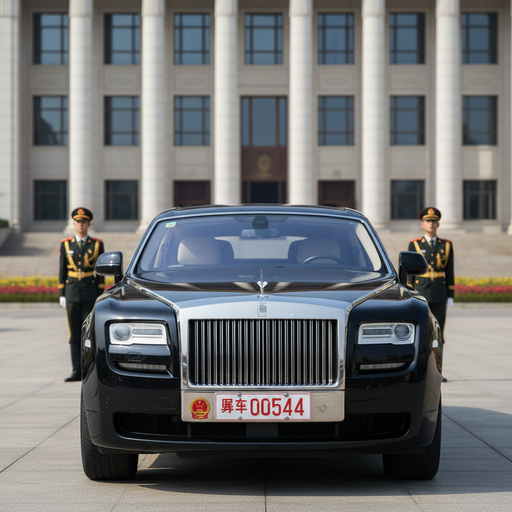
Tax rumor "suddenly hits" Hong Kong stocks! Institutional interpretation: Over-extrapolation, very low credibility
Tuesday morning, the Hong Kong stock market was suddenly hit by rumors of tax changes, causing internet technology stocks to plunge collectively. Several brokerages quickly issued statements, stating that the rumors are exaggerated speculation, and are not supported by tax, legal, or policy logic, making them highly unreliable.
The Hong Kong Hang Seng Tech Index initially followed the strength of global markets in the morning but suddenly plunged around 10:50 a.m., with the decline expanding to 3.37% at one point, and closing the morning session down 1.31%. Kuaishou once fell over 7%, Bilibili, Baidu, and Tencent Holdings each dropped over 6%, and Alibaba once declined nearly 5%.
The market panic was triggered by a rumor about “China adjusting the recognition of high-tech enterprises and related tax policies,” involving possible increases in tax rates for the financial industry and internet value-added services. Huachuang Securities believes that the rumor is an overextension of speculation, with no solid basis, and contradicts the current major policy of promoting consumption. Everbright Overseas explicitly pointed out that the rumor is unfounded in terms of tax, legal, and policy logic, and has very low credibility.
Re-emergence of rumors causes market turbulence
The main reason for the market decline was a tax rumor. During the sell-off of internet giants, there was widespread dissemination of messages suggesting that the value-added tax (VAT) rate for the financial industry and internet value-added services (such as in-game purchases and advertising) might be increased, with some rumors comparing it to the high tax rate on liquor.
Analysts pointed out that such “small stories” have been circulating in the market before. Since 2019, various versions have been spread, but none have materialized. Last year, foreign media also reported similar stories, but they also did not come to fruition.
Institutions refute: Confusing tax types and legal constraints
Regarding the mention in the rumors that “game tax rates will approach 32% like white liquor,” Everbright Overseas clarified that this is a basic misconception.
The 32% tax rate applicable to white liquor is a consumption tax (ad valorem plus specific tax), whereas in-game purchases and advertising services are subject to VAT, which are entirely different in taxation logic and legal basis, and there is no foundation for “approaching” each other.
Under the current legal framework, finance, gaming, and advertising are all classified as “modern services” under VAT, with a statutory rate of 6%. According to the VAT Law of the People’s Republic of China, effective from January 1, 2026, the tax brackets are clearly set at 13%, 9%, and 6%. The recent No. 9 Announcement issued by the Ministry of Finance and the State Taxation Administration only involves adjustments to basic telecommunications service rates and does not mention finance or internet value-added services.
The institutions emphasize that adjusting tax rates requires rigorous legislative or administrative procedures, and should not be based on market speculation. There is no policy basis to elevate the tax rates for these industries.
Furthermore, future tax regulations are more likely to focus on verifying and cleaning up tax incentives for certain enterprises (such as high-tech enterprise qualifications), rather than directly raising statutory tax rates. Such impacts are limited and controllable.
Policy logic: Increasing taxes contradicts macro direction
In addition to legal constraints, many analyses believe that the rumor is also inconsistent with economic logic.
Huachuang Securities pointed out that if internet companies face tax increases, the costs are very likely to be passed directly to consumers, which runs counter to the current national policy of promoting consumption, and cannot be logically extrapolated.
Everbright Overseas further analyzed that the current macro policy focus is on “stabilizing growth, promoting innovation, and supporting industrial upgrading.” Internet platform economy and overseas gaming are key support areas. Imposing a uniform tax increase on these critical industries at this time contradicts the overall policy direction. While there is room for discussion on tax burdens in the financial sector, regulatory approaches are more inclined toward optimizing deduction rules and structural adjustments, rather than simply raising tax rates, to avoid disrupting credit supply and financial stability.
Valuation and outlook: Long-term logic remains unchanged
Despite short-term emotional disturbances, the fundamental valuation of the Hong Kong stock market remains attractive. Data as of January 30, 2026, shows the Hang Seng Index’s PE and PB ratios at 12.47 and 1.27, respectively, placing them at the 82% and 63% percentile levels since 2010. Meanwhile, the risk premium of the Hang Seng Index is 3.76%, indicating good investment value.
Galaxy Securities believes that the technology sector remains a main long-term investment theme. With rising industry chain prices, localization, and accelerated AI applications, it is expected to oscillate upward. GF Securities suggests that, amid a decline in the dollar cycle and a mild appreciation of the RMB, Chinese equity assets are in a favorable re-pricing window. For Hong Kong stocks, investors should focus on Southbound capital inflows and valuation discounts, prioritizing technology leaders and internet platforms with both dividend-paying capacity and growth potential.
Risk warning and disclaimer
Market risks are present; investments should be cautious. This article does not constitute personal investment advice and does not consider individual users’ specific investment goals, financial situations, or needs. Users should consider whether any opinions, views, or conclusions in this article are suitable for their particular circumstances. Invest accordingly at your own risk.