In 2024, Play-to-Earn (P2E) Web3 games continue to develop, using blockchain technology such as NFT and ERC20 Token to provide players with the opportunity to obtain real value such as cryptocurrency, Token or NFT through games. Game economics, DeFi and Token economics are the keys to building a successful P2E game, and together they create a well-designed financial ecosystem. Web3 games use ERC20 Token as the local currency, and NFT represents the ownership of in-game assets and is traded through the NFT market. In addition, the game also integrates concepts such as staking, liquidity mining, DAO governance and interoperability. The current popular Web3 games show a new trend, and some new games are attracting new Web3 users with the support of innovative ideas and venture capital.
2026-04-07 05:49:23
The upcoming "200 Million ARB Game Catalyst Plan" to be implemented by the Arbitrum community aims to invigorate the Arbitrum ecosystem games through a three-year incentive measure. The article provides a detailed inventory of six blockchain games within the XAI ecosystem, covering various types such as pet collection, RPG, and strategy games. These games not only provide entertainment for game developers, players, and blockchain technology enthusiasts but also showcase the potential application of Web3 technology in the gaming industry.
2026-04-07 05:47:49
A paper jointly published by TeleportDAO and Eigen Labs explores the security and efficiency challenges faced by light nodes in proof-of-stake (PoS) blockchains and proposes a new solution. Through economic incentives, insured pre-security mechanisms and "programmable security", it aims to improve the security and efficiency of light nodes, which is of great significance to the development of cross-chain communication and blockchain technology.
2026-04-07 05:46:13
Spectral is an on-chain agent machine intelligent network that combines AI and Web3, aiming to simplify the writing and deployment of smart contracts and enable non-technical users to participate in Web3 innovation. Through its product Syntax, Spectral lowers the barrier to innovation and provides decentralized AI services through the Nova inference network. The project has received approximately US$30 million in financing and is supported by giants in the Web2 and Web3 fields. Spectral’s ecological layout is extensive, including DeFi, DAO, security and other fields, demonstrating its leadership and development potential in the AI+Web3 field.
2026-04-07 05:44:38
Web3 Security Beginner's Guide to Avoiding Pitfalls | Risks of Fake Wallets and Private Seed Phrase Leakage
2026-04-07 05:43:08
As the adoption of Oasys continues to expand, OAS may become the payment method of choice for well-known Web2 gaming brands in Web3, bringing wider recognition and integration to the crypto economy.
2026-04-07 05:41:23
Re-staking is emerging as a technology gaining attention inside and outside the industry, allowing ETH already staked on the Ethereum mainnet to be reused to support the security of other projects. This method enables users to earn returns from their original staking while also increasing potential rewards by supporting more projects. EigenLayer's staking mechanism is significantly different from the Ethereum mainnet's PoS staking. This article analyzes the EigenLayer staking mechanism, the possible rewards, and the potential risks.
2026-04-07 05:39:40
This article discusses Morph's new L2 ecosystem development strategy, which aims to address the issues of "ghost chain effect" and "fake TVL prosperity" on public chains by combining incentive airdrops and developer-centric ecosystem development. The article analyzes both the airdrop strategy of Blast and Morph's comprehensive approach, which includes incentives for testnet airdrops, a developer-centric ecosystem development fund, and strategies for attracting user and developer participation. Morph encourages AI, GameFi and other projects to build on Morph through a series of actions, such as the Sparkloom Builder Program and incubator programs, while providing financial support and airdrop incentives for participants..
2026-04-07 05:37:52
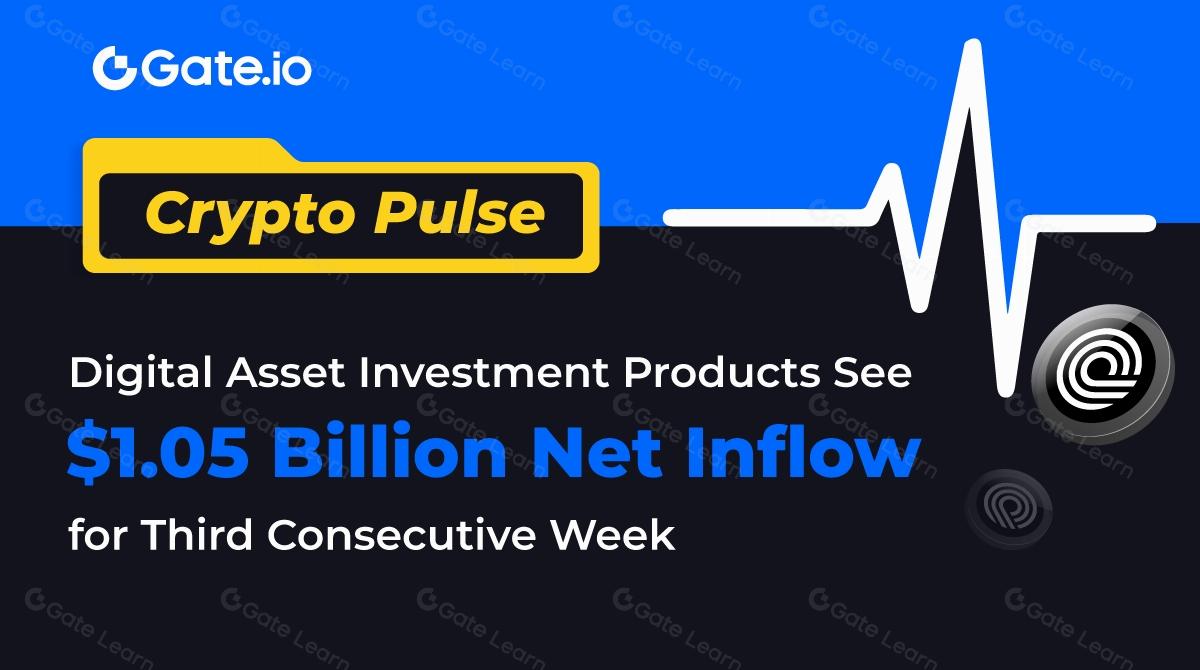
Crypto Pulse focuses on the latest developments in the cryptocurrency industry, delivering up-to-date market analysis and insights.
2026-04-07 05:36:14
This article delves into zkLink, a multi-chain aggregation layer built upon ZK-Rollup technology. It comprehensively explores zkLink's underlying principles, solutions, current development status, and future roadmap, highlighting its innovative approaches to addressing multi-chain liquidity fragmentation, reducing transaction costs, and mitigating security risks. By constructing the Layer 3 network zkLink Nova, zkLink not only aggregates liquidity across Ethereum and its L2 networks but also streamlines dApp deployment across multiple chains, enhancing user experience. The article further touches upon zkLink's funding landscape and future prospects, showcasing its potential in driving the growth of the Ethereum and L2 ecosystem.
2026-04-07 05:34:40
Web3 phishing attacks are a common threat to cryptocurrency users. Their purpose is to steal their crypto assets by inducing users to authorize, sign, or misoperate. In this article, SharkTeam systematically analyzes seven common Web3 phishing techniques, including Permit off-chain signature phishing, Permit2 off-chain signature phishing, eth_sign on-chain blind signature phishing, personal_sign/signTypedData on-chain signature phishing, authorization phishing, and address pollution phishing. As well as phishing methods that use CREATE2 to bypass security detection. The article also introduces the black industry chain of Drainer as a Service (DaaS), and provides five security suggestions to help users identify phishing scams and protect the security of their encrypted assets.
2026-04-07 05:32:56
This article explores the psychological game and market behavior of investors in the cryptocurrency market, revealing how many people react to asset price increases or decreases due to market volatility and uncertainty, such as panic selling or taking profits too early.
2026-04-07 05:31:13
There has for a long time been interest in the concept of multi-dimensional gas, and with EIP-4844 we actually have multi-dimensional gas working on Ethereum today. This post explores the benefits of this approach, and the prospects for increasing it further.
2026-04-07 05:29:32
Click to discover the most popular GameFi projects in the industry this year, featuring monster-battling adventures, strategic card games, and more.
2026-04-07 05:24:45
Explore Vertex Protocol, a groundbreaking DEX on the Arbitrum network, merging centralized efficiency with decentralized security.
2026-04-07 05:23:08