

Trade
Basic
Futures
Futures
Hundreds of contracts settled in USDT or BTC
Options
HOT
Trade European-style vanilla options
Unified Account
Maximize your capital efficiency
Demo Trading
Futures Kickoff
Get prepared for your futures trading
Futures Events
Futures Mall
Participate in events to win generous rewards
Demo Trading
Use virtual funds to experience risk-free trading
Earn
Launch
CandyDrop
Collect candies to earn airdrops
Launchpool
Quick staking, earn potential new tokens
HODLer Airdrop
Hold GT and get massive airdrops for free
Launchpad
Be early to the next big token project
Alpha Points
NEW
Trade on-chain assets and enjoy airdrop rewards!
Futures Points
NEW
Earn futures points and claim airdrop rewards
Investment
Simple Earn
Earn interests with idle tokens
Auto-Invest
Auto-invest on a regular basis
Dual Investment
Buy low and sell high to take profits from price fluctuations
Soft Staking
Earn rewards with flexible staking
Crypto Loan
0 Fees
Pledge one crypto to borrow another
Lending Center
One-stop lending hub
VIP Wealth Hub
Customized wealth management empowers your assets growth
Private Wealth Management
Customized asset management to grow your digital assets
Quant Fund
Top asset management team helps you profit without hassle
Staking
Stake cryptos to earn in PoS products
Smart Leverage
NEW
No forced liquidation before maturity, worry-free leveraged gains
GUSD Minting
Use USDT/USDC to mint GUSD for treasury-level yields

More


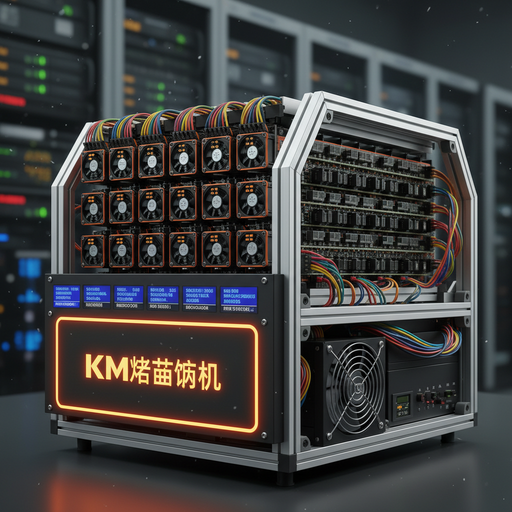




The true evaluation of low-power BTC miners: Feasibility analysis of SOLO mining as a long-term financial experiment
I spent over 6,000 yuan to buy two low-power Bitcoin miners, intending to conduct a long-term digital experiment—rather than just simple investing. It may sound like a fairy tale, but after personally researching, purchasing, and operating, I want to share some real experiences regarding BTC miner selection and SOLO mining mode.
First, a clarification: I cleared all my previous BTC holdings in early 2025. Not because I was pessimistic about the market, but because I believed the returns at the $93,000 price level were already sufficient, and I wanted to free up funds to explore other possibilities—including the interesting field of low-power miners.
Inspiration from Foreign Geek Communities: Small Power Miners Can Also Find Blocks
During the period after I cleared my holdings, I started paying attention to what foreign geek circles were discussing and discovered some surprising cases:
In March 2025, a developer using Bitaxe Nano for SOLO mining successfully found a BTC block, earning over $260,000 in rewards at once. Earlier, in 2024, a Russian geek persisted in SOLO mining for nine months and also found a block, earning about $300,000.
On communities like Reddit, Bitcointalk, and Twitter, I saw more and more low-power enthusiasts discussing a common topic: how to challenge the global Bitcoin network with just a few watts of power. This isn’t about “getting rich quick,” but treating mining as a form of digital extreme sports—a bold bet on cosmic probability.
This atmosphere is almost invisible in Chinese communities. The focus of Chinese crypto communities is usually on coin speculation and large-scale mining farms, with few viewing mining from the perspective of “low probability, high expectation.” This sparked my strong curiosity.
How BTC Miners Work: Why I Chose SOLO Mode
The Bitcoin network generates a new block every 10 minutes. Global miners compete with their computing power; whoever finds a hash that meets the criteria first wins the reward (currently 3.125 BTC plus transaction fees). This process is essentially a global “mathematical lottery.”
There are three traditional mining modes:
Pool mining is the most common. All participants’ hash power is pooled together, and when the pool finds a block, rewards are distributed proportionally to each contributor. This mode guarantees relatively stable income, but everyone gets “small fragments.”
PPLNS or similar modes have slightly different distribution mechanisms but the basic logic is the same.
SOLO mining is the third path. Your miner works alone, competing with your own hash power. If you find a block, you get the entire reward; if not, you earn nothing.
Why did I choose SOLO? The reasons are simple but honest:
This is more like placing a “long-term bet” on my life.
Equipment Choice: Specific Configuration of Two Low-Power Miners
I ultimately purchased two Avalon Nano miners, with detailed specs:
The key reason for choosing Avalon Nano over other products: low power consumption, low noise, mature and reliable product.
My dual-track SOLO strategy:
The first runs BTC for SOLO mining, aiming for a “big win once.”
The second runs BCH (Bitcoin Cash) for SOLO mining. BCH’s network difficulty is much lower than BTC, making it theoretically easier to find a block—this is a “cost recovery insurance” idea.
Practical Challenges in Technical Implementation
Getting BTC miners to work normally in China faces several technical hurdles:
Network issues: Domestic access to international mining pools requires VPNs or intermediary proxies. Direct connections can be unstable. I set up an intermediary mining pool with international routing to relay traffic.
Stealth: Since the devices are placed in an office, I bought portable WiFi and 4G SIM cards for independent network access. This avoids detection of abnormal miner traffic by the company network. The devices are small and quiet, so they won’t attract attention.
Mining pool selection: For BTC SOLO mining, I chose Ckpool—recognized as the most stable SOLO pool in the community. For BCH, I chose 2miners (which also supports SOLO mode).
Reminder: Using third-party intermediary pools has risks. Stratum mining protocol is open, and can be tampered with. Many proxy pools “intercept” part of your hash power (e.g., steal 5%) as their “service fee.” This is a gray area in the industry and requires vigilance.
Probability Math: How Long Do You Need to Mine to Win?
This is the most realistic question. Based on current network difficulty and my device hash rate:
But the key point is—probability does not mean the average.
Some hit the jackpot in 9 months, others may never get it in their lifetime. No one can predict when “your moment” will come.
SOLO Mining vs. Traditional Lottery: Where Are the Winning Strategies
You might ask: Isn’t this just like buying a lottery ticket? Why not just buy lottery tickets directly?
The answer lies in three dimensions:
Frequency: Lottery is a one-time event. But your mining machine conducts 144 “draws” every day (once every 10 minutes).
Cost: Buying a lottery ticket costs each time. Mining requires a one-time investment, and then it can continue “automatically participating” for years.
Surprise factor: Lottery results end after the draw. But a mining machine can surprise you at the most unexpected moment—perhaps on a mundane morning, you open logs and see “Congratulations! Block found.”
Who Is Suitable for Doing This
Honestly, this is not a universally recommended choice. The following types of people can seriously consider:
Final Honest Warning
Please understand the following points, which are truths about BTC miners and SOLO mining:
This is not a financial product. From the moment you purchase equipment, you should mentally assume that the money has already been spent.
Do not borrow money to participate. This activity carries extremely high risks.
Do not dream of buying multiple miners and going all-in. Greed is the biggest enemy in such endeavors.
Do not expect to definitely recover costs. Probability is cruel—there may never be that moment.
But if you can genuinely accept these limitations, owning a low-power BTC miner might become an interesting, lasting, quietly accompanying “digital adventure” in your life. It may not change your life, but it can add a little “maybe someday I’ll hit it” possibility to your daily routine.
This is my honest assessment of this geek-style SOLO mining experience.