




SoominStar

vip
Age 1.4 Year
Peak Tier 5
No content yet
Pin
  • Reward
  • 13
  • 1
  • Share
CryptoSelf:
To The Moon 🌕
View More
#MyGateTradeStory
#BMNR
BMNR Trading Analysis and Strategy Guide
BitMine Immersion Technologies (BMNR) is currently trading at $16.52, showing a modest gain of 5.63 percent in the recent session. However, the broader technical picture presents a mixed outlook that traders should carefully evaluate before entering positions.
Current Market Position
BMNR finds itself in a challenging technical environment. The stock has declined significantly from its yearly highs, currently trading near the lower end of its 52-week range. Over the past month, the price has fluctuated between $15.35 and $22.65
HighAmbition
#MyGateTradeStory
#BMNR
BMNR Trading Analysis and Strategy Guide
BitMine Immersion Technologies (BMNR) is currently trading at $16.52, showing a modest gain of 5.63 percent in the recent session. However, the broader technical picture presents a mixed outlook that traders should carefully evaluate before entering positions.
Current Market Position
BMNR finds itself in a challenging technical environment. The stock has declined significantly from its yearly highs, currently trading near the lower end of its 52-week range. Over the past month, the price has fluctuated between $15.35 and $22.65, demonstrating considerable volatility with a current ATR percentage of 7.82 percent. This wide trading range indicates that the asset is experiencing heightened price swings, which can present both opportunities and risks for active traders.
Technical Rating and Trend Analysis
The technical rating for BMNR stands at 2 out of 10, which reflects bearish conditions across multiple timeframes. Both long-term and short-term trends are pointing downward, with the stock trading below all major moving averages. The 20-day SMA sits at $18.32, the 50-day SMA at $20.37, and the 200-day SMA at $31.49. When a stock trades below declining moving averages, it typically signals weakness and suggests that sellers remain in control of the price action.
The daily indicator consensus shows a strong sell signal, with 5 out of 7 indicators flashing sell warnings. The MACD reading of negative 0.21 confirms bearish momentum, while the ADX at 20.68 indicates a developing trend that has not yet reached extreme levels. The RSI at 39.09 is approaching oversold territory but has not reached levels that would typically trigger a reversal signal.
Key Support and Resistance Levels
Understanding critical price levels is essential for any trading strategy. For BMNR, the primary support zone is established at $15.90, derived from a horizontal line on the weekly timeframe. This level has historical significance and could act as a floor where buying interest may emerge. A break below this support could open the door for further downside toward the $15.35 range low.
On the resistance side, the key level to watch is $23.39, marked by a horizontal line on the daily chart. This represents a significant barrier that the price would need to overcome to shift the trend structure. Additional resistance levels exist at the 20-day SMA around $18.32 and the psychological $20 level, which previously acted as support before the recent breakdown.
Trading Strategy Recommendations
For traders considering BMNR at current levels, several approaches can be considered based on risk tolerance and market outlook.
The conservative approach suggests waiting for the price to stabilize and form a base near the $15.90 support level. Entering after confirmation of support holding with a bullish candlestick pattern could provide a better risk-reward setup. A stop loss should be placed below $15.35 to protect against a breakdown.
For aggressive traders, the current price near $16.52 could present a speculative long opportunity with tight risk management. The target would be a move back toward the $18.32 resistance, representing approximately 11 percent upside potential. However, this approach requires accepting higher risk given the prevailing downtrend.
Short sellers might view any rallies toward the $18 to $20 zone as potential entry points for bearish positions, targeting a retest of the $15.90 support. The declining moving averages provide a logical framework for placing stop losses above resistance.
Risk Management Considerations
Given the high volatility and bearish technical structure, position sizing should be conservative. The 7.82 percent ATR suggests that daily price swings can be substantial, so traders should account for this when determining position size and stop placement. Never risk more than 1 to 2 percent of trading capital on any single trade.
Volume analysis shows healthy liquidity with an average of 38 million shares traded daily, which is positive for execution. However, the strong sell consensus across indicators suggests that any bounce attempts may face selling pressure.
Market Context and Outlook
BMNR has shown impressive yearly performance of 233 percent, but this was driven largely by a strong move approximately 10 months ago. Recent performance has deteriorated, with the stock down 22 percent over the past month and 52 percent over six months. This divergence between long-term and short-term performance highlights the importance of timing in trading decisions.
The broader market environment should also be considered. With BMNR lagging the S&P 500, which is trading in the upper part of its range, the stock is showing relative weakness. This suggests that even if the broader market stabilizes, BMNR may continue to underperform until it establishes a clear bottom formation.
Final Thoughts
BMNR at $16.52 presents a high-risk, potentially high-reward trading opportunity. The technical picture remains bearish, but the proximity to key support and oversold stochastic readings at 14.84 could signal a potential reversal zone. Traders should remain patient, wait for confirmation signals, and maintain strict risk management protocols. The path of least resistance remains downward until the price can reclaim the $18.32 level and demonstrate sustained buying pressure.@Gate_Square
repost-content-media
  • Reward
  • Comment
  • Repost
  • Share
Gate Stocks Web Platform Officially Launched, Offering a More Convenient Global Market Investment Experience.
🔹 Trade over 10,000 US stocks and ETFs using USDT
🔹 Manage crypto assets and stock investments with a unified account
🔹 Support pre-market and after-hours trading, enjoy 16×5 trading hours
🔹 Minimum trading of 0.01 shares, easily participate in quality asset investments
👉 Trade Gate Stocks now: https://www.gate.com/stocks/NVDA
👉 Learn more: https://www.gate.com/announcements/article/100015
post-image
  • Reward
  • Comment
  • Repost
  • Share
#MyGateTradeStory
MRVL (Marvell Technology) Technical Analysis and Trading Strategy
Marvell Technology is currently trading at approximately 286.5, showing remarkable strength with a year-to-date return of over 237 percent. The stock has been a standout performer in the semiconductor sector, driven by strong AI infrastructure demand and strategic partnerships with major technology companies.
Key Support and Resistance Levels
Understanding critical price zones is essential for effective trading. For MRVL, the immediate support level sits around 280, which aligns with recent consolidation areas
US5000.52%
US500200.52%
HighAmbition
#MyGateTradeStory
MRVL (Marvell Technology) Technical Analysis and Trading Strategy
Marvell Technology is currently trading at approximately 286.5, showing remarkable strength with a year-to-date return of over 237 percent. The stock has been a standout performer in the semiconductor sector, driven by strong AI infrastructure demand and strategic partnerships with major technology companies.
Key Support and Resistance Levels
Understanding critical price zones is essential for effective trading. For MRVL, the immediate support level sits around 280, which aligns with recent consolidation areas. A stronger support zone exists at approximately 270 to 275, representing previous breakout levels that could attract buying interest on any pullbacks. The major support threshold is near 260, which would be a critical line in the sand for bullish sentiment.
On the resistance side, the first hurdle appears near 290, which represents recent highs and psychological round-number resistance. The next significant resistance zone is at 300, a level that previously acted as a ceiling. Beyond that, the 52-week high of approximately 324 stands as the ultimate target for bulls. Analyst price targets currently range from 240 to 345, with an average target of 233, though recent upgrades suggest increasing optimism.
Technical Indicators and Market Structure
MRVL is trading within a rising trend channel on the medium-term timeframe, indicating sustained buying pressure and higher price acceptance over time. The Relative Strength Index is hovering around 69, approaching overbought territory but not yet at extreme levels that would suggest imminent reversal. The Moving Average Convergence Divergence shows positive momentum with a reading of approximately 34.75, confirming bullish alignment.
The stock has demonstrated exceptional momentum, with a one-year return exceeding 313 percent compared to the S&P 500's 23 percent. This outperformance reflects strong institutional interest and confidence in Marvell's AI-driven growth strategy. The company recently partnered with NVIDIA for AI infrastructure development, further cementing its position in the high-growth data center market.
Trading Strategies for Different Trader Profiles
For conservative traders, waiting for a pullback toward the 275 to 280 support zone offers a favorable risk-reward entry. A stop loss could be placed below 265, targeting a move toward 300 and potentially 320. This approach provides a buffer against volatility while maintaining exposure to the uptrend.
Moderate risk traders might consider scaling into positions between current levels and 280, using a tiered approach to build exposure. Setting a stop loss at 270 protects capital while allowing for normal market fluctuations. Profit targets could be set at 295 for the first portion and 310 for the remainder of the position.
Aggressive traders may look for breakout opportunities above 290, entering on momentum with a tight stop at 285. This strategy targets a quick move toward 300 and beyond, capitalizing on continued institutional accumulation. However, this approach requires active monitoring and quick decision-making.
Risk Management Considerations
Position sizing remains critical when trading a volatile stock like MRVL, which carries a beta of 2.28. This means the stock moves more than twice as much as the broader market, amplifying both gains and losses. Traders should size positions accordingly, potentially using half the normal allocation to account for increased volatility.
Earnings are estimated for late August, creating a catalyst that could drive significant price movement. Traders holding positions through earnings should be prepared for potential gaps in either direction. Consider reducing exposure ahead of the event or using options strategies to define risk.
The semiconductor sector is highly sensitive to interest rate expectations, AI demand trends, and broader technology spending. Monitor Federal Reserve communications and AI-related news from major customers, as these can impact MRVL's price action independent of company-specific developments.
Alternative Trading Approaches
For those seeking exposure with defined risk, call spreads or bullish put spreads could provide leveraged upside while capping potential losses. Selling cash-secured puts at the 270 or 260 strike levels offers a way to acquire the stock at a discount while generating income.
Dollar-cost averaging remains a viable strategy for long-term believers in Marvell's AI story. Regular purchases at predetermined intervals smooth out volatility and reduce the impact of timing decisions.
Conclusion
MRVL presents a compelling trading opportunity within a strong uptrend, supported by fundamental growth in AI infrastructure and positive technical momentum. Current levels near 286 offer exposure to continued upside, though disciplined entry and risk management are essential given the stock's volatility. Key levels to watch include support at 280 and 270, with resistance targets at 290, 300, and 324. Align your strategy with your risk tolerance and time horizon, and remain flexible as market conditions evolve.
@Gate_Square
repost-content-media
  • Reward
  • Comment
  • Repost
  • Share
#MyGateTradeStory
SpaceX Trading Analysis and Strategy Guide
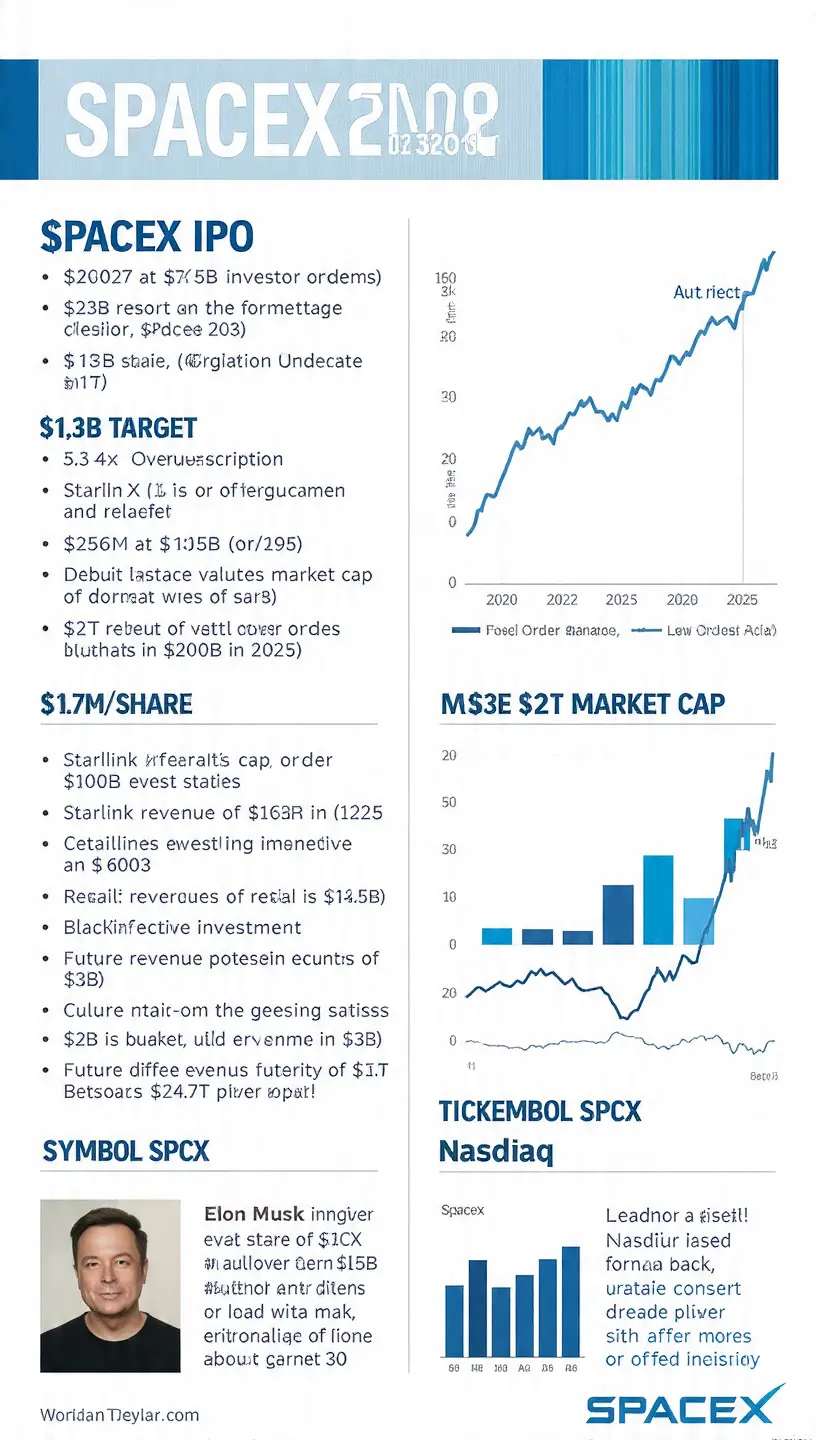
SpaceX has officially debuted on the Nasdaq on June 12, 2026, marking one of the most significant IPO events in market history. The stock opened at $150 per share, representing an 11% gain over its IPO price of $135. During midday trading, shares surged approximately 17%, pushing the company's valuation beyond $2 trillion. This remarkable debut officially crowns Elon Musk as the first trillionaire on record.
Current Market Status
The IPO was priced at $135 per share, giving SpaceX an initial valuation of $1.77 trillion. However, pre
HYPE2.52%
QQQX0.76%
HighAmbition
#MyGateTradeStory
SpaceX Trading Analysis and Strategy Guide
SpaceX has officially debuted on the Nasdaq on June 12, 2026, marking one of the most significant IPO events in market history. The stock opened at $150 per share, representing an 11% gain over its IPO price of $135. During midday trading, shares surged approximately 17%, pushing the company's valuation beyond $2 trillion. This remarkable debut officially crowns Elon Musk as the first trillionaire on record.
Current Market Status
The IPO was priced at $135 per share, giving SpaceX an initial valuation of $1.77 trillion. However, pre-IPO perpetual futures on platforms like Hyperliquid had been trading around $162, about 20% above the IPO price. These futures had previously peaked above $220 shortly after their May launch, indicating strong speculative interest. The actual opening at $150 and subsequent rally to approximately $169 aligns with elevated market expectations but remains below the speculative peaks seen in derivative markets.
Key Support and Resistance Levels
Based on the trading data and market structure, critical technical levels emerge for traders to monitor. The IPO price of $135 serves as a major psychological support level. The opening price of $150 represents immediate support, as this was where initial public demand materialized. Current trading around $169-$170 places the stock in a consolidation zone.
Resistance levels to watch include the $175 mark, which was initially indicated to trading desks before the official open. Beyond that, the $200 level represents a significant psychological barrier that trading desks had anticipated as a potential target. The pre-IPO futures peak above $220 suggests that extreme bullish sentiment could push prices toward this zone if momentum continues.
Trading Strategy Considerations
For traders looking to participate in SpaceX price action, several strategic approaches warrant consideration. Given the stock opened at $150 and rallied to current levels near $169, early momentum has been strong. However, the gap between the IPO price and current trading levels suggests that some profit-taking pressure could emerge.
Short-term traders might consider that the stock has already moved significantly from its IPO price, and the risk-reward ratio at current levels may be less favorable for new long positions. The trading desk expectations of reaching $200 provide an upside target, but the path there may involve volatility and potential pullbacks.
Risk management becomes particularly important given the stock's recent launch and limited trading history. Position sizing should reflect the inherent uncertainty in a newly public company, especially one with such a massive valuation. The relatively small float of approximately 3% of shares could contribute to heightened volatility as supply remains constrained.
Market Context and External Factors
SpaceX's debut occurs within a broader context of significant IPO activity, with companies like Anthropic and OpenAI also having filed prospectuses recently. This suggests a window of enthusiasm for high-profile technology offerings. However, analyst opinions vary significantly regarding valuation. Morningstar initiated coverage with a fair value estimate of $780 billion, less than half the IPO target, citing concerns about overvaluation. Conversely, Polymarket traders indicated an 84% probability that SpaceX would close above $1.8 trillion market capitalization.
The inclusion of SpaceX in the Nasdaq 100 Index is expected within 15 trading days after the IPO, which could drive additional passive investment flows. This technical factor may provide underlying support for the stock price as index-tracking funds build positions.
Practical Trading Recommendations
Traders should establish clear entry and exit points before initiating positions. For those considering long positions, waiting for a pullback toward the $150-$155 range could offer better risk-adjusted entry opportunities. Stop-loss orders should be placed below the IPO price of $135 to protect against significant downside moves.
For short-term trading, monitoring volume patterns and price action around the $175 and $200 resistance levels will be crucial. Breakouts above these levels with strong volume could signal continuation of the uptrend, while rejections may indicate the need for consolidation.
The stock's behavior in the coming trading sessions will establish important reference points for future technical analysis. Given that this is the first trading day, price discovery remains ongoing, and volatility should be expected. Traders should remain flexible and prepared to adjust strategies as more data becomes available and as the stock establishes its trading range.
@Gate_Square
repost-content-media
  • Reward
  • Comment
  • Repost
  • Share
#SpaceXIPOAttractsOver250BillionInOrders
SPACEX IPO: HISTORIC $1.77 TRILLION VALUATION ATTRACTS UNPRECEDENTED INVESTOR DEMAND
The financial world is witnessing what may become the largest initial public offering in history as SpaceX prepares to list on the NASDAQ under ticker symbol SPCX with a valuation of $1.77 trillion. This extraordinary figure, derived from an offering price of $135 per share for 555 million shares, represents a watershed moment for both the space industry and capital markets. The IPO has attracted over $250 billion in orders, demonstrating extraordinary investor appetit
Luna_Star
#SpaceXIPOAttractsOver250BillionInOrders
SPACEX IPO: HISTORIC $1.77 TRILLION VALUATION ATTRACTS UNPRECEDENTED INVESTOR DEMAND
The financial world is witnessing what may become the largest initial public offering in history as SpaceX prepares to list on the NASDAQ under ticker symbol SPCX with a valuation of $1.77 trillion. This extraordinary figure, derived from an offering price of $135 per share for 555 million shares, represents a watershed moment for both the space industry and capital markets. The IPO has attracted over $250 billion in orders, demonstrating extraordinary investor appetite for exposure to Elon Musk's space exploration and satellite internet empire. This level of demand suggests the offering could be multiple times oversubscribed, creating significant price dynamics when trading commences.
The scale of SpaceX's public debut defies conventional market precedents. At $1.77 trillion, the company would be valued higher than many of the world's largest public corporations, entering the rarefied territory occupied by only a handful of technology giants. The offering aims to raise $75 billion, providing substantial capital for SpaceX's ambitious growth plans while allowing early investors and employees to realize liquidity. The timing of the IPO reflects both the maturation of SpaceX's business model, particularly its Starlink satellite internet service, and favorable market conditions for technology offerings, despite recent volatility in the broader sector.
Wall Street analysts have offered divergent perspectives on SpaceX's valuation, with some questioning whether the $1.77 trillion figure reflects fundamental value or speculative enthusiasm. Some analysts argue that SpaceX's addressable market may be closer to $129 billion rather than the $1.6 trillion suggested in the company's S-1 filing. This valuation debate highlights the challenges of pricing a company with multiple business lines at different stages of development, including mature launch services, rapidly growing satellite internet, and speculative ventures in space tourism and interplanetary colonization. The range of analyst opinions provides fodder for both bullish and bearish investment theses.
The market impact of SpaceX's IPO extends beyond the company itself to affect broader technology sector dynamics. The prospect of a trillion-dollar-plus company entering public markets has triggered significant capital reallocation, with institutional investors potentially reducing holdings in other technology names to fund participation in the historic offering. This reallocation pressure may have contributed to recent weakness in semiconductor and technology stocks as portfolio managers prepare for SpaceX allocation. The IPO also sets a new benchmark for private company valuations and may influence pricing in the venture capital ecosystem.
For individual investors, the SpaceX IPO presents both opportunity and risk, offering exposure to a transformative company at a valuation that assumes strong long-term execution of ambitious growth plans. Whether SpaceX ultimately justifies its historic valuation will depend on its ability to scale satellite internet, reduce launch costs, and develop new space-based revenue streams. The IPO represents not just a financial event but a milestone in the commercialization of space, with implications that extend far beyond traditional equity markets.
repost-content-media
  • Reward
  • Comment
  • Repost
  • Share
#MyGateTradeStory
#我的Gate交易时刻
MY TRADING JOURNEY — FROM CONFUSION TO CLARITY
My journey into trading began without any real understanding of what the market actually represents. At the start, everything looked like random movement on a chart. I would see prices going up and down and assume I could simply predict the next move. That mindset led me into emotional decisions, impulsive entries, and unnecessary losses.
Back then, I didn’t understand risk, structure, or patience. I only understood excitement and fear. Every green candle made me feel overconfident, and every red candle made me doubt
Luna_Star
#MyGateTradeStory
#我的Gate交易时刻
MY TRADING JOURNEY — FROM CONFUSION TO CLARITY
My journey into trading began without any real understanding of what the market actually represents. At the start, everything looked like random movement on a chart. I would see prices going up and down and assume I could simply predict the next move. That mindset led me into emotional decisions, impulsive entries, and unnecessary losses.
Back then, I didn’t understand risk, structure, or patience. I only understood excitement and fear. Every green candle made me feel overconfident, and every red candle made me doubt myself. This emotional cycle became the biggest obstacle in my early trading journey.
Everything started to change when I began trading on Gate and slowly started observing the market more seriously instead of reacting to it.
---
UNDERSTANDING THE MARKET REALITY
One of the most important realizations in my journey was that the market is not random. It is deeply connected to global liquidity, macroeconomic conditions, investor sentiment, and human psychology.
Every movement on the chart represents millions of decisions made by traders around the world. Once I understood this, I stopped treating trading as guessing and started treating it as analyzing behavior.
This shift helped me move from emotional trading to structured thinking.
I stopped asking “Where will price go next?” and started asking “What is the market trying to tell me?”
---
MY EARLY MISTAKES
Looking back, my biggest mistakes were not technical—they were psychological.
I used to:
Enter trades without a clear plan
Increase position size emotionally
Exit too early due to fear
Hold losing trades hoping they would recover
Overtrade during volatile conditions
These mistakes were repeated many times until I realized that the real problem was not the market, but my lack of discipline.
Every loss felt painful at that time, but later I understood that each loss was feedback, not failure.
---
THE TURNING POINT — DISCIPLINE OVER EMOTION
The most important transformation in my trading journey came when I decided to prioritize discipline over emotion.
I created simple rules for myself:
I will only enter trades with clear reasoning
I will define risk before entering
I will never increase risk emotionally
I will not trade out of boredom or revenge
I will respect stop-loss every single time
Following these rules was not easy. The hardest part of trading is not analysis—it is self-control.
But slowly, discipline became my strongest tool.
---
RISK MANAGEMENT — THE CORE OF SURVIVAL
One of the most powerful lessons I learned is that risk management is more important than strategy.
A good strategy without risk control still leads to failure. But even a simple strategy with strong risk control can survive long term.
I started focusing on:
Protecting capital first
Accepting small losses without emotional reaction
Avoiding oversized positions
Thinking in terms of survival, not profit
This mindset completely changed my performance. Instead of trying to win every trade, I focused on staying in the game long enough to improve.
---
LEARNING FROM LOSS
One of the most valuable experiences in my trading journey came after a significant loss.
At that moment, I had two choices: blame the market or analyze myself. I chose to review my actions honestly.
I realized that:
My entry was emotional
My risk was not properly defined
My exit plan was unclear
That loss became a turning point. Instead of repeating mistakes, I started learning from them.
Losses stopped being emotional pain and became educational data.
---
SHIFTING FROM PROFIT-FOCUSED TO PROCESS-FOCUSED THINKING
Earlier, I measured success only by profit. If I made money, I felt successful. If I lost money, I felt like I failed.
But over time, I realized this mindset was unstable.
Now, I measure success differently:
Did I follow my plan?
Did I manage risk correctly?
Did I avoid emotional decisions?
Did I stay disciplined?
If the process is correct, results will eventually follow. This shift removed pressure from every single trade.
---
VOLATILITY — FROM FEAR TO OPPORTUNITY
In the beginning, volatility scared me. Rapid price movements created confusion and emotional pressure.
But with experience, I learned that volatility is not the enemy—it is opportunity.
Fast markets create both risk and reward. The difference between a beginner and an experienced trader is how they respond to that volatility.
Now I see volatility as information, not fear.
---
BEGINNER LESSONS I WISH I KNEW EARLIER
If I could speak to my earlier self or to new traders, I would say:
Do not rush for profit
Focus on survival first
Learn to control emotions before trading big
Never ignore risk management
Every loss is feedback, not failure
Consistency is more important than big wins
Most beginners fail not because they lack knowledge, but because they lack discipline and patience.
---
TRADING PSYCHOLOGY — THE REAL GAME
Trading is not only about charts and indicators. It is a psychological battle.
The real challenge is:
Controlling fear when market drops
Controlling greed when market rises
Staying patient during slow periods
Avoiding revenge trading after losses
I realized that no strategy works without a stable mindset. The mind is the real trading system.
---
CONSISTENCY BUILDS CONFIDENCE
Over time, I stopped chasing big wins and started focusing on small, consistent improvements.
Instead of trying to predict the market perfectly, I focused on executing my plan repeatedly.
This consistency slowly built confidence. And confidence reduced emotional decision-making.
---
FINAL REFLECTION
Today, my trading mindset is completely different from where I started.
I no longer see trading as a shortcut to profit. I see it as a long-term skill that requires discipline, patience, and emotional control.
Every trade I take is part of a learning process. Every loss teaches me something about myself. Every win reminds me to stay humble.
Most importantly, I learned that survival is the first step to success.
If I had to summarize my entire journey in one sentence, it would be:
Trading did not just change how I see the market—it changed how I see myself.
---
#我的Gate交易时刻
repost-content-media
  • Reward
  • Comment
  • Repost
  • Share
#现货白银日涨5% Silver Market Outlook: Have the bearish factors been fully priced in, and could silver rebound?
On Thursday (June 11th) during the U.S. trading session, spot silver is quoted at $64.225, up 1.33%. Earlier this week, before the release of CPI and PPI data, silver prices had already fallen sharply, with traders pre-positioning for negative data. The CPI data released on Wednesday showed inflation exceeding 4%, and on Thursday, PPI data also significantly surpassed expectations, with the European Central Bank announcing a rate hike on the same day. This week, various bearish factors ha
GAS-1.07%
ShanDingMediaRyak
#现货白银日涨5% Silver Market Outlook: Have the bearish factors been fully priced in, and could silver rebound?
On Thursday (June 11th) during the U.S. trading session, spot silver is quoted at $64.225, up 1.33%. Earlier this week, before the release of CPI and PPI data, silver prices had already fallen sharply, with traders pre-positioning for negative data. The CPI data released on Wednesday showed inflation exceeding 4%, and on Thursday, PPI data also significantly surpassed expectations, with the European Central Bank announcing a rate hike on the same day. This week, various bearish factors have continued to emerge.
On the day when all these bearish data were released collectively, silver not only stabilized but also slightly gained. When bearish expectations are fully realized but prices fail to continue falling, it indicates that the downward momentum has been exhausted. Thursday’s market movement is a clear signal of this.
Overall PPI data is relatively strong, but detailed indicators reveal potential turning points
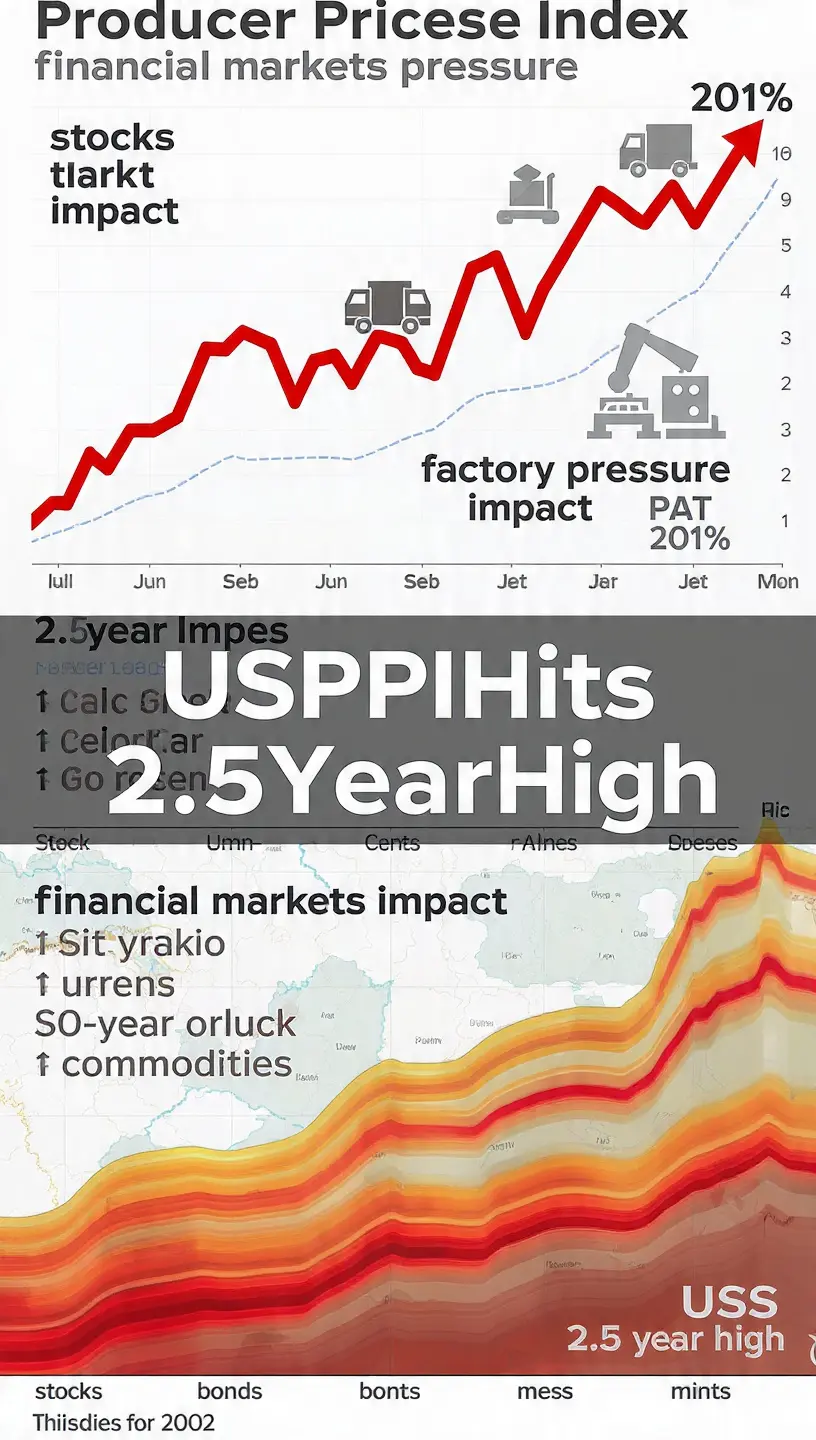
In May, the Producer Price Index (PPI) rose 1.1% month-over-month, well above the expected 0.7%; wholesale prices increased by 6.5% year-over-year, reaching a new high since November 2022. From the overall data, inflation remains concerning, but some detailed indicators are less pessimistic.
Nearly 80% of the PPI increase was driven by a 2.8% surge in final demand goods prices, with energy products being the main driver: wholesale gasoline prices soared 23.4% in a single month, and overall energy costs rose 10.7% month-over-month. Tensions in Iran directly pushed energy prices higher, which also influenced the previously released CPI data.
Excluding food and energy, core PPI rose 0.4% month-over-month, below the market expectation of 0.5%. This indicator is particularly important for silver’s price movement, as it helps determine whether inflationary pressures are confined to energy sectors or have spread more broadly. Currently, inflation pressures are not widespread. Although headline inflation remains high, the core price increases are mainly concentrated in energy commodities like crude oil and gasoline, not due to excessive overall market demand.
CPI data confirms: the Federal Reserve is unlikely to cut interest rates in the short term
Wednesday’s CPI data showed U.S. inflation rose to 4.2% year-over-year, the highest in nearly three years; core prices increased only 0.2% month-over-month, with core inflation at 2.9% year-over-year. In this context, the Fed is unlikely to initiate rate cuts. Market consensus expects the Federal Open Market Committee (FOMC) to keep rates unchanged at next week’s meeting. Surveys indicate most economists believe the Fed will not cut rates for the rest of this year.
Market expectations for rate cuts have been completely dismissed, with some traders even betting on a possible rate hike by the Fed within the year. Generally, a high-inflation environment with sustained high interest rates is unfavorable for silver. Since silver does not generate interest income, rising U.S. Treasury yields make interest-bearing assets far more attractive than silver.
This week, silver prices had already declined ahead of the data releases. When bearish data were released as expected, prices stopped falling, indicating that rate-related bearish expectations had already been priced in by the market.
ECB rate hike, silver still holding its ground
The European Central Bank raised interest rates by 25 basis points on Thursday, with the deposit rate increasing to 2.25%, marking the first rate hike since 2023. Policymakers are concerned that inflation driven by energy prices could gradually spread across all goods and services. The market also anticipates further tightening of monetary policy by the ECB later this year.
The simultaneous tightening by two major central banks would, in theory, put downward pressure on silver: this would push up global bond yields and strengthen major currencies. As silver is a non-interest-bearing asset, it should be under pressure. However, the reality is that despite the hawkish stance of the Fed, the ECB’s rate hike, and the surge in PPI data, silver still rose on the same day. This is because the market had already priced in these bearish factors earlier in the week.
Technical analysis
On Thursday, silver prices oscillated slightly lower, showing signs of forming a bottom in the short term. (Spot silver daily chart Source: YiHuiTong)
Based on combined long- and short-term trend indicators, as well as the 50-day and 200-day moving averages, both the medium- and short-term trends are in a downtrend channel. The current trend direction is quite clear; we focus on support levels and whether the decline will continue.
Resistance levels
The first resistance is the 200-day moving average at $68.08. If prices successfully break through this level, short covering could push silver higher, with the next resistance zone formed by the 20-day moving average at $73.04 and the 50-day moving average at $75.54.
Support levels
The immediate short-term target for the decline is the recent low of $61.48, followed by the March 23 low of $60.96. The market’s key level previously targeted was the 50% retracement of the all-time high of $121.49, around $60.74, which aligns closely with $60.96.
Another critical support is $59.34, which previously acted as a breakout point on December 5 last year, triggering a significant rally from December to January. If this level is broken, silver could open up further downside, with the next strong support at the October 28 low of $45.55.
During rapid declines, it is not advisable to blindly bottom fish; instead, small positions can be taken around key previous levels like $61.00. In a long-term downtrend, the most reliable bottom signals are usually iconic reversal candlestick patterns.
Key points to watch in the future
This week, the market preemptively sold off silver to prepare for CPI and PPI data. Both sets of data show high inflation overall, but mainly driven by energy price increases caused by tensions in Iran. Core inflation data did not meet market expectations. The Fed has confirmed no rate cuts are planned, and the ECB has already raised rates. These bearish factors were largely priced in before the data was released.
After the bearish data was fully digested, silver reversed and closed higher, indicating that the selling pressure related to rate expectations has been exhausted.
From a technical perspective, MACD’s DIFF line remains below the DEA line, with the green histogram not yet significantly shrinking, suggesting downward momentum is still present; RSI is approaching oversold levels near 30, increasing the likelihood of a short-term technical rebound, but no clear bottom divergence or reversal signals have appeared.
Overall judgment: On the rebound path, $68.08 (the 200-day moving average) is the first critical test. If only short covering occurs, the rally will likely stall around the resistance zone of $73.04–$75.54; only substantial buying can sustain a further rise.
Downside, key levels to watch are $61.48 and $60.96. If these are broken, especially if $59.34 gives way, the decline will accelerate sharply, with the next strong support at $45.55.
This round of decline has already priced in bearish factors, and the price stabilized after the data was released, marking a typical bottoming process. Whether a definitive bottom can be established depends on next week’s FOMC meeting results and whether the Fed signals a more hawkish stance than market expectations.
repost-content-media
  • Reward
  • Comment
  • Repost
  • Share
#Bitmine再次买入2.5万枚ETH Who can support Ethereum's biggest last buyer for how long?
As the crypto market continues to decline, BTC and ETH once dropped near $60k and $1,500, with Strategy and Bitmine floating losses exceeding $60k each. At the end of May, Strategy sold 32 BTC, breaking the long-standing narrative of not selling coins, and the financing-to-buy mode entered a stress test phase. Against this backdrop, Bitmine announced a high-profile issuance of Series A perpetual preferred shares with a 9.5% annualized yield, raising approximately $274 million. As of press time, Bitmine increased
ShanDingMediaRyak
#Bitmine再次买入2.5万枚ETH Who can support Ethereum's biggest last buyer for how long?
As the crypto market continues to decline, BTC and ETH once dropped near $60k and $1,500, with Strategy and Bitmine floating losses exceeding $60k each. At the end of May, Strategy sold 32 BTC, breaking the long-standing narrative of not selling coins, and the financing-to-buy mode entered a stress test phase. Against this backdrop, Bitmine announced a high-profile issuance of Series A perpetual preferred shares with a 9.5% annualized yield, raising approximately $274 million. As of press time, Bitmine increased its ETH holdings by 127k last week, with a total purchase of 125k over the past three days. Currently, its total holdings are about 5.66 million ETH, less than 400k ETH short of the 5% target.
As the most persistent and aggressive marginal buyer of ETH in the market, Bitmine continues to add positions despite floating losses exceeding hundreds of millions of dollars. Now even it needs to rely on preferred shares to fund its flywheel—if the financing market experiences anomalies or the coin-hoarding machine is forced to slow down, who else can support Ethereum’s price? Buying enough to reach 5% by the end of the year, and then what?
Bitmine began accumulating ETH in the second half of last year, planning to complete the "5% alchemy" within five years. Data shows that between July 2025 and June 2026, Bitmine raised $19.2 billion through 50 equity issuances, all used to buy ETH. As of press time, Bitmine’s ETH holdings have reached about 5.66 million, less than 400k short of the 5% target, with actual progress over 90% in one year. About 127k ETH have been staked, accounting for over 85% of total holdings, with an expected annualized staking yield of approximately $125k to $296 million. This staking system is supported by the company's self-built MAVAN validator node network and is considered the key structural difference that sets Bitmine apart from Strategy.
However, the cost of aggressive coin hoarding is also clear: ETH is currently around $1,650, while the company's cost basis is about $3,500, and its ETH treasury value is only about $9.3 billion. The company's overall loss has reached $10.5 billion, with a drawdown of over 50%. The stock price has fallen nearly 90% from its peak. According to 10x Research, Bitmine’s investors face two layers of losses: the first is floating loss from ETH’s decline, and the second is that when purchasing BMNR shares, they paid a premium of about $4.6 billion over the underlying ETH net assets. Combined, these layers amplify the actual losses for shareholders. Facing huge floating losses, Tom Lee characterized this decline as superficial. He believes that the current financial system has many fake transactions, while Ethereum has never experienced fraudulent trades; it has lower operating costs, and on-chain transaction volume and daily active addresses have hit record highs. The price correction is mainly driven by macro factors and deleveraging, with no fundamental damage.
A longer-term bet is that AI agent systems will rely on blockchain operation, and ETH supply continues to shrink, making Ethereum the most direct beneficiary. Tom Lee recently revealed that Bitmine expects to reach the 5% goal by the end of 2026, at which point it may not need to continue increasing holdings. He also mentioned that the company might be officially included in the Russell 1000 index by the end of June, which, based on current market cap, could bring at least $2.15 billion in passive capital inflows for BMNR.
How will the 3% staking yield support a 9.5% dividend? On June 5, Bitmine completed the pricing of Series A perpetual preferred shares: 3.5 million shares at $80 each, with a face value of $100, raising about $274 million net. The dividend rate is 9.5%, paid weekly in cash, and even if the board does not declare dividends, they will continue to accrue. Based on face value, the annual dividend obligation is about $33.25 million. Bitmine has early redemption rights, allowing redemption at 110% of face value within 18 months, at 105% from 18 months to 3 years, and at par after 3 years, with additional payment of accrued unpaid dividends upon redemption. At first glance, this calculation seems straightforward. By the end of May, Bitmine had staked 4.7 million ETH, with an expected annualized staking yield of about $400k to $296 million, which is 8 to 9 times the annual dividend obligation. However, this forecast of over $200 million is based on the assumption that the 4.7 million ETH are fully staked recently. According to the prospectus, in the six months ending February 28, 2026, the company's staking income was $11.18 million, with an annualized rate of about $22 million.
It’s worth noting that staking yields are denominated in ETH, not USD. If ETH continues to decline, the company's staking income will shrink accordingly. This highlights a fundamental difference between Bitmine and Strategy: BTC has no native yield, and Strategy’s STRC pays dividends, relying solely on BTC appreciation or selling coins. ETH’s staking mechanism offers Tom Lee a different route: if the price remains stable, staking yields still generate income without touching the underlying holdings. This is Bitmine’s real advantage in the current bear market.
But this path may not go far. Crypto KOL chenmo pointed out that early issuance volume was low, so covering dividends with staking yields isn’t a big problem initially. But as the preferred stock issuance scale continues to grow, a 3-4% staking yield will inevitably be insufficient to cover the 9.5% annual interest. At that point, ETH appreciation will be necessary to sustain this logic. Analyst Yuyue also said that STRC is under pressure in the current market, and issuing preferred shares now—even if temporarily positive—could be seen as a worse signal by the market. According to CointelegraphMT research, there are two other details in the prospectus worth noting. The auditor was changed to KPMG on April 27, and at the same time, significant internal control deficiencies were disclosed, with the audit not yet completed, and financial data may be restated. Additionally, the board has full discretion over dividend payments, and the only enforcement mechanism for preferred shareholders is the nomination of two directors if dividends are not received for 18 consecutive months.
If Bitmine stops buying after reaching 5%, where will ETH’s price go?
On-chain analyst Yujin said that, based on current buying pace, the target could be reached in about a month. But after that, will they continue to buy? If they stop, the last firm bulls in this market will disappear, and what will support ETH then?
Bitmine has been the most persistent and aggressive marginal buyer of ETH over the past year. Other potential buyers are scattered and weak. Last week, ETH spot ETF saw a net outflow of $173 million, and after 17 days of continuous outflows, it briefly turned positive on June 8, but the scale was much smaller than previous outflows. Meanwhile, Goldman Sachs plans to cut ETH ETF holdings by about 70% in Q1 2026, and Harvard’s endowment completely liquidated its $87 million ETH position after just one quarter. Additionally, institutional incremental demand from stablecoin legislation and RWA tokenization is a slow variable, unlikely to fill the gap left by Bitmine in the short term. Without a broader crypto market reversal, it’s foreseeable that the treasury flywheel will falter, leading to a cycle: ETH prices keep falling, BMNR stock faces pressure, relative net asset premiums narrow, issuance financing windows shrink, buying slows down, and ETH loses marginal support further. This cycle might even occur without Bitmine actively selling a single ETH—loss of buying power alone is enough.
In a pessimistic scenario, if the financing market’s acceptance of preferred shares declines, BMNR hits new lows, and buying slows significantly, ETH could drop to the next consensus key level (around $1,000). Andrei Grachev, co-founder of DWF Labs, believes that Strategy and Bitmine have a good chance to trigger the biggest market crash in crypto history. This is a tail risk assessment, not a baseline expectation. Under the baseline scenario, Bitmine maintains buying, staking yields provide buffers, preferred shares are smoothly absorbed, and ETH consolidates in the $1,500–$2,000 range. Despite heavy losses for Bitmine and short-term ETH difficulty in recovery, 10x Research notes that when stocks fall deep enough, the underlying assets become almost irrelevant; investors are essentially buying pure options—betting on ETH’s future rebound—yet this is not fully priced in by the market.
In an optimistic scenario, inclusion in the Russell 1000 brings passive capital, and stablecoin legislation like the GENIUS Act clears institutional entry barriers. Standard Chartered maintains a target price of $4,000 for ETH by the end of 2026, believing that recent price declines do not reflect the ongoing improvement in Ethereum’s fundamentals, and compares the current situation to the post-bubble phase of Amazon in 2001—prices temporarily disconnected from network value, but infrastructure development never stopped. The bank expects ETH/BTC to rebound to about 0.08 by the end of this decade, with a target of $40k by 2030.
Ultimately, whether this financing can sustain Bitmine’s flywheel depends on ETH’s price. But, Bitmine’s coin-buying itself is also an important support for the price. So the core question is: after Bitmine reaches the 5% goal and gradually exits, who will take over? Traditional institutions are retreating, ETF flows are volatile, and real incremental demand from stablecoins and RWA has yet to materialize at scale. Ethereum may not lack narratives, but when will the liquidity turning point occur? Where will the new marginal buyers come from? These are the key issues that will determine ETH’s future price trajectory.
repost-content-media
  • Reward
  • Comment
  • Repost
  • Share
#我的Gate交易时刻 6.12 World Cup: Group B First Match: Canada vs. Bosnia and Herzegovina, can Canada continue yesterday's success against Mexico and secure a home victory?
The Canada vs. Bosnia and Herzegovina match will be held at Toronto's stadium in Canada. The weather forecast for Toronto on match day is sunny to partly cloudy, which is ideal for the game.
The match will be officiated by a renowned Argentine referee, who has extensive experience and a deep understanding of high-intensity South American-style confrontations.
On paper, Canada's strength is slightly higher, with 197 million compare
ShanDingMediaRyak
#我的Gate交易时刻 6.12 World Cup: Group B First Match: Canada vs. Bosnia and Herzegovina, can Canada continue yesterday's success against Mexico and secure a home victory?
The Canada vs. Bosnia and Herzegovina match will be held at Toronto's stadium in Canada. The weather forecast for Toronto on match day is sunny to partly cloudy, which is ideal for the game.
The match will be officiated by a renowned Argentine referee, who has extensive experience and a deep understanding of high-intensity South American-style confrontations.
On paper, Canada's strength is slightly higher, with 197 million compared to Bosnia and Herzegovina's 150 million. Among the 26 players announced in Canada's World Cup squad, 13 are from top five leagues, and the rest are from other top-tier leagues worldwide. Several key players are doubtful for this match; team captain Alfonso is likely to miss the first game due to injury, and the main center-back's injury recovery has not met expectations, confirming absence from the first match. Midfielder Marcelo has confirmed to miss the entire World Cup due to injury, leading to significant adjustments in the team's defense and midfield.
Bosnia and Herzegovina's 26-man squad includes 7 players from top five leagues, with many young players selected this year. The team is generally healthy, but two core forwards are dealing with injuries, casting doubt on their availability for the first match.
Canada's main tactic is high pressing, excelling at creating turnovers in the opponent's backfield through intense team pressing, and quickly advancing along the flanks to switch between attack and defense. However, the team lacks effective organization in set-piece situations, and due to injuries, their aerial defense has become a concern.
Bosnia and Herzegovina's tactical approach is very pragmatic, likely adopting a low defensive formation such as 4-2-3-1 or 5-4-1. The team will give up midfield control, with all double midfielders dropping back to form a dense defensive line, thoroughly blocking central penetration.
Tactically, Bosnia and Herzegovina seem to target Canada. The team is tied for the world's tallest average height, which can be advantageous in aerial battles. In recent friendlies, Canada performed slightly better, while Bosnia struggled somewhat. As the host nation, Canada has the home advantage in this match, but neither side has a clear edge in overall strength, so this game is likely to be a low-scoring, closely contested battle.
Match outcome prediction
Favoring Canada.
repost-content-media
  • Reward
  • Comment
  • Repost
  • Share
#MyGateTradeStory
#$XAUT $XAUT ‌#Tether黄金触底反弹3% XAUT/USDT Market Review: Is the safe-haven selling pressure exhausted, or is this just a dead cat bounce?
As the broader crypto market stabilizes, XAUT/USDT staged a 3.05% rebound to $4,207.0 on June 12, after printing a local low near $4,020.0 earlier this week. The 24h turnover reached $44.34M, with volume at 10.68K XAUT, signaling renewed short-term interest in tokenized gold.
Technically, the downtrend remains intact. Price is still trading below all major moving averages: MA5 at $4,192.6, MA10 at $4,275.4, and MA30 at $4,439.1. The MACD r
XAUT0.19%
BTC0.03%
discovery
#MyGateTradeStory
#$XAUT $XAUT ‌#Tether黄金触底反弹3% XAUT/USDT Market Review: Is the safe-haven selling pressure exhausted, or is this just a dead cat bounce?
As the broader crypto market stabilizes, XAUT/USDT staged a 3.05% rebound to $4,207.0 on June 12, after printing a local low near $4,020.0 earlier this week. The 24h turnover reached $44.34M, with volume at 10.68K XAUT, signaling renewed short-term interest in tokenized gold.
Technically, the downtrend remains intact. Price is still trading below all major moving averages: MA5 at $4,192.6, MA10 at $4,275.4, and MA30 at $4,439.1. The MACD remains deeply negative at -21.6, with DIF at -103.5 and DEA at -81.8, indicating bearish momentum has not fully reversed. Since mid-April, XAUT has corrected over 13.5% from the $4,865.5 peak, tracking the decline in spot gold as U.S. inflation data exceeded expectations.
This week, the U.S. May PPI rose 6.5% year-over-year, the highest since November 2022, while the European Central Bank raised its benchmark rate by 25 basis points. As real yields rise, non-yielding assets like gold face structural headwinds. Tokenized gold is no exception: despite being a crypto-native safe haven, XAUT underperformed BTC during the recent risk-off move.
However, Thursday’s price action is notable. After PPI data surpassed expectations and inflation fears spiked, XAUT did not make a new low. Instead, it rebounded from $4,050.2 to close above MA5. When bearish macro data fails to push prices lower, it often signals that downside momentum is exhausted.
Currently, XAUT is testing the $4,228.5 level, the 24h high. A decisive break above MA10 at $4,275.4 is required to confirm a trend reversal. If rejected, the $4,020 support may be retested.
As central banks remain hawkish and energy-driven inflation persists, can tokenized gold reclaim its safe-haven narrative in H2 2026, and who will step in as the marginal buyer?
#MyGateTradingMoment
repost-content-media
  • Reward
  • Comment
  • Repost
  • Share
#MyGateTradeStory
#$LAB $LAB ‌#LAB暴涨后回调63% LAB/USDT Market Review: After a parabolic 68x rally, is the distribution phase over, or is more pain ahead?
LAB/USDT is attempting stabilization at $10.081, up 30.91% in 24h, after a violent correction from the $27.927 all-time high printed on June 7. The rebound comes with 24h volume of 1.36M LAB and turnover of $12.33M, indicating that volatility remains elevated despite the drawdown.
From the daily chart, LAB delivered an extreme move. Price rallied from the $0.406 base in mid-April to $27.927 in under 60 days, a 6,778% gain. The subsequent corre
LAB11.72%
discovery
#MyGateTradeStory
#$LAB $LAB ‌#LAB暴涨后回调63% LAB/USDT Market Review: After a parabolic 68x rally, is the distribution phase over, or is more pain ahead?
LAB/USDT is attempting stabilization at $10.081, up 30.91% in 24h, after a violent correction from the $27.927 all-time high printed on June 7. The rebound comes with 24h volume of 1.36M LAB and turnover of $12.33M, indicating that volatility remains elevated despite the drawdown.
From the daily chart, LAB delivered an extreme move. Price rallied from the $0.406 base in mid-April to $27.927 in under 60 days, a 6,778% gain. The subsequent correction was equally severe. As of June 12, LAB has retraced 63.9% from the peak, erasing nearly $1.8B in fully diluted market cap.
Technically, the structure is mixed. Price is currently caught between key moving averages: MA5 at $9.476 is providing short-term support, while MA10 at $11.199 now acts as immediate resistance. The longer-term MA30 at $7.906 remains well below price, showing the primary uptrend is not yet broken. However, MACD at -0.525 has crossed below the signal line, with DIF at 1.322 and DEA at 1.848, suggesting bearish momentum is still dominant despite today’s green candle.
The 24h range between $7.540 and $10.444 shows buyers defended the $7.5 zone, which aligns with the late-May consolidation area. This level also coincides with MA30. If MA30 fails, the next major structural support is near $5.799, the pre-breakout high from May 20. On the upside, reclaiming $11.199, the MA10, is the first step for bulls to regain control. A close above $14.097 would signal the correction may be complete.
As a DeFi sector token ranked No.10 in 24h heat, LAB’s volatility is amplified by leverage. LABUSDT Perp is up 31.68% at $10.12363, showing futures are leading spot. This divergence often occurs during high-volatility phases when traders use derivatives to express directional views with leverage.
The data indicates that early profit-taking was aggressive after the parabolic top. Volume bars during the decline from $27.9 to $10.0 exceeded the volume during the entire markup phase from $0.4 to $5.0. This is a classic sign of distribution. Yet, the 30% daily rebound on June 12 suggests short covering and dip buying are active.
With AI and DeFi narratives rotating and risk appetite returning to altcoins, LAB’s high-beta nature makes it a liquidity magnet. But after a 6,700% move, valuations and unlock schedules become critical.
Is the current $10.0 level a healthy retest of the breakout zone before continuation, or has the speculative mania peaked with the $27.9 blow-off top?
#MyGateTradingMoment
#我的Gate交易时刻
repost-content-media
  • Reward
  • Comment
  • Repost
  • Share
#MyGateTradeStory
#SPCX $SPCX #SpaceX概念币强势反弹 SPCX/USDT Market Review: Pre-IPO hype or real exposure to SpaceX valuation?
SPCX/USDT is back in momentum, trading at $170.15 with a 12.04% daily surge on June 12. After correcting from the $189.90 high to $150.00, buyers stepped in and pushed price back above all short-term moving averages. With 24h turnover at $6.10M and volume at 37.54K SPCX, the “SpaceX token” narrative is active again. But what exactly is SPCX, and can the team deliver on the implied promise?
1. Teknik Görünüm: Düzeltme Bitti mi?
The daily chart shows a full cycle in 50 days
SPCX0.48%
DOGE0.94%
discovery
#MyGateTradeStory
#SPCX $SPCX #SpaceX概念币强势反弹 SPCX/USDT Market Review: Pre-IPO hype or real exposure to SpaceX valuation?
SPCX/USDT is back in momentum, trading at $170.15 with a 12.04% daily surge on June 12. After correcting from the $189.90 high to $150.00, buyers stepped in and pushed price back above all short-term moving averages. With 24h turnover at $6.10M and volume at 37.54K SPCX, the “SpaceX token” narrative is active again. But what exactly is SPCX, and can the team deliver on the implied promise?
1. Teknik Görünüm: Düzeltme Bitti mi?
The daily chart shows a full cycle in 50 days. SPCX launched near $37.60 in late April, rallied 405% to $189.90 by late May, then corrected 21% to $150.00 in early June. The current bounce is technically significant.
Positive signals:
1. MA Breakout: Price reclaimed MA5 $155.90 and MA10 $156.87 in one candle. MA30 at $165.03 is now the last resistance before a retest of the $189.90 ATH. 2. Volume: The 24h low at $150.00 was bought aggressively. That level aligns with the May 20 breakout zone, meaning old resistance became new support. 3. Perp Premium: SPCXUSDT Perp trades at $176.78, +8.94% and 3.9% above spot. When futures lead spot with a premium, it signals leveraged longs are willing to pay funding.
Negative signal: MACD is still negative at -2.37, with DIF 0.90 < DEA 3.28. Momentum has not flipped bullish yet. A daily close above MA30 $165.03 is required to confirm trend continuation.
Key levels: Support at $159.44 and $150.00. Resistance at $171.98, the 24h high, then $189.90 ATH. The Avg. Price marker at $121.56 shows most holders are still in profit, reducing panic-sell risk.
2. Proje & Ekip: “SpaceX” Adı Ne Kadar Gerçek?
This is the critical part. SPCX is listed under “Pre-IPO” on Gate and named “SpaceX”. To be clear: This token is not issued by SpaceX, Elon Musk, or any official affiliate. It is a “synthetic asset” or “pre-IPO concept token” created by a third-party team.
Logical positives:
1. Narrative Strength: In 2026, SpaceX is in global headlines with Starlink IPO and Mars missions. Retail investors cannot buy SpaceX stock because the company is not public. SPCX tokenizes this demand. Narratively, it’s the strongest “Musk beta” token after DOGE. 2. Market Structure: Listing on a major exchange like Gate and maintaining $6M daily volume indicates the team has market maker support. “Rug” risk is lower compared to sub-$50M micro-cap tokens. 3. Liquidity: Consolidating in the $150-$170 range for 2 weeks suggests the team is managing price in a controlled way. This is not a one-candle pump-and-dump; there is evidence of staged distribution/accumulation.
Logical risks:
1. Legal Risk: Using the “SpaceX” name is a gray area. The SEC filed lawsuits against similar “Pre-IPO” tokens in 2024-2025. If regulatory pressure comes, exchange delisting is a risk. That could take price from $189 to $37 in a single candle. 2. No Asset Backing: SPCX is not backed by real SpaceX shares. It is entirely speculative. Its price is determined by supply-demand on Gate, not by SpaceX’s valuation. Even if Starlink IPOs, there is no 1:1 impact on SPCX. 3. Team Transparency: There is no official website, whitepaper, or audit report. Who is the “team”? Is the token contract audited? Until these questions are answered, the $170 level is based purely on belief. 3. Gelecek Senaryoları: 2026 H2’de Ne Olur? 1. Bull Scenario: If the SpaceX or Starlink IPO timeline becomes clear, the “pre-IPO” narrative explodes. If SPCX holds above MA30 $165 and breaks the $189.90 ATH, FOMO could test the $250-$300 zone. This is entirely dependent on news flow. The team must avoid legal issues in the meantime. 2. Bear Scenario: If a “risk warning” comes from the SEC or Gate, liquidity will exit. If $150 support breaks, a 30-35% drop to the $121.56 Avg. Price and $113.75 gap area is technically easy. A trademark lawsuit is the biggest black swan. 3. Base Scenario: Volatile sideways between $150-$190. It pumps 10-20% on real SpaceX news, then faces profit taking. The project continues selling only the “name” without delivering anything from the team side. Sonuç: Ekibe Dair Mantıklı Görüş
The SPCX team is not building a product. They are selling an “attention market” product. And they are doing it well. Taking it from $37 to $189 and maintaining $6M liquidity requires serious market making. This shows the team is not amateur.
However, their future depends entirely on external factors: an Elon Musk tweet, an SEC decision, a Gate announcement. The only thing in their control is “trust”. If they do regular AMAs with the community, provide proof-of-reserves, and clearly state “we are not SpaceX, we index the price”, the project can survive the 2026 bull market.
Otherwise, SPCX will be remembered as a “narrative coin” that went parabolic and died, just like the “Amazon Token” and “Tesla Token” craze of 2021.
The chart shows traders still believe. The question is: will the team give them a reason beyond the ticker? Or is “SPCX” just a well-marketed meme with an expiration date tied to regulators?
#MyGateTradingMoment
#我的Gate交易时刻
repost-content-media
  • Reward
  • Comment
  • Repost
  • Share
#MarketStructure
#btc
The New Power Behind Bitcoin: Why Smart Money Is Quietly Redefining the Market
The cryptocurrency market has always been a stage for dramatic stories. Fortunes have been built in months, erased in days, and rebuilt again through resilience, conviction, and timing. Yet beneath the familiar volatility that continues to capture headlines, a deeper transformation is taking place—one that many casual observers still underestimate.
Bitcoin is no longer moving through the market it once knew.
For years, price movements were largely dictated by retail enthusiasm. Social medi
BTC0.03%
discovery
#MarketStructure
#btc
The New Power Behind Bitcoin: Why Smart Money Is Quietly Redefining the Market
The cryptocurrency market has always been a stage for dramatic stories. Fortunes have been built in months, erased in days, and rebuilt again through resilience, conviction, and timing. Yet beneath the familiar volatility that continues to capture headlines, a deeper transformation is taking place—one that many casual observers still underestimate.
Bitcoin is no longer moving through the market it once knew.
For years, price movements were largely dictated by retail enthusiasm. Social media trends, speculative excitement, and emotional buying often fueled explosive rallies. Today, however, the landscape has evolved. The market is increasingly influenced by a more disciplined participant: institutional capital.
This shift represents far more than a simple change in investor demographics. It marks the beginning of a new chapter in Bitcoin’s history, where liquidity, capital allocation, and strategic positioning often matter more than hype.
The difference becomes apparent during periods of uncertainty. Retail investors frequently react to short-term price swings, allowing fear and excitement to dictate decisions. Institutional investors operate differently. They focus on risk-adjusted returns, long-term market structure, and capital preservation. Their decisions are rarely emotional and almost never impulsive.
As a result, Bitcoin's market behavior has become increasingly sophisticated.
Large investors are not chasing every headline. They are evaluating macroeconomic conditions, monetary policy, liquidity trends, and long-term adoption metrics. Their involvement has introduced a level of maturity that was largely absent during earlier market cycles.
This evolution is creating a fascinating dynamic.
On one side stands the traditional retail trader searching for rapid gains. On the other stands a growing class of professional investors viewing Bitcoin as a strategic asset within a broader portfolio framework. The interaction between these two groups is shaping every major move in the market.
What makes this moment particularly important is that institutional participation has changed the way successful investors interpret market signals.
In previous cycles, momentum alone could sustain significant rallies. Today, experienced traders pay close attention to capital flows. They understand that sustainable trends require sustained demand. Price action may attract attention, but liquidity often determines direction.
This distinction separates professional investors from the crowd.
When volatility increases, inexperienced participants often focus exclusively on immediate price fluctuations. Professionals ask a different question: Is the underlying demand strengthening or weakening?
The answer frequently reveals opportunities invisible to the broader market.
Periods of consolidation, uncertainty, or temporary weakness can become strategic accumulation zones when long-term adoption remains intact. History has repeatedly shown that some of the strongest market advances begin when sentiment is fragile and confidence is scarce.
This is why the smartest investors rarely chase excitement. They position themselves before excitement arrives.
Bitcoin's long-term story continues to revolve around scarcity, global accessibility, and growing acceptance within the financial system. While short-term narratives constantly change, these fundamental characteristics remain remarkably consistent.
The market will continue to experience corrections. Volatility will remain a defining feature. Headlines will alternate between optimism and pessimism. Yet the larger transformation occurring beneath the surface deserves far more attention than daily price movements.
Bitcoin is gradually transitioning from a speculative asset into a globally recognized financial instrument.
That transition will not happen overnight.
It will be uneven, occasionally frustrating, and often misunderstood.
But for investors capable of looking beyond short-term noise, the real story is becoming increasingly clear. The future of Bitcoin may not be defined by the loudest voices in the market, but by the quiet and deliberate movement of capital that continues to reshape the entire ecosystem.
And in many ways, that story is only just beginning.
#MyGateTradeStory
#MyGateTradingMoment
$BTC
repost-content-media
  • Reward
  • Comment
  • Repost
  • Share
#EthereumUtility
#BeyondSpeculation
Ethereum’s Next Test: Can Utility Outshine Speculation?
For most of cryptocurrency’s history, attention has gravitated toward price. Charts dominated conversations. Volatility drove headlines. Traders measured success in percentages rather than progress.
Today, one of the most intensely discussed topics across the digital asset industry revolves around a different question:
What happens when utility becomes more important than speculation?
No major blockchain sits closer to the center of that conversation than Ethereum.
While many digital assets continue c
ETH-0.74%
discovery
#EthereumUtility
#BeyondSpeculation
Ethereum’s Next Test: Can Utility Outshine Speculation?
For most of cryptocurrency’s history, attention has gravitated toward price. Charts dominated conversations. Volatility drove headlines. Traders measured success in percentages rather than progress.
Today, one of the most intensely discussed topics across the digital asset industry revolves around a different question:
What happens when utility becomes more important than speculation?
No major blockchain sits closer to the center of that conversation than Ethereum.
While many digital assets continue competing for attention through narratives and short-term excitement, Ethereum is increasingly being evaluated through a more demanding lens. Investors, developers, and institutions are asking whether the network can continue expanding its real-world relevance while maintaining its position as the leading smart-contract ecosystem.
This debate has become one of the defining stories of the current market environment.
Unlike previous cycles, where speculative enthusiasm alone often pushed valuations higher, today’s investors are paying closer attention to actual network activity. Transaction volumes, developer engagement, infrastructure growth, and ecosystem expansion are receiving far greater scrutiny than before.
The reason is simple.
The cryptocurrency market is maturing.
As the industry evolves, capital is becoming more selective. Investors want evidence of sustainability. They want to see networks solving real problems, attracting users, and creating economic value beyond price appreciation.
Ethereum remains one of the strongest candidates to meet those expectations.
Its ecosystem continues to support a vast range of applications, including decentralized finance, tokenized assets, blockchain-based gaming, and digital ownership systems. More importantly, it has built an extensive developer community that continues creating new products despite changing market conditions.
This foundation gives Ethereum a unique advantage.
Technology alone rarely determines long-term success.
Communities do.
A network supported by talented builders, active users, and continuous innovation possesses a resilience that cannot easily be replicated. Market cycles come and go, but ecosystems built around genuine utility tend to survive long after speculative trends disappear.
From an investor's perspective, this distinction is critical.
Many market participants focus on short-term catalysts while overlooking the factors that create durable value. Experienced investors often take the opposite approach. They examine whether a network continues attracting talent, capital, and development activity even during periods of uncertainty.
Ethereum has repeatedly demonstrated that capability.
Yet challenges remain.
Competition across the blockchain industry has never been more intense. Emerging networks continue attempting to attract users through lower fees, faster transactions, and alternative technical approaches. This competitive pressure forces Ethereum to continue evolving rather than relying solely on its historical leadership.
In many ways, this challenge may ultimately strengthen the ecosystem.
Markets reward adaptation.
Industries reward innovation.
Networks that remain complacent rarely retain leadership positions for long.
Professional traders are watching this dynamic closely. Many understand that future market leaders will not necessarily be determined by marketing campaigns or temporary excitement. Instead, leadership will likely belong to ecosystems capable of generating meaningful economic activity over extended periods.
This is why Ethereum remains one of the most discussed assets in the industry today.
The debate surrounding its future extends far beyond price targets.
It touches on a much larger question about the direction of the entire cryptocurrency sector.
Can blockchain technology create lasting value beyond speculation?
Can decentralized infrastructure support meaningful economic activity at global scale?
Can utility become the primary driver of growth?
Ethereum sits at the center of all three questions.
The answers will not emerge overnight.
They will develop through years of adoption, experimentation, competition, and innovation.
But one reality is already becoming clear.
The next chapter of the cryptocurrency industry will be shaped less by hype and more by usefulness.
And few assets are more closely tied to that transition than Ethereum.
repost-content-media
  • Reward
  • Comment
  • Repost
  • Share
#DigitalAssets #tokenization
The Great Tokenization Race: Why Real-World Assets Have Become Crypto’s Most Important Story
Every few years, the cryptocurrency industry discovers a narrative powerful enough to reshape the entire conversation.
In earlier eras, investors focused on digital payments, decentralized finance, and blockchain gaming. Each wave attracted attention, investment, and innovation. Some delivered lasting value. Others faded as quickly as they arrived.
Today, one topic stands above almost every other discussion among investors, institutions, developers, and market analysts.
To
discovery
#DigitalAssets #tokenization
The Great Tokenization Race: Why Real-World Assets Have Become Crypto’s Most Important Story
Every few years, the cryptocurrency industry discovers a narrative powerful enough to reshape the entire conversation.
In earlier eras, investors focused on digital payments, decentralized finance, and blockchain gaming. Each wave attracted attention, investment, and innovation. Some delivered lasting value. Others faded as quickly as they arrived.
Today, one topic stands above almost every other discussion among investors, institutions, developers, and market analysts.
Tokenization.
Not as a buzzword.
Not as a marketing slogan.
But as a potentially transformative shift in how ownership itself is recorded, transferred, and managed.
The concept is deceptively simple. Real-world assets such as real estate, bonds, commodities, private equity, and other financial instruments can be represented digitally on blockchain networks. Ownership becomes easier to divide, transfer, track, and verify.
The implications are enormous.
Traditional financial systems often operate through layers of intermediaries, paperwork, settlement delays, and geographic limitations. Tokenization offers a vision of financial markets that move faster, operate more efficiently, and provide broader access to investment opportunities.
For years, the idea remained largely theoretical.
That is no longer the case.
Across the financial sector, serious efforts are underway to explore how tokenized assets could improve market infrastructure. Large institutions are studying ways to digitize ownership records, streamline settlement processes, and unlock liquidity in markets that have historically been difficult to access.
This shift explains why tokenization has become one of the most closely watched developments in the cryptocurrency industry.
Unlike many previous narratives, its potential audience extends far beyond crypto enthusiasts.
It reaches banks.
Asset managers.
Investment funds.
Corporate treasuries.
Governments.
And eventually, ordinary investors.
Professional investors are particularly interested because tokenization addresses a problem that has existed for decades: inefficiency.
Many traditional assets remain difficult to trade, expensive to manage, or inaccessible to smaller investors. Digital representation has the potential to reduce friction while increasing transparency and flexibility.
If successful, the impact could be measured not in billions, but in trillions of dollars.
Yet enthusiasm alone does not guarantee success.
The road ahead remains challenging.
Regulatory frameworks continue evolving. Technical standards must mature. Security requirements remain demanding. Market participants must gain confidence that tokenized systems can operate reliably under real-world conditions.
These are significant obstacles.
They are also the kinds of obstacles that accompany every major financial innovation.
From a trader’s perspective, tokenization represents more than a technological trend.
It represents a long-term investment thesis.
The most successful investors often identify structural transformations before they become obvious to the broader market. They understand that the largest opportunities are rarely created by short-term excitement. Instead, they emerge when new infrastructure begins changing how industries operate.
Tokenization appears increasingly capable of becoming such a transformation.
That does not mean every project connected to the theme will succeed.
History suggests the opposite.
Periods of innovation inevitably attract both genuine builders and opportunists. Careful analysis remains essential. Investors must distinguish between meaningful adoption and empty promises.
The winners will likely be platforms capable of delivering real utility, regulatory compatibility, operational reliability, and measurable economic value.
Those qualities matter more than headlines.
More than hype.
More than temporary market excitement.
As the cryptocurrency industry continues evolving, tokenization is emerging as one of the few narratives capable of connecting blockchain technology with the broader global economy.
That connection could prove decisive.
Because the next phase of digital asset growth may not come from creating entirely new forms of value.
It may come from transforming the way existing value moves through the world.
If that happens, future historians may look back on this period as the moment when blockchain technology stopped existing alongside traditional finance and began merging with it.
And that possibility is precisely why tokenization has become one of the most important stories in the market today.
repost-content-media
  • Reward
  • Comment
  • Repost
  • Share
#USPPIHits2.5YearHigh
Inflation Pressure Returns: What a 2.5-Year High in Producer Prices Signals for Global Markets
A fresh wave of macroeconomic tension is building across financial markets as producer-level inflation indicators climb to their strongest levels in more than two years. The latest readings have reignited debate among investors, economists, and policy watchers about whether the long cycle of disinflation is quietly coming to an end.
At the center of this discussion is the sharp acceleration in upstream pricing pressure, often seen as an early signal of broader inflation trends
discovery
#USPPIHits2.5YearHigh
Inflation Pressure Returns: What a 2.5-Year High in Producer Prices Signals for Global Markets
A fresh wave of macroeconomic tension is building across financial markets as producer-level inflation indicators climb to their strongest levels in more than two years. The latest readings have reignited debate among investors, economists, and policy watchers about whether the long cycle of disinflation is quietly coming to an end.
At the center of this discussion is the sharp acceleration in upstream pricing pressure, often seen as an early signal of broader inflation trends that eventually reach consumers, corporate earnings, and risk assets.
Unlike headline inflation, which tends to reflect the final impact of price changes, producer price dynamics reveal what is happening beneath the surface of the economy. They track the cost of raw materials, intermediate goods, and production inputs before they reach retail markets. When these costs rise persistently, the pressure eventually flows downstream.
That is why the recent surge to a multi-year high has caught the attention of global investors.
The Hidden Layer of Inflation Few Investors Watch Closely
While consumer inflation often dominates public discussion, professional market participants pay close attention to producer-level data because it tends to lead broader inflation cycles.
The latest spike suggests that cost pressures are re-emerging in key segments of the supply chain, including energy inputs, industrial materials, logistics, and manufacturing components. These increases are not uniform, but the directional trend has become harder to ignore.
For corporations, this environment creates a difficult balancing act.
On one side, firms face rising input costs that compress margins.
On the other, demand conditions in many sectors remain sensitive after a prolonged period of monetary tightening.
The result is a profit environment that becomes increasingly dependent on pricing power—something not all industries possess.
Markets Are Repricing the Interest Rate Path
Financial markets are highly sensitive to inflation expectations because they directly influence central bank policy.
When producer prices rise sharply, traders begin reassessing whether interest rate cuts will arrive as quickly as previously expected. Even small shifts in expectations can trigger significant repricing across equities, bonds, and foreign exchange markets.
Recent positioning data indicates that investors have already started adjusting rate-cut probabilities lower, reflecting concern that inflation may remain sticky for longer than anticipated.
This shift has several immediate consequences:
Equity valuations face pressure as discount rates remain elevated for longer.
Bond yields stabilize or rise as markets demand higher compensation for inflation risk.
Growth-oriented assets become more sensitive to macroeconomic headlines.
In short, liquidity conditions tighten—not necessarily through policy action, but through expectation adjustment.
The Market Is Entering a More Fragile Phase
One of the most important characteristics of inflation-driven cycles is that they tend to create asymmetric market reactions.
Positive surprises in inflation data often trigger sharp risk-off moves, while improvements generate more muted relief rallies. This imbalance reflects the market’s sensitivity to uncertainty rather than direction alone.
Traders are increasingly aware that volatility may remain elevated as long as inflation signals remain inconsistent.
This environment rewards caution over aggression, and selectivity over broad exposure.
Corporate Margins Under Renewed Pressure
Beyond financial markets, the real economy is beginning to feel the effects of renewed cost inflation.
Companies that rely heavily on imported inputs or energy-intensive production processes are particularly exposed. Even firms with strong brand power face limitations in passing on rising costs without affecting demand.
This creates a divergence in corporate performance.
Some businesses with strong pricing power may continue delivering stable earnings.
Others may experience margin compression that gradually weighs on profitability expectations.
For investors, this divergence becomes critical. Market leadership often shifts toward companies that can protect margins without sacrificing demand—a factor that becomes more valuable in inflation-sensitive environments.
Why This Matters for Risk Assets
Inflation dynamics are not just a macroeconomic story. They directly influence how capital is allocated across asset classes.
When inflation expectations rise, capital tends to rotate toward assets perceived as hedges or income generators. When inflation stabilizes, risk appetite typically expands.
The recent rise in producer prices has therefore introduced a new layer of uncertainty into an already complex market environment.
It does not necessarily signal a return to extreme inflationary conditions.
But it does suggest that the path toward economic normalization may be less smooth than previously assumed.
The Key Question Now Facing Investors
The central question emerging from this data is not whether inflation is rising.
It is whether this represents a temporary rebound or the beginning of a more persistent phase.
The answer will depend on several factors:
Energy price stability in the coming months
Supply chain normalization versus renewed disruptions
Labor cost dynamics in key sectors
Global demand resilience under higher financing costs
Each of these variables carries significant weight in shaping the next phase of inflation trends.
A Market at a Turning Point
The recent multi-year high in producer-level inflation is more than just a statistical milestone. It is a reminder that the global economy is still adjusting to a post-stimulus environment where supply constraints, geopolitical uncertainty, and shifting demand patterns continue to interact in unpredictable ways.
For investors, this is not a moment for extreme conclusions.
It is a moment for careful interpretation.
Because in markets, inflation is rarely just about prices.
It is about expectations.
And expectations, once shifted, can reshape the entire structure of global capital flows.
repost-content-media
  • Reward
  • Comment
  • Repost
  • Share
#TradFiCFDGoldMasters
Gold Remains One of the Most Important Assets of 2026
As of June 12, 2026, gold continues to attract strong attention from traders worldwide. Rising inflation pressures, geopolitical uncertainty, and expectations surrounding future monetary policy decisions have strengthened demand for safe-haven assets.
Recent economic data has shown inflation remaining elevated in several major economies. This environment has encouraged investors to diversify portfolios and increase exposure to precious metals. Gold's ability to preserve value during periods of uncertainty continues to
XAU0.12%
XAUUSD0.18%
Yusfirah
#TradFiCFDGoldMasters
Gold Remains One of the Most Important Assets of 2026
As of June 12, 2026, gold continues to attract strong attention from traders worldwide. Rising inflation pressures, geopolitical uncertainty, and expectations surrounding future monetary policy decisions have strengthened demand for safe-haven assets.
Recent economic data has shown inflation remaining elevated in several major economies. This environment has encouraged investors to diversify portfolios and increase exposure to precious metals. Gold's ability to preserve value during periods of uncertainty continues to reinforce its long-term appeal.
Beyond traditional safe-haven demand, gold is also benefiting from increased participation by institutional investors and active traders who are using volatility to capture short-term opportunities. Price movements have become more dynamic, creating favorable conditions for both trend-following and momentum-based trading strategies.
The relationship between gold, interest rates, and currency markets remains a key factor to monitor. Any shift in central bank expectations can quickly influence market sentiment and trigger substantial movements across precious metals.
My view is that gold remains one of the most strategically important assets in today's global market. Whether used for portfolio protection, inflation hedging, or active trading, gold continues to demonstrate why it has maintained investor confidence for generations.
The coming weeks may provide additional volatility, making risk management and proper position sizing more important than ever for market participants.
repost-content-media
  • Reward
  • Comment
  • Repost
  • Share
#MyGateTradeStory FOMO vs Discipline Trading Psychology The $100 Billion Lesson
On June 12, 2026, the financial world witnessed a behavioral finance case study unfold in real time. SpaceX's IPO drew retail investor orders exceeding $100 billion for a $75 billion offering meaning demand outstripped supply by nearly 40 percent before the stock even opened for trading. This wasn't rational allocation. This was FOMO in its purest, most quantifiable form.
Fear of Missing Out has shaped market behavior for decades, but 2026 has amplified it to unprecedented levels. Social media accelerates informati
Falcon_Official
#MyGateTradeStory FOMO vs Discipline Trading Psychology The $100 Billion Lesson
On June 12, 2026, the financial world witnessed a behavioral finance case study unfold in real time. SpaceX's IPO drew retail investor orders exceeding $100 billion for a $75 billion offering meaning demand outstripped supply by nearly 40 percent before the stock even opened for trading. This wasn't rational allocation. This was FOMO in its purest, most quantifiable form.
Fear of Missing Out has shaped market behavior for decades, but 2026 has amplified it to unprecedented levels. Social media accelerates information diffusion. AI-driven trading tools compress decision timelines. And the SpaceX IPO the largest listing in history, the company that made Elon Musk the world's first trillionaire became the perfect catalyst for emotional trading at scale.
The psychology is well-documented but rarely confronted honestly. FOMO triggers three predictable cascades in retail behavior. First, attention anchoring: when a single event dominates financial media coverage, investors allocate disproportionate cognitive bandwidth to that event, neglecting portfolio-level risk assessment. Second, social proof acceleration: seeing $100 billion in retail orders creates a herd signal that bypasses independent analysis. If everyone else is buying, the implicit reasoning becomes that the opportunity must be legitimate. Third, scarcity panic: the 3 to 4 percent float on SPCX's debut created a genuine supply constraint, but the emotional response "I need to get in before it's gone" amplifies the constraint into a perceived existential threat to one's financial future.
The result is what behavioral researchers call the disposition-FOMO nexus. Investors who succumb to FOMO enter positions at inflated prices, then face a disposition effect bias when those positions decline: they hold losers too long because admitting the mistake feels worse than the financial loss itself. This pattern repeats across every major hype cycle from the 2021 meme stock wave to the crypto rallies of 2024 and now the SpaceX debut of 2026.
But 2026 also introduces a counter-trend: the emergence of FOLO, or Fear of Losing Out. Unlike FOMO, which drives acquisition anxiety, FOLO centers on portfolio resilience and capital preservation. Swiss financial analysts have identified FOLO as the dominant psychological shift expected this year investors increasingly asking not "what am I missing?" but "what could I lose?" This reframing is subtle but powerful. FOLO-orientated traders build checklists before entering hype-driven positions: they verify float size, assess lockup expiration schedules, calculate downside scenarios, and set predefined exit rules. They treat narrative momentum as a data point, not a decision driver.
The SpaceX IPO illustrates the contrast starkly. The disciplined approach recognizes that $135 was a fixed administrative price, not a market-clearing one. Real price discovery happened when the stock opened on Nasdaq. The disciplined trader waits for that discovery, watches the first 30 minutes of volume and spread patterns, and enters only when the price-action thesis aligns with the valuation thesis. The FOMO-driven trader pre-orders at any price, accepts whatever allocation they receive, and plans to flip on day one a strategy that multiple brokerages actively penalize through flipping restrictions.
The practical discipline framework for hype events includes four pillars: position sizing that limits any single IPO exposure to under 5 percent of portfolio capital; time-staggered entry that avoids the first 15 minutes of chaos; pre-defined stop levels based on downside valuation scenarios rather than emotional thresholds; and post-entry review at 24, 48, and 72 hours to reassess whether the original thesis still holds. These rules aren't glamorous. They don't capture the thrill of being part of history. But they protect capital when the hype fades and the market remembers that even trillion-dollar companies must eventually justify their price with earnings, cash flow, and sustainable competitive advantages. FOMO is inevitable. Discipline is optional. That choice determines whether you profit from the event or become the exit liquidity for those who did.
@Gate_Square
repost-content-media
  • Reward
  • Comment
  • Repost
  • Share
#MyGateTradeStory AI & Data Center Boom Stocks The $75 Billion Quarter and What Comes Next
NVIDIA's fiscal Q1 2027 earnings report, released on May 20, 2026, delivered a number that reshaped how the market understands the AI infrastructure cycle: $75.2 billion in data center revenue, up 92 percent year over year and 21 percent quarter over quarter. Total company revenue reached $82 billion, a 85 percent annual increase. Net income hit $42.96 billion. The GPU maker now commands an estimated 85 to 90 percent share of the AI training market, and its market capitalization has reached $5 trillion m
BTC0.03%
Falcon_Official
#MyGateTradeStory AI & Data Center Boom Stocks The $75 Billion Quarter and What Comes Next
NVIDIA's fiscal Q1 2027 earnings report, released on May 20, 2026, delivered a number that reshaped how the market understands the AI infrastructure cycle: $75.2 billion in data center revenue, up 92 percent year over year and 21 percent quarter over quarter. Total company revenue reached $82 billion, a 85 percent annual increase. Net income hit $42.96 billion. The GPU maker now commands an estimated 85 to 90 percent share of the AI training market, and its market capitalization has reached $5 trillion making it the world's most valuable company by a comfortable margin.
But the story extends far beyond NVIDIA itself. The AI data center boom has created a cascading investment thesis that reaches semiconductor manufacturing, memory chips, power infrastructure, real estate, and even Bitcoin mining companies. Each layer presents distinct risk-reward profiles that traders must evaluate independently rather than treating the entire AI infrastructure stack as a monolithic bet.
At the silicon layer, Micron Technology has emerged as a critical node. NVIDIA certified Micron as an HBM4 supplier for its Vera Rubin platform, positioning the memory company as an indispensable link in the AI compute supply chain. Micron's Q2 revenue beat estimates by 22 percent, and the company guided toward $33.5 billion in Q3 revenue with 81 percent margins. Analyst targets range up to $1,750 per share roughly double the current trading level but insiders are net sellers after a 776 percent stock surge, a divergence that disciplined traders should note carefully.
At the manufacturing layer, Taiwan Semiconductor Manufacturing Company continues to produce the physical chips that NVIDIA designs. TSM's strategic importance has attracted increased institutional positioning, with major holders boosting stakes in recent days. The foundry model concentrates risk: if demand for advanced AI silicon slows, TSM faces margin compression on its most lucrative nodes. But if demand accelerates through the Vera Rubin cycle beginning in late 2026, TSM's capacity constraints become a pricing advantage.
The most unexpected transformation is happening at the infrastructure layer. Bitcoin mining companies long viewed as speculative crypto plays have pivoted aggressively into AI data center hosting. Nearly $90 billion in AI partnerships have already been signed between miners and hyperscalers, with Bernstein projecting the sector's AI revenue growing ninefold from $1.2 billion to over $10 billion by 2030.
The mechanism is elegant: miners sign 15 to 25 year leases with AI cloud tenants, and hyperscalers like Alphabet's Google guarantee the lease payments. Mining stocks have outperformed 50 percent year-to-date even as Bitcoin itself has struggled in 2026, reflecting a fundamental re-rating from crypto speculation to infrastructure utility.
SpaceX's AI pivot adds another dimension. The Colossus 1 data center leasing agreements with Anthropic at $1.25 billion per month and Google at $920 million per month represent a new revenue category that didn't exist in SpaceX's public filings six months ago. If sustained, these contracts alone would generate over $26 billion annually roughly 15 percent of the valuation at IPO price from AI infrastructure services.
For traders navigating this boom, the critical distinction is between revenue momentum and valuation sustainability. NVIDIA's $75.2 billion data center quarter proves the current demand cycle is real and accelerating. But every infrastructure boom in history has eventually faced overcapacity: too many data centers chasing too few workloads, too many chip designs competing for the same fabrication lines, too many miners repurposing facilities that may not deliver the uptime guarantees hyperscalers require.
The disciplined approach is to track utilization rates, monitor capital expenditure trajectories against revenue growth, and distinguish between companies selling essential components with limited substitution versus those providing commoditized services where margin pressure arrives early. The AI data center boom is the defining investment theme of 2026.
The question isn't whether it's real NVIDIA's numbers answered that. The question is whether current valuations across the stack already discount three years of perfect execution or whether genuine upside remains for late-cycle entrants who pick the right layers and entry points.
@Gate_Square
repost-content-media
  • Reward
  • Comment
  • Repost
  • Share
#MyGateTradeStory
𝙏𝙝𝙚 𝙋𝙧𝙚𝙘𝙞𝙨𝙞𝙤𝙣 𝙏𝙧𝙖𝙥 — 𝙏𝙝𝙚 𝙏𝙧𝙖𝙙𝙚 𝙏𝙝𝙖𝙩 𝙈𝙖𝙙𝙚 𝙈𝙚 𝘼 𝘽𝙚𝙩𝙩𝙚𝙧 𝙏𝙧𝙖𝙙𝙚𝙧
𝘛𝘩𝘦 𝘮𝘢𝘳𝘬𝘦𝘵 𝘥𝘰𝘦𝘴𝘯'𝘵 𝘳𝘦𝘸𝘢𝘳𝘥 𝘢𝘤𝘤𝘶𝘳𝘢𝘤𝘺. 𝘐𝘵 𝘳𝘦𝘸𝘢𝘳𝘥𝘴 𝘥𝘪𝘴𝘤𝘪𝘱𝘭𝘪𝘯𝘦.
For years, I believed becoming a better trader meant predicting price more accurately.
I searched for the perfect entry.
The perfect indicator.
The perfect confirmation.
Ironically, the closer I chased perfection, the worse my execution became.
That realization led me to create a personal framework I now call the Precision Trap.
It's the belief that finding the per
SOL-0.45%
BTC0.03%
EagleEye
#MyGateTradeStory
𝙏𝙝𝙚 𝙋𝙧𝙚𝙘𝙞𝙨𝙞𝙤𝙣 𝙏𝙧𝙖𝙥 — 𝙏𝙝𝙚 𝙏𝙧𝙖𝙙𝙚 𝙏𝙝𝙖𝙩 𝙈𝙖𝙙𝙚 𝙈𝙚 𝘼 𝘽𝙚𝙩𝙩𝙚𝙧 𝙏𝙧𝙖𝙙𝙚𝙧
𝘛𝘩𝘦 𝘮𝘢𝘳𝘬𝘦𝘵 𝘥𝘰𝘦𝘴𝘯'𝘵 𝘳𝘦𝘸𝘢𝘳𝘥 𝘢𝘤𝘤𝘶𝘳𝘢𝘤𝘺. 𝘐𝘵 𝘳𝘦𝘸𝘢𝘳𝘥𝘴 𝘥𝘪𝘴𝘤𝘪𝘱𝘭𝘪𝘯𝘦.
For years, I believed becoming a better trader meant predicting price more accurately.
I searched for the perfect entry.
The perfect indicator.
The perfect confirmation.
Ironically, the closer I chased perfection, the worse my execution became.
That realization led me to create a personal framework I now call the Precision Trap.
It's the belief that finding the perfect entry is more valuable than following a disciplined process.
Once I understood this mistake, everything about my trading changed.
━━━━━━━━━━━━━━
𝙏𝙝𝙚 𝙏𝙧𝙖𝙙𝙚 𝙄 𝙎𝙩𝙞𝙡𝙡 𝙍𝙚𝙢𝙚𝙢𝙗𝙚𝙧
Asset: SOL/USDT Futures
Position: Long
📍 Entry: 172.40
🛑 Stop Loss: 168.80
🎯 Take Profit: 181.00
✅ Exit: 179.20
Leverage: 4×
Trade Return: +3.94%
The setup wasn't extraordinary.
SOL had broken above resistance and successfully retested the level while buying volume continued to increase.
Every condition in my trading plan was present.
Yet I hesitated.
I wanted a slightly lower entry.
A slightly better price.
The market didn't wait.
Price moved higher without me.
Eventually, fear of missing the move pushed me into a late entry.
The irony was obvious.
I gave up a quality trade because I was obsessed with finding a perfect one.
━━━━━━━━━━━━━━
𝙒𝙝𝙖𝙩 𝙏𝙝𝙚 𝙈𝙖𝙧𝙠𝙚𝙩 𝙏𝙖𝙪𝙜𝙝𝙩 𝙈𝙚
The issue wasn't technical analysis.
The issue was my psychology.
I wasn't trying to maximize returns.
I was trying to satisfy my ego.
Buying the exact bottom made me feel intelligent.
Behavioral finance describes this as an illusion of control.
I called it expensive.
Every minute spent chasing perfection slowly destroyed my risk-to-reward ratio.
━━━━━━━━━━━━━━
𝙏𝙝𝙚 𝙋𝙧𝙚𝙘𝙞𝙨𝙞𝙤𝙣 𝙏𝙧𝙖𝙥 𝙁𝙧𝙖𝙢𝙚𝙬𝙤𝙧𝙠
I built one simple rule after that experience.
If a setup satisfies at least 90% of my checklist, I execute.
I don't negotiate with the remaining 10%.
Markets reward probability.
They rarely reward perfection.
Waiting for the perfect candle often creates unnecessary uncertainty.
The objective isn't buying the absolute bottom.
The objective is participating in a high-quality opportunity with predefined risk.
Removing hesitation dramatically improved my consistency.
━━━━━━━━━━━━━━
𝙏𝙝𝙚 𝘽𝙧𝙚𝙖𝙠𝙙𝙤𝙬𝙣
Several weeks later, I ignored my own framework.
BTC formed another textbook breakout.
I convinced myself price would retrace another 1%.
It never did.
I watched the move happen without me.
Then I chased it.
Minutes later, price retraced.
My stop loss was hit.
The analysis wasn't wrong.
My execution was.
That trade reminded me that fear of missing out begins long before pressing the buy button.
It starts when we stop trusting our own plan.
━━━━━━━━━━━━━━
𝙈𝙮 𝙏𝙧𝙖𝙙𝙞𝙣𝙜 𝙋𝙧𝙤𝙘𝙚𝙨𝙨 𝙏𝙤𝙙𝙖𝙮
Every position starts with structure.
✔ Entry defined before execution.
✔ Stop loss accepted before opening the trade.
✔ Take profit determined by market structure.
✔ Position size calculated before leverage.
✔ No emotional adjustments after entry unless the original thesis is invalidated.
The objective is no longer predicting every market move.
The objective is repeating a disciplined process across hundreds of trades.
Consistency comes from repetition, not brilliance.
━━━━━━━━━━━━━━
𝙏𝙝𝙚 𝘽𝙞𝙜𝙜𝙚𝙨𝙩 𝙏𝙧𝙖𝙣𝙨𝙛𝙤𝙧𝙢𝙖𝙩𝙞𝙤𝙣
I stopped celebrating profitable trades.
I started celebrating disciplined ones.
Some losing trades became successful decisions because my execution was flawless.
Some winning trades exposed weaknesses because I ignored my own rules.
Separating execution from outcome made me calmer, more patient, and significantly more consistent.
━━━━━━━━━━━━━━
𝙁𝙞𝙣𝙖𝙡 𝙍𝙚𝙛𝙡𝙚𝙘𝙩𝙞𝙤𝙣
The market isn't searching for the smartest participant.
It's searching for the trader who can remain emotionally stable while everyone else reacts.
The day I stopped chasing perfect entries and started trusting structured decisions was the day my trading truly matured.
Every chart presents opportunities.
Very few traders have the patience to accept a good setup instead of waiting forever for a perfect one.
What has damaged your trading more—taking the wrong trade, or missing the right trade because perfection became the goal?
repost-content-media
  • Reward
  • Comment
  • Repost
  • Share
  • Pinned