Gate Wiki

Gate Wiki empowers users with accessible crypto and blockchain knowledge, delivering trusted token research, industry analysis, trend forecasts, and market insights.
wiki-banner
How does TAO price volatility compare to Bitcoin and Ethereum with 50% monthly fluctuations?

How does TAO price volatility compare to Bitcoin and Ethereum with 50% monthly fluctuations?

This article examines TAO's pronounced price volatility, which exceeds 50% monthly compared to Bitcoin and Ethereum's relative stability. Bittensor's TAO token demonstrated a 40% decline in January 2026, reflecting emerging AI-focused blockchain protocols' higher risk profile. The analysis reveals TAO operates within a $310-$759 trading range with critical support at $221.88 and resistance at $757.60, providing traders with defined technical levels. Despite a sub-1.0 beta coefficient, TAO correlates with Bitcoin movements through liquidity dynamics and investor sentiment contagion rather than direct price correlation. Institutional adoption acceleration, 2026 halving events, and regulatory clarity position TAO for potential 539% growth by 2032, though volatility will likely persist as the network matures. Understanding these volatility drivers helps investors manage risks in high-growth emerging assets traded on platforms like Gate.
2026-02-04 10:22:16
Coin vs Token: Understanding the Key Differences

Coin vs Token: Understanding the Key Differences

This comprehensive guide distinguishes between cryptocurrency coins and tokens—two fundamental digital assets in blockchain ecosystems. Coins are independent cryptocurrencies with their own blockchains, such as Bitcoin and Ethereum, serving as native units of value and network security. Tokens, conversely, are built on existing blockchains through smart contracts, offering customizable functionality for governance, utility, and investment purposes. The article explores how both operate, their diverse use cases, and practical examples including popular assets tradeable on Gate. By understanding technical differences, risk profiles, and regulatory considerations, investors and users can make informed decisions when engaging with these distinct asset classes in decentralized finance.
2026-02-04 10:20:13
BOND vs ARB: A Comprehensive Comparison of Two Leading DeFi Governance Tokens

BOND vs ARB: A Comprehensive Comparison of Two Leading DeFi Governance Tokens

This comprehensive guide compares BOND and ARB, two leading DeFi governance tokens with distinct market positioning. BOND (BarnBridge) operates as a volatility derivatives protocol for risk management, while ARB (Arbitrum) functions as an Ethereum Layer 2 scaling solution. The article analyzes historical price trends, current market status, tokenomics, institutional adoption, technical ecosystems, and investment strategies. ARB demonstrates significantly higher liquidity ($3.78M daily volume versus BOND's $17K) and stronger growth projections through 2031. The comparison addresses key considerations for conservative and aggressive investors, evaluates risk profiles including market and technical risks, and provides detailed price forecasts across multiple timeframes. This analysis helps investors determine appropriate asset selection based on individual risk tolerance and market exposure preferences.
2026-02-04 10:18:32
How do on-chain data metrics reveal RIVER whale accumulation and transaction patterns in 2026?

How do on-chain data metrics reveal RIVER whale accumulation and transaction patterns in 2026?

This article explores how on-chain data metrics expose RIVER whale accumulation dynamics in 2026. It examines active address growth across 141 global markets with sustained 70-86% daily bullish candles, indicating robust ecosystem participation. Analysis reveals transaction volume surging to $80-90M daily with 60%+ volatility, driven by Layer Zero's cross-chain efficiency dominating 75% of bridge volume. Critical findings show a single entity controlling 50% of circulating supply through coordinated wallets, escalating prices from $25-30 to $70+. The article distinguishes genuine whale positioning through satUSD adoption and Omni-CDP collateral inflows on Gate exchange, differentiating long-term capital deployment from speculative activity. Advanced on-chain tools like Glassnode and IntoTheBlock reveal wallet concentration patterns and fund flow consistency, providing investors with transparent evidence of authentic whale accumulation versus market manipulation throughout 2026.
2026-02-04 10:17:42
Understanding the Relationship Between Web3 and DAO

Understanding the Relationship Between Web3 and DAO

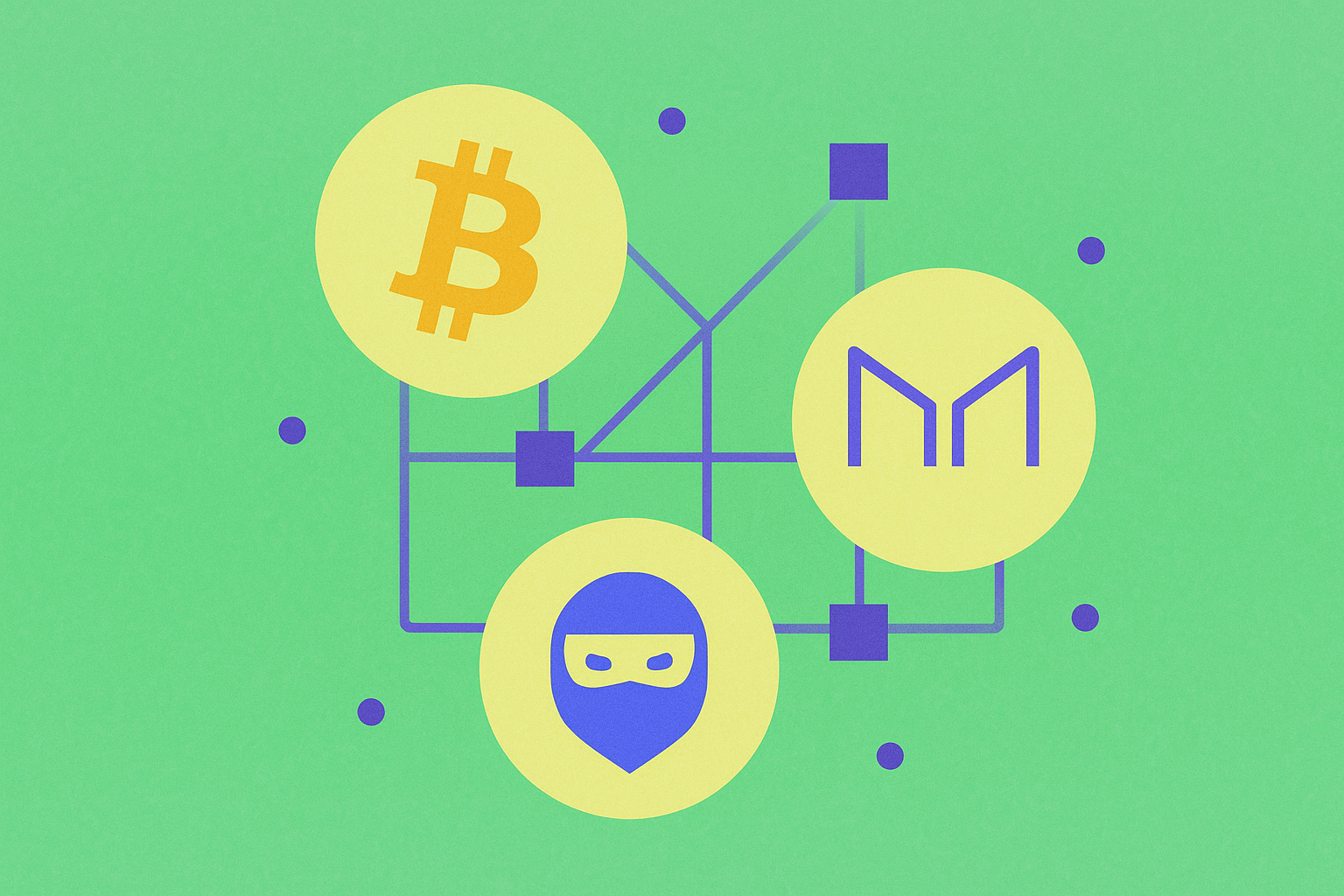
This comprehensive guide explores how Web3 and Decentralized Autonomous Organizations (DAOs) collaborate to drive decentralized innovation. Web3 represents a revolutionary blockchain-based internet enabling user data ownership, while DAOs serve as autonomous organizations operating through smart contracts and democratic governance. The article clarifies their relationship: Web3 is the foundational infrastructure, and DAOs are specific implementations within this ecosystem. Through real-world case studies including MakerDAO, Ninja DAO, and Bitcoin, readers discover how these technologies operate in practice. Japan's regulatory advances, including the Liberal Democratic Party's White Paper 2024 and legal reforms supporting Web3 startups, demonstrate growing institutional adoption. This guide equips investors and innovators with essential knowledge to participate in the transformative Web3 ecosystem, highlighting unprecedented opportunities created by technological innovation, regulatory clarity, and institution
2026-02-04 10:17:11
What are the security risks and vulnerabilities of XAUt stablecoin in 2026?

What are the security risks and vulnerabilities of XAUt stablecoin in 2026?

This article examines the critical security risks and vulnerabilities threatening XAUt stablecoin holders in 2026. The analysis covers three primary threat vectors: smart contract vulnerabilities that enable phishing attacks draining millions in user assets, sophisticated network attack vectors including AI-powered signature fraud targeting transaction authorization, and inherent centralized dependency risks stemming from Tether's single-issuer structure and Swiss vault concentration. Real-world incidents demonstrate how technical flaws combined with social engineering create catastrophic exposure. The article addresses wallet security risks, authentication mechanisms, and regulatory compliance challenges affecting XAUt trading on Gate and other platforms. Essential for institutional and retail traders managing gold-backed stablecoin positions, this guide provides comprehensive vulnerability assessments and practical security recommendations.
2026-02-04 10:15:45
LOOKS vs OP: Understanding the Key Differences Between Appearance and Operational Performance in Modern Technology

LOOKS vs OP: Understanding the Key Differences Between Appearance and Operational Performance in Modern Technology

This comprehensive analysis compares LOOKS and OP, two distinct cryptocurrency assets with fundamentally different use cases and market positions. LOOKS operates as a community-first NFT marketplace platform launched in 2022, while OP functions as an Ethereum Layer 2 scaling solution delivering faster, low-cost transactions. The article evaluates historical price performance, tokenomics, institutional adoption, technical ecosystems, and risk factors through 2031. LOOKS has declined 99.99% from its $7.1 peak, while OP dropped 95.72% from $4.84, reflecting extreme market volatility. The analysis provides differentiated investment strategies for conservative and aggressive investors, detailed price forecasts, risk management guidance, and institutional adoption considerations. Ideal for investors comparing Layer 2 scaling solutions against NFT marketplace infrastructure exposure, seeking data-driven allocation strategies within cryptocurrency portfolios during current market conditions characterized by extreme f
2026-02-04 10:15:42
PRAI vs IMX: A Comprehensive Comparison of Two Leading AI Image Generation Platforms

PRAI vs IMX: A Comprehensive Comparison of Two Leading AI Image Generation Platforms

This comprehensive analysis compares PRAI and IMX, two distinct cryptocurrency assets serving different market segments. PRAI, launched in 2025, offers decentralized confidential AI infrastructure utilizing Fully Homomorphic Encryption for secure machine learning across Web2 and Web3 ecosystems. IMX operates as an established Layer-2 scaling solution for NFTs on Ethereum since 2021, providing zero gas fee trading with instant transactions. The article examines historical price trends, current market positioning at Gate exchange, tokenomics, institutional adoption, technical ecosystems, and five-year price forecasts through 2031. Investment recommendations are segmented by investor profile: conservative investors favor IMX's proven adoption and higher liquidity, while experienced investors may allocate to both for portfolio diversification. Risk analysis addresses volatility, technical challenges, and regulatory considerations specific to each asset's market segment.
2026-02-04 10:14:32
How active is XAUT community and ecosystem in 2025 with 150% surge in active addresses and $1.2B trading volume

How active is XAUT community and ecosystem in 2025 with 150% surge in active addresses and $1.2B trading volume

XAUT experienced explosive growth in 2025, with active addresses surging 150% and trading volume reaching $1.2 billion, signaling robust institutional and retail adoption of tokenized gold. This growth trajectory reflects genuine ecosystem maturation, supported by expanding holder base (5,524 holders with 21% month-over-month growth) and market capitalization reaching $3.59 billion by early 2026. Trading volume breakthrough demonstrates enhanced market liquidity and tight bid-ask spreads, benefiting both retail and institutional traders seeking gold-backed digital assets. LayerZero's OFT technology accelerated cross-chain capabilities across Arbitrum, TON, and Mantle, enabling seamless DApp integration and DeFi platform adoption. Major platforms like Bybit commanding 16% of global XAUT spot trading volume validate institutional-grade infrastructure, while tokenized gold sector experienced 177% market cap increase and 198% holder surge, positioning XAUT as mainstream on-chain financial infrastructure for real-
2026-02-04 10:13:43
GET vs SAND: A Comprehensive Comparison of Two Essential Web Development Concepts

GET vs SAND: A Comprehensive Comparison of Two Essential Web Development Concepts

This comprehensive analysis examines GET versus SAND, two distinct cryptocurrency assets serving different market segments. GET, launched in 2025 as a universal entertainment industry token, trades at $0.0014465 with daily volume of $12,681.82, representing early-stage ecosystem positioning. SAND, established since 2020 as a metaverse gaming platform, trades at $0.09963 with significantly higher liquidity of $1,562,196.45. The article compares historical price movements, supply mechanisms, institutional adoption, technological development, and macroeconomic influences on both tokens. Current market conditions reflect extreme fear sentiment (14 on Fear & Greed Index). Investment strategies vary by risk profile: conservative allocations suggest GET 20-30% and SAND 30-40%, while aggressive portfolios recommend GET 40-50% and SAND 30-40%. The analysis includes 2026-2031 price range projections, comprehensive risk assessment covering market, technical, and regulatory factors, and actionable guidance for novice, ex
2026-02-04 10:13:19
What is HBAR market cap and trading volume in 2026?

What is HBAR market cap and trading volume in 2026?

This comprehensive guide examines HBAR's market performance in 2026, with market capitalization ranging from $3.95 to $4.26 billion and the token trading between $0.101 and $0.135. HBAR maintains the 25th position among major cryptocurrencies with 43 billion tokens in circulation. Trading volume analysis shows $125.79 million average daily volume, with recent 24-hour activity at $4.28 million. The token operates on a mature tokenomics model with 86% of the total 50 billion supply already circulating. HBAR's liquidity is enhanced by presence across 415 trading pairs on major exchanges including Gate, supporting efficient institutional and retail trading. Key drivers include enterprise adoption, network upgrades, and real-world asset tokenization initiatives that influence both market cap valuation and trading volume throughout 2026.
2026-02-04 10:11:46
What Is the Mt. Gox Incident? An In-Depth, Clear Explanation of the Ongoing Bitcoin Repayment Saga

What Is the Mt. Gox Incident? An In-Depth, Clear Explanation of the Ongoing Bitcoin Repayment Saga

The Mt. Gox incident stands as the largest hacking event in Bitcoin history, occurring in 2014. Roughly 850,000 BTC were lost, and following bankruptcy proceedings, repayments are set to begin in 2024. This overview covers the details of the incident, security practices, and effects on the market. It provides key information for secure cryptocurrency trading.
2026-02-04 10:06:18
What is Zilliqa (ZIL) market overview: price, market cap ranking, trading volume, and liquidity in 2026

What is Zilliqa (ZIL) market overview: price, market cap ranking, trading volume, and liquidity in 2026

This comprehensive market overview examines Zilliqa (ZIL) as of February 2026, positioning it at #159 globally with an $89.61M market cap and $0.006553 price point. The article analyzes ZIL's substantial trading volume dynamics, circulating supply of 19.90B tokens (94.80% of total supply), and demonstrated liquidity across 42 major exchanges including Gate. Despite a recent -7.63% price decline, ZIL maintains active trading participation with volume-to-market-cap ratios indicating healthy market conditions. Coverage includes exchange accessibility, trading depth metrics, and comparative advantages of Zilliqa's sharding technology versus competing Layer-1 blockchains. The guide serves investors and traders evaluating ZIL's market position, liquidity conditions, and ecosystem potential within the competitive blockchain landscape.
2026-02-04 10:04:54
What is Core Assets (CC) coin? A fundamental analysis of whitepaper logic, use cases, and team credentials

What is Core Assets (CC) coin? A fundamental analysis of whitepaper logic, use cases, and team credentials

This article provides a comprehensive analysis of Core Assets (CC) coin, examining its decentralized asset management framework designed for institutional finance participants. It explores the permissionless architecture that eliminates intermediaries while maintaining institutional-grade security and compliance standards. The article details real-world use cases spanning digital asset custody to cross-chain interoperability solutions, showcasing how institutions can manage diverse asset classes seamlessly on Gate and other supported platforms. Technical innovation sections evaluate Canton Network's development milestones against market standards, highlighting SOC 2 Type 2 compliance and ISO 27002 mapping achievements. The piece thoroughly assesses leadership team credentials, emphasizing the importance of blockchain expertise combined with traditional finance experience. Finally, comprehensive FAQ sections address tokenomics, differentiation factors, adoption status, and investment risks, providing investors
2026-02-04 10:03:06
How does macroeconomic policy impact PAXG gold token price and crypto adoption in 2026

How does macroeconomic policy impact PAXG gold token price and crypto adoption in 2026

This comprehensive analysis explores how macroeconomic policies shape PAXG gold token valuations and accelerate cryptocurrency mainstream adoption in 2026. The article examines Federal Reserve interest rate decisions and their transmission effects on tokenized gold prices, demonstrating how PAXG surged from $4,800 to $5,640 as rate expectations shifted. It analyzes inflation data sensitivity through CPI and PPI correlations, revealing PAXG's enhanced safe-haven appeal amid economic uncertainty. The piece evaluates institutional migration toward gold-backed tokens as S&P 500 volatility intensifies and real yields compress. Finally, it positions PAXG within the expanding tokenized asset ecosystem—projected to exceed $1 trillion by 2026—highlighting how regulatory clarity and institutional validation from major firms like BlackRock are transforming tokenized gold into essential portfolio infrastructure. Ideal for macro-focused investors seeking crypto exposure with tangible asset backing.
2026-02-04 09:59:42
Jumper to
Page