The Federal Reserve’s March FOMC meeting minutes were officially released on April 8, 2026, and the key takeaways quickly drew market attention: compared with the January meeting where only “a few” officials were willing to consider rate hikes, in March “some” officials were already open to tighter monetary policy. Within the Federal Reserve’s hierarchy of wording, “some” represents more officials than “a few.” What kind of policy signal does this wording upgrade convey? And how should the crypto market interpret the asset-pricing logic behind a shift in rate expectations?
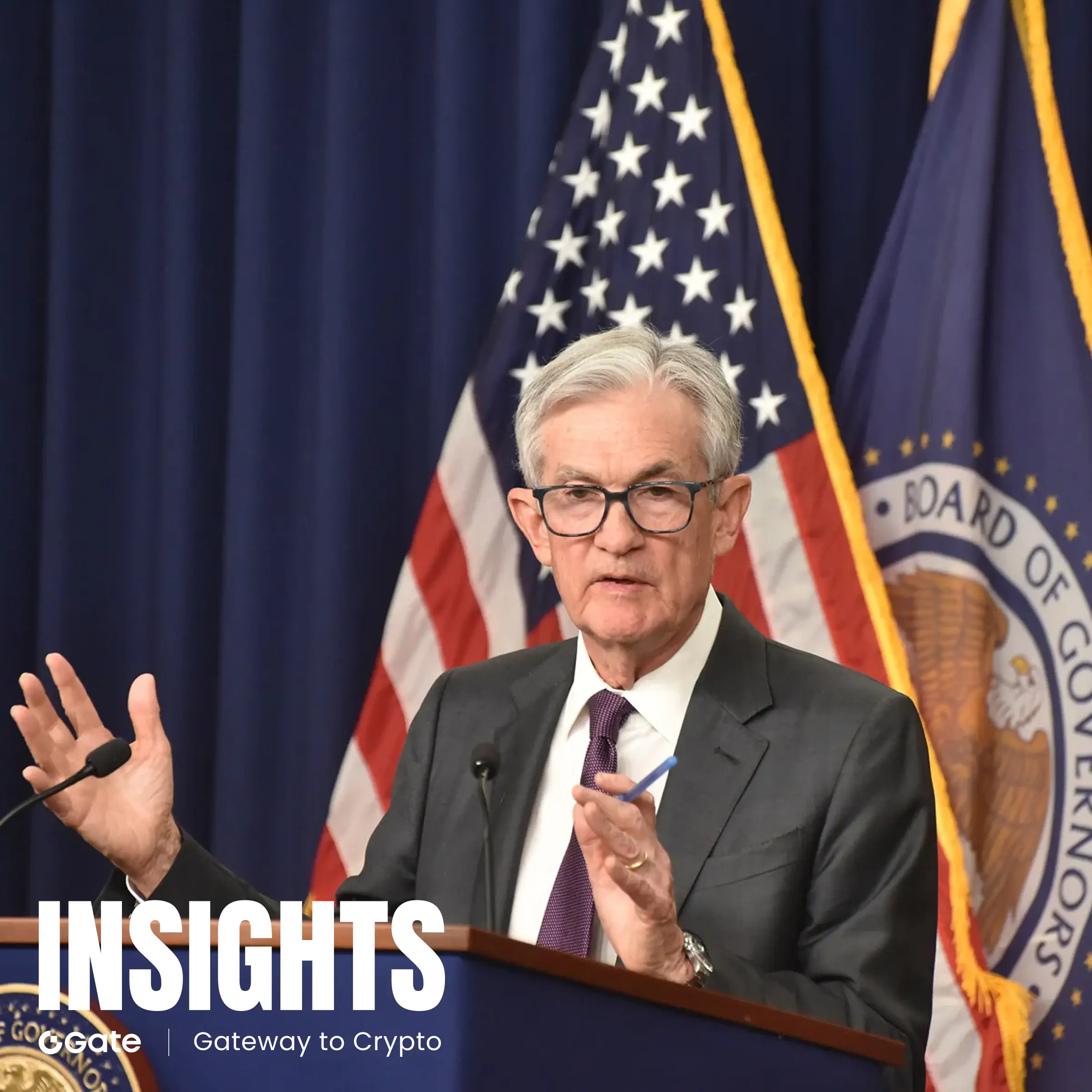
The Federal Reserve’s wording upgrade from “a few” to “some” strengthens hawkish signals
In the Federal Reserve’s March meeting, the target range for the federal funds rate was kept unchanged at 3.50% to 3.75% with an 11:1 vote, the second time since late 2025 when it held steady after three consecutive rate cuts. The most critical wording change in the minutes is that the number of officials supporting adding “two-way” interest-rate language to the post-meeting statement increased—from “a few” in January to “some” in March.
The original minutes state: “Some participants believed there was ample reason to describe the Committee’s future rate decisions in two directions in the post-meeting statement, reflecting that if inflation continued to run above the target level, raising the target range for the federal funds rate might be appropriate.” Within the Federal Reserve’s official terminology framework, the number of officials represented by “some” is clearly greater than those represented by “a few,” and this upgrade is seen as direct evidence that the hawkishness of the policy stance has deepened.
How inflation resilience and dual geopolitical pressure drive the intensification of rate-hike discussions
This hawkish turn did not emerge in isolation; there is a clear chain of logic behind it.
The minutes show that since the outbreak of the Middle East conflict on February 28, crude oil futures prices rose by about 50% in the period between meetings. Brent crude briefly broke above $108 per barrel. Against the backdrop of sustained energy-price increases, “many participants noted that the period during which inflation remains stubborn may be longer than expected,” while “some participants emphasized that after several years of inflation staying above target, long-term inflation expectations may become even more sensitive to rising energy prices.”
The Federal Reserve raised its forecast for 2026 core PCE inflation significantly from 2.5% to 2.7%, indicating that policymakers recognize inflation persistence is higher than previously expected. The combination of geopolitical shocks and traditional inflation pressures provides a structural foundation for the intensification of rate-hike discussions.
Divisions within the Federal Reserve: policy trade-offs between the rate-hike camp and the rate-cut camp
Despite the expansion of hawkish voices, the minutes also clearly present deep internal divisions within the Federal Reserve.
The dot plot shows that among 19 decision-making officials, 7 expect no rate cuts in 2026, 7 expect cuts of 25 basis points, and 5 even argue for cuts of 50 basis points. At the same time, “many participants” still treat rate cuts as part of the baseline scenario, while “most participants” worry that the continued Middle East conflict could further weaken the labor market, thereby requiring more rate cuts.
The minutes explicitly state that the overwhelming majority of participants judge that both “upside risks to inflation” and “downside risks to employment” have increased due to developments in the Middle East situation. This means the Federal Reserve is caught in a narrow space between “stall” and “inflation” risks—energy shocks are pushing inflation higher, but weakened household purchasing power and a slowdown in global growth are also grounds for rate cuts. As of early April 2026, the market’s probability of no rate cuts in 2026 has risen to 47.1%, and CME FedWatch data shows the probability of holding rates steady in April is 98.4%.
Initial market pricing of the hawkish minutes: relief from bad news or a directional switch
The crypto market’s reaction to this hawkish set of minutes shows a pronounced tendency to resist declines.
After the minutes were released, Bitcoin only slipped slightly to about $70,851, successfully holding the key psychological level of $70,000. This performance was notably stronger than historical statistics—on the day FOMC minutes are released, there is typically about a 75% probability of a negative market move. But resisting declines does not automatically mean a stronger trend. Clear internal divergence has emerged: institutional ETF flows have continued to see net outflows. From April 7 to April 8, cumulative outflows totaled about $220 million. Meanwhile, the derivatives market has completed a round of mild deleveraging, with Bitcoin perpetual contract funding rates dropping to extremely low levels.
As of the April 9 publication time, Bitcoin (BTC) is around $71,000, down about 1% over the past 24 hours; Ethereum (ETH) is around $2,180, down nearly 3% over the past 24 hours. On the surface, the market shows a “bad news already priced in” resilience to declines, but the divergence between liquidity conditions and price action suggests this phase is essentially a hedge between “macro suppression and micro resilience,” not a trend reversal.
From tighter rate expectations to risk-asset re-pricing: tracing the macro transmission path
The main impact path from rising rate-hike expectations on crypto assets shows up in three layers:
- First, a high-rate environment lifts the U.S. dollar index and U.S. Treasury yields, reducing the relative attractiveness of risk assets, and moves capital from high-volatility assets to risk-free yield assets.
- Second, expectations of liquidity contraction suppress the valuation anchor of crypto assets—the higher the rate, the larger the discounting factor for future cash flows, creating direct pressure on crypto assets priced on future growth expectations.
- Third, the risk premium from policy uncertainty rises. The minutes show that the probability of rate hikes by early next year has risen to about 30%, meaning monetary policy has shifted from “uncertainty about the rate-cut pace” to “uncertainty about the direction.”
The market is entering a pricing stage of “extending the interest-rate ceiling,” and the weight of macro factors in crypto asset valuation models continues to rise.
Outlook for the future path: rate hikes are still a low-probability option, but the risk balance is tilting
As of early April 2026, CME FedWatch data shows the probability of the Federal Reserve raising rates by 25 basis points in April is only 1.6%, and rate hikes for all of 2026 remain not the market’s baseline expectation.
But looking at the medium-term trend, the risk balance is tilting toward the hawkish side. In the minutes, “most participants” believe it is “too early” to assess the full economic impact of the conflict, and they advocate continuing to monitor the situation before adjusting policy. This implies that before the next meeting on April 28–29, inflation data (especially March CPI and PCE data) and energy price trends will become key variables to watch. If inflation continues to run above target and the geopolitical situation shows no meaningful easing, rate-hike discussions will gradually expand from the arguments of “some” officials to a broader range of officials. For the crypto market, the key variables in the coming weeks are not the movement of rates themselves, but the pricing speed of the market’s expectation that the rate path will “shift further to the right.”
Summary
The March meeting minutes from the Federal Reserve reveal a substantive escalation in the hawkish posture of policymakers—from “a few” in January to “some” in March. Behind the wording change are the dual pressures of inflation persistence exceeding expectations and geopolitical energy shocks.
After the hawkish stance landed, the crypto market displayed decline-resistant resilience beyond expectations, but continued outflows of capital and divergence from price action indicate the market is still in a hedge phase between macro suppression and micro resilience. Rate hikes are not the current baseline scenario, but uncertainty about the policy direction has risen meaningfully. In the coming weeks, inflation data and developments in the geopolitical situation will determine whether rate-hike discussions remain concerns raised by “some” officials or evolve into broader policy-adjustment consensus.
FAQ
Q1: What exactly is the difference between “some” and “a few” in the Federal Reserve’s wording framework?
Within the Federal Reserve’s official terminology framework, the number of officials represented by “some” is clearly greater than those represented by “a few.” While the Federal Reserve does not disclose the exact number of officials supporting each position, this wording upgrade itself is an official signal that the hawkishness of the policy stance has increased, showing that the number of officials willing to consider rate hikes has grown materially between January and March.
Q2: The Federal Reserve held rates steady in its March meeting—why is the crypto market still under pressure?
The core of market pricing is always “expectations,” not “current reality.” Even if rates do not actually change, if the market revises upward its expectations for the future rate path—meaning expecting “higher rates for longer”—the valuation anchor for risk assets will still face pressure. The minutes show that the probability of rate hikes has risen to about 30%, meaning the market is re-pricing the upper bound of rates.
Q3: How does the crypto market typically respond when rate-hike expectations heat up?
Rising rate-hike expectations typically affect the crypto market through three channels: a stronger dollar and rising U.S. Treasury yields weaken the appeal of risk assets; liquidity tightening expectations lower the valuation anchor of assets; and higher policy uncertainty raises the risk premium. Historical data shows that BTC and the Nasdaq index have relatively high synchronous correlation during macro tightening cycles.
Q4: Which future macro variables are most worth watching?
Two key variables: first, March CPI and PCE inflation data, which will validate the degree of transmission from energy prices to core inflation; second, the actual evolution of the Middle East geopolitical situation, especially the status of passage through the Strait of Hormuz and the trajectory of oil prices. Together, these two variables will determine whether rate-hike discussions will further escalate.
Q5: What are the core structural characteristics of the current crypto market?
The current market is in a hedge phase between “macro suppression” and “micro resilience.” On the price side, it shows decline-resistant strength beyond expectations, but with ongoing outflows of institutional ETF capital, large amounts of unconverted capital being held on exchange addresses, and derivatives leverage having been mildly reduced, the market is waiting for directional confirmation. This is not a trend-driven move; it is a directional waiting period after leverage has been cleaned up.


