

Trade
Basic
Futures
Futures
Hundreds of contracts settled in USDT or BTC
Options
HOT
Trade European-style vanilla options
Unified Account
Maximize your capital efficiency
Demo Trading
Futures Kickoff
Get prepared for your futures trading
Futures Events
Participate in events to win generous rewards
Demo Trading
Use virtual funds to experience risk-free trading
Earn
Launch
CandyDrop
Collect candies to earn airdrops
Launchpool
Quick staking, earn potential new tokens
HODLer Airdrop
Hold GT and get massive airdrops for free
Launchpad
Be early to the next big token project
Alpha Points
NEW
Trade on-chain assets and enjoy airdrop rewards!
Futures Points
NEW
Earn futures points and claim airdrop rewards
Investment
Simple Earn
Earn interests with idle tokens
Auto-Invest
Auto-invest on a regular basis
Dual Investment
Buy low and sell high to take profits from price fluctuations
Soft Staking
Earn rewards with flexible staking
Crypto Loan
0 Fees
Pledge one crypto to borrow another
Lending Center
One-stop lending hub
VIP Wealth Hub
Customized wealth management empowers your assets growth
Private Wealth Management
Customized asset management to grow your digital assets
Quant Fund
Top asset management team helps you profit without hassle
Staking
Stake cryptos to earn in PoS products
Smart Leverage
NEW
No forced liquidation before maturity, worry-free leveraged gains
GUSD Minting
Use USDT/USDC to mint GUSD for treasury-level yields

More


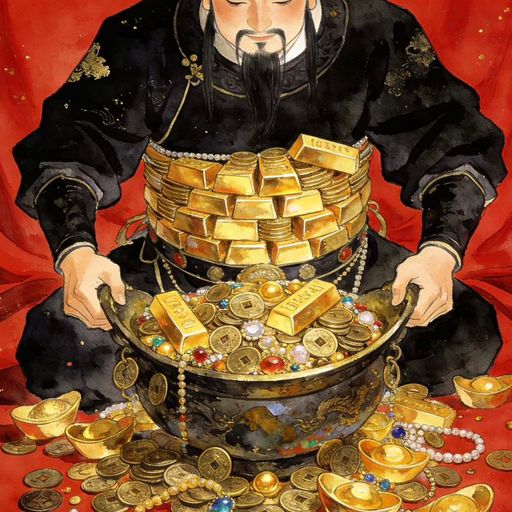


The Man Who Was One of the Richest in the World and Lost Everything: The Lesson of Eike Batista
Eike Batista’s story is not just about an entrepreneur who built and destroyed a fortune. It is a portrait of what happens when unchecked ambition meets speculative markets and fragile governance structures. In just over a decade, he went from being recognized as one of the richest men in the world to becoming a symbol of one of Brazil’s biggest corporate collapses.
How It All Started: From Mining to Conglomerate
Eike Fuhrken Batista da Silva was born in Governador Valadares, Minas Gerais, and his family heritage provided privileged contacts in the natural resources sector. His father was president of Vale and Minister of Mines and Energy. Still young, Eike began studying metallurgical engineering in Germany but did not complete the course. He returned to Brazil and started modestly: selling insurance and acting as an intermediary in mining deals.
In the 1980s and 1990s, his connections in gold and diamond prospecting in Northern Brazil positioned him for larger ventures. He participated in billion-dollar projects in gold and silver mining across Brazil, Canada, and Chile, consolidating experience and capital that would serve as a foundation for his next move.
The Big Project: Grupo EBX and the “X” Strategy
Everything changed when Eike created Grupo EBX — a conglomerate designed to raise capital in the financial markets and multiply value through large-scale projects. The letter “X” present in almost all subsidiaries had a clear purpose: to represent multiplication.
The main companies included OGX (oil and gas), MMX (mining), MPX (energy), LLX (logistics), OSX (shipbuilding), and CCX (coal). In addition to smaller operations like IMX, REX, and FIX. The narrative was seductive: ambitious projects, global demand for commodities on the rise, potential to transform Brazil into an energy powerhouse.
Between 2010 and 2012, share prices soared. Institutional and retail investors bet more on future promises than on current results. OGX was the star — announcements of highly productive oil fields in the Campos and Santos basins generated extraordinary expectations.
At the Top: When Promises Become Assets
In 2012, Eike reached his peak. His fortune was estimated at approximately US$30 billion. He was considered not only the richest man in Brazil but also one of the wealthiest in the world, ranking 7th on Forbes’ global list.
The speed of his rise was dizzying — and therein lay the danger. The market priced future expectations as if they were guarantees. Every announcement of a new project, every executive presentation, every production forecast fueled a speculative cycle that increasingly diverged from actual operational fundamentals.
The Collapse: When Reality Shook the Promises
The turning point came when the actual numbers did not materialize. Fields announced as highly productive performed drastically below expectations. OGX’s shares plummeted. Investors realized they had bet on narratives, not on real businesses.
The domino effect was immediate. Confidence evaporated. Other companies in Grupo EBX began to face difficulties. Several filed for bankruptcy or went bankrupt. The conglomerate, built on leverage and expectations, collapsed like a house of cards.
Eike was convicted of market manipulation — accused of disseminating false information about the viability of oil projects. He received an eight-year prison sentence.
Lava Jato: An Additional Layer of Problems
Beyond corporate collapses, Eike faced charges related to Operation Lava Jato. He was involved in schemes of corruption and money laundering, including paying bribes to former Rio de Janeiro governor Sérgio Cabral.
In 2017, he was considered a fugitive until surrendering to justice. He was detained at Bangu prison complex and had his regime converted to house arrest by STF decision. He reached a plea bargain with the Federal Public Ministry — the details remain confidential.
What Remained: An Empire in Ruins
Asset sales became inevitable. Today, few companies in Grupo EBX remain relevant: MMX, Dommo Energia (former OGX), and OSX are still listed on the stock exchange but without their former shine.
A positive exception: the former MPX Energia was sold to a German group and restructured as Eneva (ENEV3). The company managed to recover and generate value for shareholders — showing that not everything was doomed; better management and operational realism made a difference.
Five Lessons for Investors and Executives
1. Narrative does not replace fundamentals
Appealing stories about a bright future deceive only once. Evaluate actual cash flow, operational execution, effectively met goals — not optimistic projections. Companies with an inconsistent track record tend to disappoint.
2. Unlimited leverage multiplies losses
Accelerated growth financed by debt can amplify initial gains, but when scenarios change, losses are equally magnified. Over-leveraged structures leave investors vulnerable.
3. Corporate governance is foundational, not ornamental
Transparency, internal controls, and management quality are not details — they are decisive factors. Companies with weak governance carry risks that often only appear when it’s too late.
4. Diversification protects
Concentration in a single group, sector, or thesis amplifies the impact of errors. Strategic diversification remains one of the most effective ways to reduce risks in the long term.
5. Healthy skepticism is part of the strategy
It’s not about distrusting everything but maintaining a critical sense. Question assumptions, seek independent sources, resist collective enthusiasm — these practices help avoid decisions that cost fortunes.
Conclusion: A Permanent Case Study
Eike Batista’s trajectory remains one of the most emblematic examples of how ambition, capital markets, and uncontrolled risk can combine explosively. It serves as a continuous warning to investors, executives, and regulators about the dangers of rapid growth without solid foundations.
His story is not just about a man or a lost fortune. It is a portrait of what happens when fragile structures encounter speculative cycles — and a lesson that in the financial market, well-informed and skeptical decisions tend to generate more lasting value than bold bets on seductive narratives.