

Trade
Basic
Futures
Futures
Hundreds of contracts settled in USDT or BTC
Options
HOT
Trade European-style vanilla options
Unified Account
Maximize your capital efficiency
Demo Trading
Futures Kickoff
Get prepared for your futures trading
Futures Events
Participate in events to win generous rewards
Demo Trading
Use virtual funds to experience risk-free trading
Earn
Launch
CandyDrop
Collect candies to earn airdrops
Launchpool
Quick staking, earn potential new tokens
HODLer Airdrop
Hold GT and get massive airdrops for free
Launchpad
Be early to the next big token project
Alpha Points
NEW
Trade on-chain assets and enjoy airdrop rewards!
Futures Points
NEW
Earn futures points and claim airdrop rewards
Investment
Simple Earn
Earn interests with idle tokens
Auto-Invest
Auto-invest on a regular basis
Dual Investment
Buy low and sell high to take profits from price fluctuations
Soft Staking
Earn rewards with flexible staking
Crypto Loan
0 Fees
Pledge one crypto to borrow another
Lending Center
One-stop lending hub
VIP Wealth Hub
Customized wealth management empowers your assets growth
Private Wealth Management
Customized asset management to grow your digital assets
Quant Fund
Top asset management team helps you profit without hassle
Staking
Stake cryptos to earn in PoS products
Smart Leverage
NEW
No forced liquidation before maturity, worry-free leveraged gains
GUSD Minting
Use USDT/USDC to mint GUSD for treasury-level yields

More


Trending Topics
View More28K Popularity
34.69K Popularity
20.26K Popularity
4.16K Popularity
2.12K Popularity



Pin
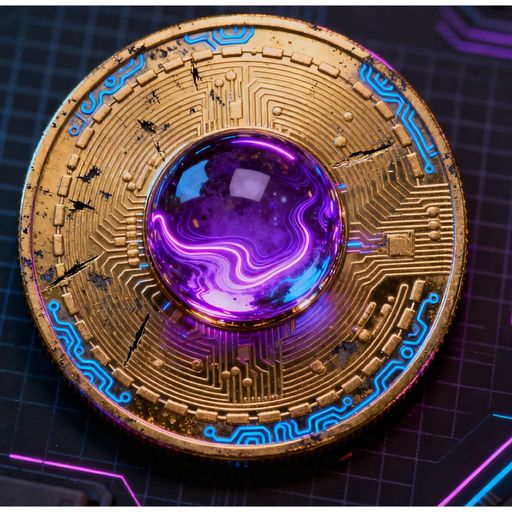
From Physical Assets to Digital Tokens: The Reshaping of Global Finance in 2024
The financial world stands at an inflection point. What was once confined to science fiction—tokenizing real estate, securities, and artwork into instantly transferable digital assets—is rapidly becoming mainstream reality. Recent insights from blockchain industry experts reveal that tokenization represents not merely a technological upgrade, but a fundamental redefinition of what money means in the digital age.
Understanding Tokenization: The Technical Foundation
Tokenization converts ownership rights to tangible or financial assets into digital tokens recorded on blockchain networks. Rather than storing a deed in a filing cabinet or settling stock trades over days, this process creates secure, verifiable digital certificates that represent real value.
The core innovation addresses a systemic inefficiency plaguing modern finance: settlement delays. Traditional securities transactions require two to three business days to finalize. Tokenization compresses this to minutes, freeing up capital and dramatically reducing counterparty risk. Real estate, bonds, equities, and commodities—all can be tokenized and transferred instantly across borders and platforms.
What makes this revolutionary is scope. Any asset with demonstrable ownership can be tokenized: corporate shares, government bonds, physical gold, intellectual property, even rare collectibles. The infrastructure that took decades to perfect for centralized exchanges can now be replicated globally through decentralized blockchain networks.
The Philosophical Shift: Redefining Money Itself
Tokenization news today often focuses on specific use cases—a bank tokenizing bonds, a real estate platform fractionalizing properties. But industry thought leaders suggest the implications run deeper: the very concept of money is undergoing transformation.
Historically, money was defined by state fiat. Central banks issued currency; citizens and institutions accepted it because governments declared it legal tender. Tokenization inverts this logic. If an asset can be reliably stored on a blockchain and instantly transferred between parties who trust the underlying representation, it functions as money.
This shift dissolves traditional boundaries between asset classes. Money becomes not what a government issues, but rather any tokenized store of value that achieves sufficient network adoption and liquidity. The implications are staggering:
Practical Applications Reshaping Today’s Markets
Real-world experimentation validates the theoretical promise. Major financial institutions—central banks, asset managers, custodians—are piloting tokenized bond markets, fund platforms, and private equity vehicles. These aren’t speculative exercises; they’re competitive responses to the possibility of being outmaneuvered by faster, cheaper platforms.
Immediate Benefits:
The advantages are quantifiable. Instant settlement eliminates multi-day clearing cycles, improving cash flow and reducing systemic risk. Fractional ownership democratizes access to premium assets—a $5 million property becomes purchasable in $1,000 increments. Enhanced transparency through immutable blockchain records creates auditability impossible with legacy ledgers.
Structural Obstacles:
Yet significant hurdles remain. Regulatory frameworks globally are still primitive. How do jurisdictions tax tokenized assets? Which regulator governs a cross-border token trade? Legacy financial infrastructure—SWIFT networks, clearing houses, custodial systems—must integrate with blockchains. Institutional adoption requires overcoming technological inertia and trust deficits.
Building this hybrid financial system demands solving both technical and institutional challenges simultaneously.
Where Markets Head Next
The trajectory points toward coexistence, not replacement. Tokenized versions of traditional assets will operate alongside native digital assets, with blurred lines between categories. Over time, tokenization becomes infrastructure, not novelty—as invisible and essential as internet protocols.
The ultimate vision: value moves across financial systems with the same ease that information traverses the internet. No geographic boundaries. No multi-day settlement windows. No artificial scarcity of access.
This isn’t speculation—momentum is accelerating. The question for participants isn’t whether tokenization transforms finance, but how quickly institutions adapt to the distributed, token-first future already materializing.
Common Questions About Digital Asset Tokenization
What exactly is asset tokenization in plain language? It’s converting ownership of real-world assets—property, stocks, bonds—into digital tokens on blockchain that can be instantly traded and settled, similar to how email transmits files instantly rather than requiring physical delivery.
How does this differ from cryptocurrency? Cryptocurrencies like Bitcoin exist natively on blockchains. Tokenization creates digital representations of existing physical or financial assets. One is born-digital; the other represents something tangible.
Are tokenized assets secure? Security depends on blockchain architecture and custodial practices. Cryptography provides strong technical protections, but key management and platform reputation remain critical.
Can this integrate with traditional banking? Integration is essential and already underway. Banks are becoming custodians and compliance bridges connecting legacy systems to tokenized networks—adapting rather than disappearing.
Which assets qualify for tokenization? Virtually any asset with clear, verifiable ownership: real estate, securities, commodities (precious metals, agricultural goods), intellectual property, fine art. Intangible assets with contractual rights can also be tokenized.
Will this eliminate banks? No, but roles evolve. Banks shift from transaction processors to custody providers, compliance gatekeepers, and bridges between traditional finance and tokenized markets. Their function transforms rather than disappears.
The digital asset revolution is fundamentally reshaping assumptions about money, value transfer, and financial inclusion. As tokenization moves from experimental stage to operational reality, the financial ecosystem becomes faster, more transparent, and more accessible—rewriting rules that have governed commerce for centuries.