

Trade
Basic
Futures
Futures
Hundreds of contracts settled in USDT or BTC
Options
HOT
Trade European-style vanilla options
Unified Account
Maximize your capital efficiency
Demo Trading
Futures Kickoff
Get prepared for your futures trading
Futures Events
Futures Mall
Participate in events to win generous rewards
Demo Trading
Use virtual funds to experience risk-free trading
Earn
Launch
CandyDrop
Collect candies to earn airdrops
Launchpool
Quick staking, earn potential new tokens
HODLer Airdrop
Hold GT and get massive airdrops for free
Launchpad
Be early to the next big token project
Alpha Points
NEW
Trade on-chain assets and enjoy airdrop rewards!
Futures Points
NEW
Earn futures points and claim airdrop rewards
Investment
Simple Earn
Earn interests with idle tokens
Auto-Invest
Auto-invest on a regular basis
Dual Investment
Buy low and sell high to take profits from price fluctuations
Soft Staking
Earn rewards with flexible staking
Crypto Loan
0 Fees
Pledge one crypto to borrow another
Lending Center
One-stop lending hub
VIP Wealth Hub
Customized wealth management empowers your assets growth
Private Wealth Management
Customized asset management to grow your digital assets
Quant Fund
Top asset management team helps you profit without hassle
Staking
Stake cryptos to earn in PoS products
Smart Leverage
NEW
No forced liquidation before maturity, worry-free leveraged gains
GUSD Minting
Use USDT/USDC to mint GUSD for treasury-level yields

More





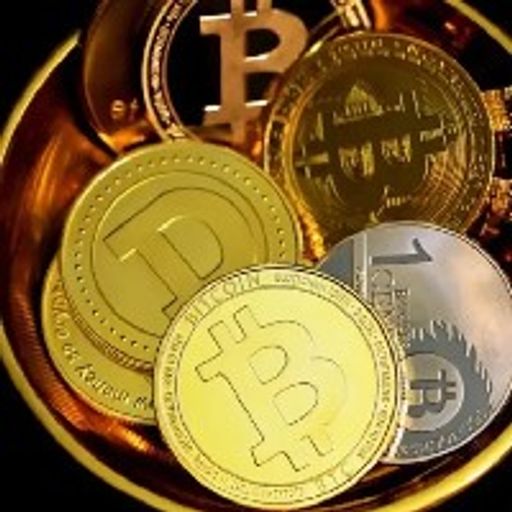

Understanding Store of Value Meaning: Why Assets Like Bitcoin and Gold Preserve Wealth
When people talk about store of value meaning, they’re describing one of the most fundamental concepts in finance and economics. Essentially, it refers to any asset that can maintain or increase its purchasing power over time, rather than losing value. This ability to preserve wealth is what separates truly valuable investments from those that erode slowly through inflation and economic pressure.
The concept of store of value meaning goes beyond simple asset holding—it’s about understanding which assets reliably protect your wealth across decades or even centuries. Money serves multiple functions in society, and store of value is just one of them; the other two critical functions are medium of exchange and unit of account. But understanding store of value meaning is especially important in today’s world, where inflation erodes traditional currencies year after year.
Decoding the True Meaning of Store of Value in Modern Finance
A store of value is fundamentally an asset, currency, or commodity that you can trust to hold its worth over extended periods with minimal risk. Traditionally, risk-averse investors seek out stores of value with long lifespans, steady demand patterns, and low volatility. What makes this distinction important is that not all assets perform this function equally well.
Fiat currencies—paper money issued by governments without commodity backing—historically represent poor stores of value. They depreciate steadily due to inflation, a problem that has worsened in recent years. Even at modest 2-3% annual inflation rates, a dollar loses purchasing power year after year. In extreme cases like Venezuela, South Sudan, and Zimbabwe, hyperinflation has devastated fiat currencies entirely, sometimes making them virtually worthless.
In contrast, assets like gold, silver, and Bitcoin demonstrate strong store of value characteristics because their supplies are limited and they don’t deteriorate physically or functionally. This distinction is worth examining through real examples. An ounce of gold has maintained remarkable purchasing power across millennia. In Ancient Rome, a high-quality toga cost roughly an ounce of gold. Today, a quality men’s suit costs approximately the same amount of gold. That 2,000-year consistency tells you something important about store of value meaning—it’s about purchasing power that transcends any single economic system.
Another revealing comparison involves oil prices. In 1913, one barrel of oil cost just $0.97 in fiat currency. Today, that same barrel costs around $80-90. That looks like inflation has destroyed the oil price. But here’s the critical insight: one ounce of gold bought approximately 22 barrels of oil in 1913. Today, an ounce of gold buys roughly 24 barrels. Gold’s value remained essentially stable (excellent store of value), while the fiat currency depreciated dramatically (poor store of value).
The Three Essential Properties That Define a Reliable Store of Value
Understanding store of value meaning requires examining what properties make an asset truly reliable for wealth preservation. Every strong store of value exhibits three critical characteristics: scarcity, durability, and immutability.
Scarcity means the asset has a limited supply relative to demand. Computer scientist Nick Szabo coined the term “unforgeable costliness” to describe this quality—essentially, you cannot artificially create more of the asset without enormous effort and cost. When money becomes too abundant, its value collapses. Precious metals maintain scarcity because extracting them requires significant resources. Bitcoin enforces absolute scarcity: exactly 21 million coins will ever exist, making artificial inflation mathematically impossible.
Durability refers to whether an asset can maintain its physical and functional properties over extended periods. Currency must withstand repeated handling without degrading. Digital assets like Bitcoin achieve durability through redundant blockchain networks that preserve transaction history across thousands of computers. Physical assets like gold never tarnish or deteriorate, maintaining their properties for millennia.
Immutability has become an increasingly important property in digital finance. It means that once a transaction is recorded, it cannot be altered or reversed. This prevents fraud, counterfeiting, and manipulation. On Bitcoin’s blockchain, every transaction is permanently recorded and cryptographically protected against tampering. This immutability is crucial in our increasingly digital world where trust and security matter enormously.
These three properties work together to create assets worthy of store of value meaning—assets you can confidently hold knowing your wealth remains protected.
How Different Assets Compare as Stores of Value
Different assets serve as stores of value with varying degrees of effectiveness. Precious metals like gold, platinum, and palladium have performed this role for centuries. They possess limited supply, require no maintenance, and maintain consistent industrial demand. However, Bitcoin has proven superior to even gold in terms of scarcity and appreciation rates. Since Bitcoin’s inception, it has consistently appreciated against gold while maintaining stronger scarcity properties.
The practical drawbacks of physical metals reveal why store of value meaning matters for accessibility. Storing large quantities of gold is expensive and complicated. This inconvenience has driven some investors toward “digital gold”—gold-backed financial products—but these introduce counterparty risk, where intermediaries might fail or mismanage holdings.
Real estate remains among the most common stores of value due to its tangibility and utility. Property values have generally appreciated since the 1970s, offering investors a sense of security. Before then, real estate tracked inflation with minimal real returns. However, real estate suffers from poor liquidity and censorship vulnerability. You cannot quickly convert property to cash, and governments can seize or restrict your assets.
Stock market investments have historically appreciated over long periods across major exchanges like the NYSE, LSE, and JPX. Stocks can serve as stores of value, though they experience higher volatility than precious metals, making them less reliable for wealth preservation than assets with constrained supplies.
Index funds and ETFs provide diversified exposure to equity markets with lower fees than traditional mutual funds. These also appreciate over long time horizons, though they remain subject to market cycles and economic forces similar to individual stocks.
Creative investors sometimes choose specialized stores of value aligned with personal interests—fine wines, classic automobiles, watches, or art. These can appreciate over time but require expertise to evaluate and often face significant liquidity challenges.
Why Bitcoin Represents an Advanced Store of Value
Bitcoin initially appeared as a speculative, volatile asset. However, over its 15+ year history, it has increasingly demonstrated all the characteristics that define store of value meaning. Bitcoin represents a genuinely novel discovery—digital, sound money that operates without government or institutional intermediaries.
Bitcoin achieves store of value status through its unique combination of properties. Its finite 21-million-coin supply creates absolute scarcity impossible to replicate with fiat currencies or traditional commodities. Its digital, data-based nature ensures perfect durability—Bitcoin cannot rust, deteriorate, or be destroyed without simultaneously destroying redundant copies across global networks. Its blockchain-based immutability guarantees transaction permanence and prevents fraud at scales impossible for traditional financial systems.
Increasingly, major investors and institutions recognize Bitcoin’s store of value properties, driving adoption beyond early speculators to serious wealth preservation strategies.
Why Most Alternatives Fail as Stores of Value
Understanding store of value meaning also requires recognizing what doesn’t work. Perishable items—food, transportation tickets, time-limited services—expire and become worthless. They cannot preserve value because their utility vanishes on specific dates.
The vast majority of alternative cryptocurrencies have failed to function as stores of value. Research by Swan Bitcoin analyzing 8,000 cryptocurrencies since 2016 revealed a stark reality: 2,635 underperformed Bitcoin over time, while 5,175 cryptocurrencies no longer exist at all. Most alternative cryptocurrencies prioritize adding features and functionality over ensuring security, scarcity, and censorship resistance. This tradeoff makes them poor wealth preservation tools. Unlike Bitcoin’s simple, security-focused design, altcoins chase innovation, making them more similar to speculative stocks than sound money.
Speculative penny stocks—small-cap assets trading below $5 per share—represent another category of poor stores of value. Extreme volatility and minuscule market capitalizations mean these can evaporate suddenly or explode exponentially without warning. Their unpredictability disqualifies them from wealth preservation purposes.
Government bonds once seemed like solid stores of value purely because governments backed them. However, years of negative interest rates in Japan, Germany, and across Europe have made bonds unattractive. While inflation-protected bonds like I-bonds and TIPS theoretically preserve purchasing power, they remain government-dependent and rely on official inflation calculations that governments can influence or misreport.
The Practical Significance of Store of Value Meaning Today
Store of value meaning carries practical importance because our current monetary system continuously erodes wealth through inflation. Fiat currencies are considered “soft money”—too dependent on government price stability targets rather than market forces. Governments target 2% annual inflation, deliberately shrinking the value of currency while prices increase. This systematic value erosion encourages people to seek alternative stores of value rather than holding depreciating currencies.
Bitcoin and precious metals offer alternatives precisely because their supplies cannot be arbitrarily expanded. No government can decree more Bitcoin into existence. No politician can inflate gold’s supply to finance spending. This property—real scarcity—addresses the core problem with fiat currencies.
The Bottom Line on Store of Value Meaning
Store of value meaning ultimately refers to assets capable of maintaining or increasing purchasing power by adhering to principles of scarcity, durability, and immutability. Determining whether an asset qualifies depends on supply-demand fundamentals and whether it possesses the inherent properties of sound money.
Gold, precious metals, real estate, and Bitcoin all function as stores of value by preserving wealth across time. Most other assets—cryptocurrencies, speculative stocks, perishable goods, depreciating fiat currencies—fail this test. Bitcoin’s relatively brief existence has nonetheless demonstrated that it satisfies all the properties required of robust stores of value, potentially positioning it as the premier wealth preservation tool for the digital age.