

Trade
Basic
Futures
Futures
Hundreds of contracts settled in USDT or BTC
Options
HOT
Trade European-style vanilla options
Unified Account
Maximize your capital efficiency
Demo Trading
Futures Kickoff
Get prepared for your futures trading
Futures Events
Futures Mall
Participate in events to win generous rewards
Demo Trading
Use virtual funds to experience risk-free trading
Earn
Launch
CandyDrop
Collect candies to earn airdrops
Launchpool
Quick staking, earn potential new tokens
HODLer Airdrop
Hold GT and get massive airdrops for free
Launchpad
Be early to the next big token project
Alpha Points
NEW
Trade on-chain assets and enjoy airdrop rewards!
Futures Points
NEW
Earn futures points and claim airdrop rewards
Investment
Simple Earn
Earn interests with idle tokens
Auto-Invest
Auto-invest on a regular basis
Dual Investment
Buy low and sell high to take profits from price fluctuations
Soft Staking
Earn rewards with flexible staking
Crypto Loan
0 Fees
Pledge one crypto to borrow another
Lending Center
One-stop lending hub
VIP Wealth Hub
Customized wealth management empowers your assets growth
Private Wealth Management
Customized asset management to grow your digital assets
Quant Fund
Top asset management team helps you profit without hassle
Staking
Stake cryptos to earn in PoS products
Smart Leverage
NEW
No forced liquidation before maturity, worry-free leveraged gains
GUSD Minting
Use USDT/USDC to mint GUSD for treasury-level yields

More


Trending Topics
View More43.14K Popularity
5.48K Popularity
4.61K Popularity
2.64K Popularity
2.33K Popularity




Pin
How a Medium of Exchange Revolutionized Trade: From Ancient Coins to Bitcoin
Trade has always been central to human civilization, yet for most of history, it faced a fundamental problem: how do you exchange what you have for what you need when the other person doesn’t have what you want? This challenge shaped societies, limited economies, and constrained growth. The solution emerged thousands of years ago with the invention of something we take for granted today—a medium of exchange, a tool that transformed commerce and laid the foundation for modern economies.
The Problem That Sparked Trade Evolution
Before currency existed, humans relied on barter—the direct exchange of goods and services. In small communities, this system worked adequately. A farmer with surplus grain could trade directly with a blacksmith for tools. But as societies grew larger and more complex, barter became increasingly impractical. The system required what economists call the “perfect match problem”: you need medicine, but the doctor needs a battery, and you have wheat instead. Finding that exact combination of mutual needs became mentally exhausting and economically inefficient.
Imagine needing medicine but possessing only grain. You would search endlessly for someone with medicine who also wants grain, negotiate terms, and complete the transaction—a process that consumes enormous time and effort. This friction prevented economies from expanding. Communities remained small precisely because the costs of finding trading partners and completing exchanges were prohibitively high.
What Is a Medium of Exchange?
A medium of exchange is fundamentally a facilitating tool that enables two parties to trade goods or services indirectly. Rather than requiring an exact match of needs, it serves as a universally accepted intermediary. Both parties accept it because they know others will also accept it, creating a chain of commerce rather than isolated bilateral transactions.
Throughout history, different items have served this function. Ancient societies used shells, whale teeth, salt, and tobacco—rare objects that held value. What mattered wasn’t the item itself but whether communities widely recognized and accepted it as valuable for trade.
Why Every Economy Needs a Medium of Exchange
Without a medium of exchange, economies cannot scale. With it, three revolutionary changes occur. First, trade becomes accessible. Instead of searching for that one person who has exactly what you need, you can sell your goods to anyone and use the proceeds to buy from anyone else. Second, planning becomes possible. Producers can estimate what to manufacture and at what price. Consumers can budget their purchases reliably. Third, the economy becomes efficient—resources flow to their highest-value uses because prices signal supply and demand clearly.
Money is the most effective medium of exchange because it solves the perfect match problem. It enables buyers and sellers to participate as equals in markets. Without it, economies revert to small-scale barter and stagnation.
The Birth of Standardized Coins
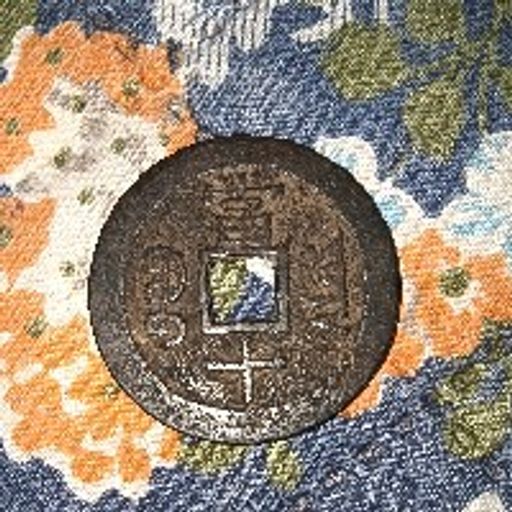
About 2,600 years ago in Lydia—a region in what is now Turkey—society took a crucial step. Rather than relying on unstandardized metal pieces of varying weights and purities, the Lydians created the first official stamped coins. These coins combined gold and silver alloys and bore images certifying their weight and authenticity.
This innovation solved a critical problem: how do you verify that the metal you’re receiving is genuine and contains the correct value? The stamp guaranteed quality, reducing transaction costs and building trust in trade. For the first time, coins became widely accepted not just as valuable metals but as standardized money.
The Critical Properties That Make a Superior Medium of Exchange
Not every item can serve as an effective medium of exchange. Several essential properties determine whether something functions well in this role.
Wide Acceptability comes first. People must recognize and accept it across communities. A currency only works if merchants, producers, and consumers all agree to use it. This is why government backing historically mattered—it guaranteed acceptance across entire nations.
Portability is equally crucial. A medium of exchange must be easily transported over long distances without significant loss of value or deterioration. Gold and silver worked well; land or livestock did not.
Value Preservation matters for stability. If a medium of exchange loses value rapidly due to inflation or degradation, people lose confidence in it. This is why governments fiercely protect their currencies from counterfeiting and inflation.
Scarcity ensures value. If anyone could create unlimited quantities of the medium of exchange, it would become worthless. Historical currencies were backed by precious metals to guarantee scarcity.
Censorship Resistance, a newer property, protects individuals from having their transactions blocked or frozen. Traditional government currencies fail this test; authoritarian regimes can freeze assets and control who can transact.
Money as the Primary Medium of Exchange
In modern economies, government-issued currency serves as the dominant medium of exchange. People accept it because the state guarantees its value and legal status. However, government currencies carry vulnerabilities. Political instability, rampant inflation, and mismanagement directly undermine currency value. The 1920s Weimar Republic and recent cases like Venezuela demonstrate how currency can collapse when governments fail.
This fragility motivates the search for alternatives—mediums of exchange that don’t depend on any single government’s stability or decision-making.
Bitcoin: A Digital Medium of Exchange for the Modern Era
Bitcoin represents a fundamentally different approach to medium of exchange. Rather than relying on government backing, it derives value from its properties and the consensus of its users. Bitcoin functions as a medium of exchange through several distinct advantages.
Speed is first among these. Traditional banking transfers take days or even weeks. Bitcoin transactions settle on the blockchain every ten minutes, making commerce faster and more efficient. For international trade or time-sensitive payments, this speed matters significantly.
Layer 2 Solutions like the Lightning Network amplify Bitcoin’s effectiveness. The Lightning Network operates as a second-layer system on top of Bitcoin’s blockchain, enabling instant, near-zero-cost transactions between parties. This innovation makes Bitcoin practical even for microtransactions—payments so small that traditional systems make them economically unfeasible. Imagine purchasing a single article from a news site for one cent, paid directly through Bitcoin without intermediaries.
Censorship Resistance protects Bitcoin users in ways traditional currencies cannot. Authoritarian governments cannot freeze Bitcoin accounts or prevent transactions. This property appeals particularly to people living under oppressive regimes or those who prioritize financial privacy.
Absolute Scarcity guarantees Bitcoin will never be inflated away. Its maximum supply of 21 million coins is hardcoded into the protocol. As new blocks are mined, the supply approaches this ceiling asymptotically, creating predictable scarcity that preserves long-term value.
The Evolution Continues: What Makes a Superior Medium of Exchange
The history of trade reveals an enduring pattern. Throughout centuries and across cultures, certain properties remain essential for any effective medium of exchange: wide acceptability, portability, value preservation, and increasingly, censorship resistance. These properties transcend technology and historical era.
As economies continue evolving, the medium of exchange that best embodies these properties tends to become dominant. In ancient times, coins outcompeted shells and barter. In the modern era, government currency dominated. Today, Bitcoin and digital money challenge the status quo by offering properties—particularly censorship resistance and decentralization—that traditional systems cannot match.
However, evolutionary change in monetary systems occurs slowly. Bitcoin remains in relative infancy despite its revolutionary design. Before it becomes a universal medium of exchange replacing government currencies, it must prove itself across decades and achieve significantly wider adoption than exists today.
What seems certain is this: the properties underlying a superior medium of exchange will never change, even as the technology and form of money continue evolving. The tool that best satisfies these properties—whatever it becomes—will ultimately prevail.