

Trade
Basic
Futures
Futures
Hundreds of contracts settled in USDT or BTC
Options
HOT
Trade European-style vanilla options
Unified Account
Maximize your capital efficiency
Demo Trading
Futures Kickoff
Get prepared for your futures trading
Futures Events
Futures Mall
Participate in events to win generous rewards
Demo Trading
Use virtual funds to experience risk-free trading
Earn
Launch
CandyDrop
Collect candies to earn airdrops
Launchpool
Quick staking, earn potential new tokens
HODLer Airdrop
Hold GT and get massive airdrops for free
Launchpad
Be early to the next big token project
Alpha Points
NEW
Trade on-chain assets and enjoy airdrop rewards!
Futures Points
NEW
Earn futures points and claim airdrop rewards
Investment
Simple Earn
Earn interests with idle tokens
Auto-Invest
Auto-invest on a regular basis
Dual Investment
Buy low and sell high to take profits from price fluctuations
Soft Staking
Earn rewards with flexible staking
Crypto Loan
0 Fees
Pledge one crypto to borrow another
Lending Center
One-stop lending hub
VIP Wealth Hub
Customized wealth management empowers your assets growth
Private Wealth Management
Customized asset management to grow your digital assets
Quant Fund
Top asset management team helps you profit without hassle
Staking
Stake cryptos to earn in PoS products
Smart Leverage
NEW
No forced liquidation before maturity, worry-free leveraged gains
GUSD Minting
Use USDT/USDC to mint GUSD for treasury-level yields

More


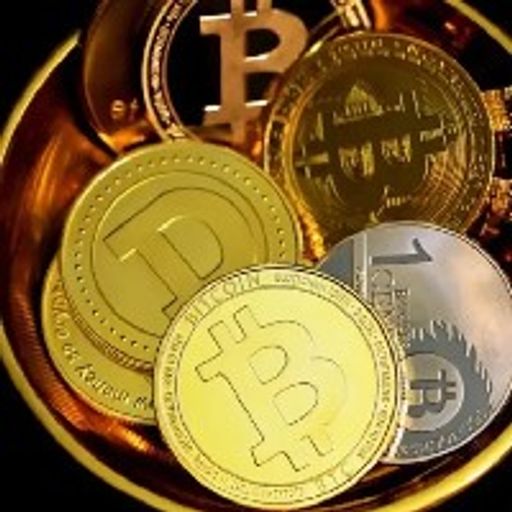



Understanding the Medium of Exchange: From Coins to Cryptocurrency
The story of trade tells us how societies adapt. As civilizations grew larger and more interconnected, the simple act of bartering—swapping one item for another—began to crumble under its own limitations. The fundamental problem wasn’t complexity; it was finding someone who had exactly what you needed while also wanting what you offered. This challenge, known as the coincidence of wants, became an obstacle to economic growth. Around 2,600 years ago, the people of Lydia in modern-day Turkey discovered an elegant solution: they created the first standardized metal coins, ushering in a new era of commerce. This innovation represented humanity’s first major leap toward what we now call a medium of exchange—a tool that would reshape civilization itself.
A medium of exchange is fundamentally a bridge between buyers and sellers. It’s an intermediary instrument that both parties willingly accept to complete transactions for goods and services. This concept is so central to economics that it forms one of three core functions of money, alongside being a store of value (an asset that holds its worth over time) and serving as a unit of account (a standard measure for pricing everything in an economy). Without this mechanism, modern commerce as we know it would be impossible.
The Historical Journey of Exchange Methods
Long before coins existed, humans experimented with various objects as mediums of exchange. Shells, whale teeth, salt, and tobacco all served this purpose in different cultures because they were rare, durable, and widely recognized. Each had limitations, but each represented humanity’s attempt to solve the core problem: how do we trade efficiently at scale?
The Lydians revolutionized this system by introducing standardized, stamped coins made from a gold and silver alloy. These weren’t just pretty metal pieces—they represented a fundamental breakthrough. By inscribing official seals and weight measurements on coins, the Lydians eliminated the need for buyers to verify the purity and quantity of metal in each transaction. This single innovation reduced transaction costs dramatically and transformed trade from a local, trust-based affair into something that could work across strangers and distances.
Today’s governments maintain this legacy by ensuring their currencies are widely distributed, difficult to counterfeit, and available in sufficient quantities to meet public demand. But the underlying principle remains unchanged since Lydia: a medium of exchange must be universally recognized and trusted by all parties involved in commerce.
Why We Need a Universal Medium of Exchange
Consider a simple scenario: you have a battery and need medicine. Without a medium of exchange, you’d need to find someone who possesses medicine and wants precisely your battery—and then negotiate terms. Multiply this complexity across an entire economy with millions of participants and thousands of products, and you begin to understand why barter economies remain small and localized.
A medium of exchange collapses this complexity into elegance. Instead of searching for one person with both the item you want and the desire for your item, you can sell your battery to anyone, then use that payment to purchase medicine from anyone else. This indirect exchange pathway enables entire supply chains to form, businesses to specialize, and economies to scale.
This efficiency has profound consequences. When people can easily quantify value and exchange items through an accepted medium, they can make predictable pricing decisions. Producers know what goods to manufacture and at what price points. Consumers can budget their spending rationally. When this mechanism breaks down—when people cannot agree on the value of items—economies spiral into chaos, with demand and supply becoming impossible to forecast.
Key Characteristics That Define an Effective Medium
Not every item can function as an effective medium of exchange. To serve this role successfully, something must possess specific properties.
Portability and Transportability are essential. An effective medium of exchange must move easily across distances without deteriorating in value. Salt works in small communities but fails at scale because transportation costs become prohibitive. Gold solved this problem better, making it ideal for long-distance trade routes.
Universal Acceptability is equally critical. A medium of exchange has no inherent value unless the entire community recognizes and accepts it. This is why government backing matters for fiat currencies—the public trusts that others will accept it because the state mandates its use. Without this collective agreement, even the most elegant system collapses.
Value Stability ensures that people can store their wealth safely over time without fear of sudden loss. A medium of exchange that fluctuates wildly fails to protect purchasing power and discourages people from using it.
These characteristics must develop through an evolutionary process. Historically, items first function as stores of value (rare objects people want to preserve), then gradually transition into mediums of exchange as their acceptability grows, and finally mature into units of account once pricing becomes standardized around them.
Bitcoin and the Future of Digital Exchange
The digital age has introduced possibilities that Lydia’s merchants never imagined. Bitcoin represents a fundamentally different approach to creating a medium of exchange—not through government decree or physical material, but through cryptography and distributed networks.
Bitcoin possesses several advantages as a medium of exchange. Transactions settle every 10 minutes on the blockchain—far faster than traditional banking methods that can require days or weeks. But the real innovation emerges with Layer 2 solutions like the Lightning Network, which enable instant, ultra-low-cost payments between parties. These solutions allow microtransactions to occur without waiting for blockchain confirmations, creating an entirely new efficiency frontier.
Beyond speed, Bitcoin introduces properties that neither commodity money nor government-issued currencies can easily provide. Its supply is absolutely scarce—mathematically capped at 21 million coins—eliminating inflationary pressure. It also offers censorship resistance, a critical feature for people living under authoritarian regimes where governments restrict financial freedom. These combined characteristics suggest Bitcoin could evolve into a complete medium of exchange with all three functions of money.
Yet Bitcoin remains early in its adoption cycle. While it has already proven itself as a store of value, wider acceptance as a medium of exchange for everyday transactions continues to develop. Like any revolutionary system, it will take time for a medium of exchange based on decentralized networks to displace millennia of tradition built around physical money and government-backed currencies.
The Unchanging Principles of Trade Evolution
Societies transform, technologies evolve, and economic systems adapt. Yet through every transition—from bartering tribes to merchant empires to digital networks—certain truths about trade remain constant. Any effective medium of exchange must satisfy four core requirements: wide public acceptance, portability across distances and scales, stability in value, and increasingly, resistance to censorship and external control.
The specific form this medium takes may change. History moved from shells to coins to paper to digital. But the underlying purpose never wavers: to enable people to trade efficiently with strangers across time and space. As technology continues advancing and societies keep transforming, the good that best embodies these timeless properties will naturally emerge as the dominant medium of exchange. This evolution has always taken time—and there’s no reason to expect that pattern to break now.