

Trade
Basic
Futures
Futures
Hundreds of contracts settled in USDT or BTC
Options
HOT
Trade European-style vanilla options
Unified Account
Maximize your capital efficiency
Demo Trading
Futures Kickoff
Get prepared for your futures trading
Futures Events
Futures Mall
Participate in events to win generous rewards
Demo Trading
Use virtual funds to experience risk-free trading
Earn
Launch
CandyDrop
Collect candies to earn airdrops
Launchpool
Quick staking, earn potential new tokens
HODLer Airdrop
Hold GT and get massive airdrops for free
Launchpad
Be early to the next big token project
Alpha Points
NEW
Trade on-chain assets and enjoy airdrop rewards!
Futures Points
NEW
Earn futures points and claim airdrop rewards
Investment
Simple Earn
Earn interests with idle tokens
Auto-Invest
Auto-invest on a regular basis
Dual Investment
Buy low and sell high to take profits from price fluctuations
Soft Staking
Earn rewards with flexible staking
Crypto Loan
0 Fees
Pledge one crypto to borrow another
Lending Center
One-stop lending hub
VIP Wealth Hub
Customized wealth management empowers your assets growth
Private Wealth Management
Customized asset management to grow your digital assets
Quant Fund
Top asset management team helps you profit without hassle
Staking
Stake cryptos to earn in PoS products
Smart Leverage
NEW
No forced liquidation before maturity, worry-free leveraged gains
GUSD Minting
Use USDT/USDC to mint GUSD for treasury-level yields

More




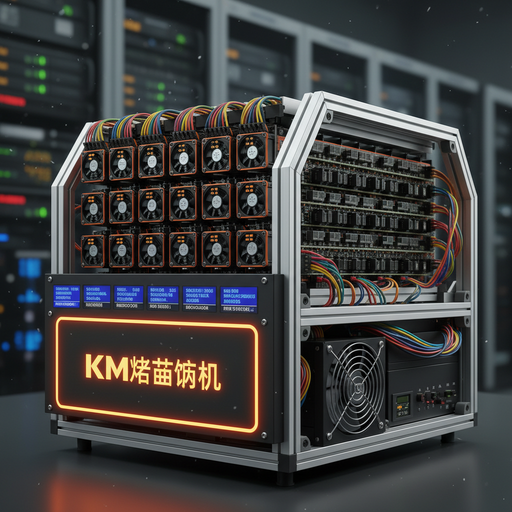


Explaining Bitcoin Mining: How the Network Powers Digital Transactions
Bitcoin mining is far more than just a technical process—it’s the fundamental mechanism that keeps the Bitcoin network secure, functional, and decentralized. To explain bitcoin mining properly, you need to understand how it serves as the backbone of digital currency validation without requiring any central authority. At its core, mining enables transactions to be confirmed and permanently recorded on the blockchain through a system called distributed proof-of-work (PoW). The term “mining” draws a parallel to extracting precious metals: just as miners extract gold and diamonds from the earth, Bitcoin miners use computational resources to introduce new bitcoins into circulation and validate transactions on the network’s immutable ledger.
Why Bitcoin Mining Matters: The Foundation of Decentralized Transactions
To fully explain bitcoin mining’s importance, consider the problem it solves: in traditional payment systems, a trusted intermediary like a bank verifies that money isn’t spent twice and that transactions are legitimate. Bitcoin replaces this intermediary with a mathematical process. Without miners, the network would have no way to reach consensus on which transactions are valid or prevent someone from spending the same bitcoin multiple times—a flaw known as the double-spending problem.
When Satoshi Nakamoto launched Bitcoin in January 2009, the system needed a way to maintain trust without a central authority. Miners accomplish this by bundling pending transactions into blocks and solving complex mathematical puzzles to add those blocks to the blockchain. Each miner who successfully completes this work receives newly created bitcoins plus transaction fees as a reward. This economic incentive is crucial: it motivates millions of participants worldwide to invest in equipment and electricity to support the network.
The mining process creates what economists call “proof of work”—concrete evidence that significant computational effort was expended to secure each block. Because altering a past block would require redoing all the computational work of every subsequent block, the cost of attacking the network becomes economically irrational. As more blocks accumulate, the network becomes exponentially more secure.
How Bitcoin Mining Works: From Blocks to Proof of Work
Mining follows a continuous cycle. Miners gather unconfirmed transactions broadcast across the peer-to-peer network and package them into a candidate block. They then reference the previous block’s header, creating a chain linking all blocks together chronologically. The critical step comes next: miners attempt to solve the “proof of work” puzzle.
This puzzle involves finding a specific number called a “nonce” that, when combined with other block data and processed through the SHA-256 hashing algorithm, produces a result below a predetermined target value. The SHA-256 algorithm, originally created by the National Security Agency, generates a 256-bit output. Even the tiniest change to the input produces a completely different hash—so miners must try billions of combinations, incrementing the nonce each time, until they find a valid solution.
The difficulty of this puzzle isn’t fixed—it adjusts automatically every 2,016 blocks (approximately two weeks) to maintain Bitcoin’s design target: one new block every ten minutes. When more miners join the network, blocks get created faster, so the difficulty rises proportionally. Conversely, if miners leave, difficulty decreases. This self-regulating mechanism is what keeps Bitcoin’s transaction confirmation time consistent despite fluctuating network participation.
When a miner discovers a valid block solution, they broadcast it to the entire network. Other nodes quickly verify the solution, add the block to their copy of the blockchain, and begin working on the next block. The successful miner receives the block reward—currently 6.25 bitcoins—plus all transaction fees from the transactions included in that block.
Mining Hardware Evolution: From CPUs to Specialized ASICs
To properly explain bitcoin mining’s current state, understanding this technological transformation is essential. When Bitcoin launched, mining difficulty was just 1, and Satoshi Nakamoto mined the Genesis block (block 0) containing 50 bitcoins using an ordinary desktop computer’s central processing unit (CPU). In those early days, running a full Bitcoin node and mining bitcoins were essentially the same activity.
As Bitcoin’s price started climbing in 2011—reaching $1, then $30—the profit incentive attracted more participants and competition intensified. Miners discovered that graphics processing units (GPUs), originally designed for gaming, could perform the millions of mathematical calculations needed for mining much faster than CPUs. GPU mining became dominant by 2011-2012.
Within a year, field programmable gate arrays (FPGAs) emerged as an intermediate step, offering improvements over GPUs but still not optimal. By 2013, application-specific integrated circuits (ASICs) revolutionized mining. These chips are custom-designed exclusively for Bitcoin’s SHA-256 algorithm, making them orders of magnitude faster than any general-purpose computer component. A single ASIC performs trillions of hashes per second—a task that would take a CPU weeks to complete.
Today, ASIC mining is the only economically viable approach. The mining difficulty has grown from 1 to approximately 30 trillion, meaning modern miners must collectively perform over 30 trillion hash calculations before producing a single valid block. Home mining with consumer hardware has become essentially impossible; the competition from industrial-scale mining operations is simply too intense.
Bitcoin’s Programmatic Supply: Halvings and the 21 Million Cap
Bitcoin mining incorporates an ingenious economic mechanism: the block reward halving. Every 210,000 blocks—roughly every four years—the mining reward is cut in half. Bitcoin launched with a 50-bitcoin block reward, which became 25 bitcoins in 2012, then 12.5 bitcoins in 2016, and currently stands at 6.25 bitcoins following the 2020 halving.
This declining reward structure ensures that Bitcoin’s total supply will never exceed 21 million coins. Mathematical projections suggest that by the year 2140, the final bitcoin will be mined, and the block reward will reach zero. Afterward, miners will earn exclusively from transaction fees.
This programmatic supply schedule makes Bitcoin what economists call a “hard asset”—its scarcity is mathematically guaranteed and cannot be altered. Gold, by comparison, increases in supply by 1-2% annually with no ceiling. This makes Bitcoin’s monetary properties fundamentally unique among global assets.
The Path to Mining: Solo, Pooled, and Institutional Options
Bitcoin mining offers several pathways for different participants. Solo mining means operating independently with your own ASIC hardware, keeping the entire block reward for yourself whenever you find a valid block. However, given the current difficulty, a solo miner might wait months or years before finding a block. Remarkably, in January 2022, one solo miner with just 120 TH/s of hashpower discovered a valid block against astronomical odds and earned approximately $265,000 in bitcoin—proof that it’s theoretically possible, even if statistically unlikely.
Pool mining represents a more practical approach for individuals. Miners join decentralized pools where they combine computational power with thousands of others, sharing rewards proportionally to their contributed hashpower. Prominent mining pools include Slush Pool, Poolin, F2Pool, Foundry, and others. Pooled mining offers consistent, predictable income rather than gambling on finding occasional blocks alone.
For those lacking capital or technical expertise, three business models exist: purchasing mining equipment from a company and hosting it in their facilities, buying a share of their hashpower, or investing directly in mining companies. Companies like Core Scientific, Iris Energy, Riot Blockchain, and Hut 8 Mining operate at industrial scale. The trade-offs include mandatory identity verification (KYC requirements) and service fees, plus reduced control over operational decisions.
Addressing Common Misconceptions About Bitcoin Mining
To explain bitcoin mining’s real-world impact, addressing persistent myths is essential.
Energy and Renewables: Critics claim Bitcoin mining wastes “dirty energy.” In reality, bitcoin mining creates economic incentive for renewable energy adoption. Solar and wind generation now cost 3-4 cents per kilowatt-hour and 2-5 cents per kWh respectively—cheaper than fossil fuels at 5-7 cents per kWh. Miners naturally settle where electricity is cheapest, and renewables increasingly win that competition. Regions like West Texas have abundant wind and solar resources that attract mining operations. Norway generates 100% of its electricity from hydropower, making it an ideal mining hub. Bitcoin mining essentially creates a new market buyer for stranded renewable energy capacity.
Consumption vs. Carbon Emissions: Bitcoin consumes approximately 87 terawatt-hours annually—around 0.55% of global electricity. However, consumption and carbon emissions are separate metrics. Bitcoin could theoretically consume the entire world’s electricity with zero net carbon impact if powered entirely by renewables. The Cambridge Center for Alternative Finance estimated that 39-73% of Bitcoin mining uses carbon-neutral energy sources, depending on the measurement period. The Bitcoin Mining Council reported that 59.5% of the mining industry’s electricity came from sustainable sources in Q2 2022.
Per-Transaction Energy Comparison: Detractors often claim Bitcoin uses excessive energy per transaction compared to payment networks like Visa. This comparison fundamentally misunderstands how Bitcoin works. Most mining energy goes into creating new bitcoins and securing the blockchain infrastructure—not into processing each individual transaction. Once bitcoins exist, transaction validation requires minimal energy. Additionally, traditional payment systems involve multi-layered infrastructure that can take six months to finalize settlements, wasting energy throughout. Bitcoin provides instant, irreversible final settlement, making it a fundamentally different system.
The emerging opportunity involves leveraging Bitcoin mining’s demand for energy to accelerate renewable infrastructure development and even enable new technologies like ocean energy capture, potentially providing clean power to populations worldwide.