

Trade
Basic
Futures
Futures
Hundreds of contracts settled in USDT or BTC
Options
HOT
Trade European-style vanilla options
Unified Account
Maximize your capital efficiency
Demo Trading
Futures Kickoff
Get prepared for your futures trading
Futures Events
Futures Mall
Participate in events to win generous rewards
Demo Trading
Use virtual funds to experience risk-free trading
Earn
Launch
CandyDrop
Collect candies to earn airdrops
Launchpool
Quick staking, earn potential new tokens
HODLer Airdrop
Hold GT and get massive airdrops for free
Launchpad
Be early to the next big token project
Alpha Points
NEW
Trade on-chain assets and enjoy airdrop rewards!
Futures Points
NEW
Earn futures points and claim airdrop rewards
Investment
Simple Earn
Earn interests with idle tokens
Auto-Invest
Auto-invest on a regular basis
Dual Investment
Buy low and sell high to take profits from price fluctuations
Soft Staking
Earn rewards with flexible staking
Crypto Loan
0 Fees
Pledge one crypto to borrow another
Lending Center
One-stop lending hub
VIP Wealth Hub
Customized wealth management empowers your assets growth
Private Wealth Management
Customized asset management to grow your digital assets
Quant Fund
Top asset management team helps you profit without hassle
Staking
Stake cryptos to earn in PoS products
Smart Leverage
NEW
No forced liquidation before maturity, worry-free leveraged gains
GUSD Minting
Use USDT/USDC to mint GUSD for treasury-level yields

More





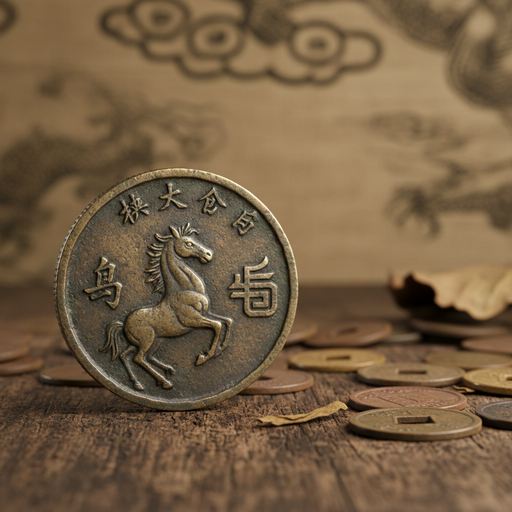

Beyond Coins and Currency: Understanding How Commodity Money Shaped Financial Systems
When we think of money today, we imagine digital transfers and paper notes. But centuries ago, the concept of currency was far more tangible—societies trusted and exchanged items that held real, physical value. This is the essence of commodity money, a system where the currency itself possesses intrinsic worth derived from what it’s made of, rather than from government decree or trust in a central authority.
Why Commodity Money Once Ruled Ancient Trade
Long before banks and central monetary systems existed, trade relied on barter—a direct exchange of goods that faced a critical problem: the double coincidence of wants. Imagine you’re a farmer with grain but need pottery. You must find a potter who needs grain at exactly that moment. To solve this impasse, societies began accepting certain items with recognized value as a medium of exchange to smooth commercial transactions.
Different civilizations discovered their own solutions based on local resources. In ancient Mesopotamia, barley served this function. Egyptian societies accepted grain, cattle, and precious metals. Across Africa, Asia, and Pacific islands, cowry shells circulated as currency due to their scarcity and cultural significance. Some societies even used salt, capitalizing on its essential role as a food preservative. In Central America, the Maya initially used cocoa beans for barter, which eventually became formalized as currency under Aztec dominance.
As economies became more sophisticated, precious metals rose to prominence. Gold and silver provided the qualities that made them ideal for standardization—they were durable, divisible into consistent units, and scarce enough to maintain value without being abundant.
What Makes Commodity Money Valuable
The durability of commodity money distinguishes it from perishable goods. While shells or grain could deteriorate, metals like gold and silver withstand time and handling, preserving their worth across generations. This longevity proved essential to establishing trust in a currency.
Scarcity plays an equally critical role. When something is readily available, it holds little value as currency. The limited supply of precious metals and rare shells ensured they maintained purchasing power. Combined with universal recognizability—people could easily identify authentic gold or verify shell characteristics—these materials became widely acceptable across trading networks.
Divisibility matters too. Unlike a unique art object, commodity money could be melted, broken into smaller pieces, or minted into standardized coins of various denominations. This flexibility made transactions practical whether purchasing a loaf of bread or a piece of land.
Finally, commodity money functions as a store of value. Unlike currency that loses purchasing power, items with intrinsic worth could be accumulated and saved with confidence that they’d retain their value years later.
How Commodity Money Evolved Into Modern Currency
The rigidity of physical commodity money eventually created problems. Transporting and securing large quantities of gold or silver became cumbersome and dangerous. Verifying authenticity required expertise. These challenges prompted the shift toward representative money—paper certificates backed by actual metal reserves stored in vaults. You could exchange your paper note for gold, giving it legitimacy while solving transportation issues.
Representative money introduced a crucial innovation but also a vulnerability. The system depended on trust that issuing institutions maintained adequate reserves. When that trust eroded, the system fractured.
This dynamic ultimately led to fiat money—currency with no physical backing, deriving value purely from government declaration and collective acceptance. Fiat systems offered governments tremendous flexibility in monetary policy. Central banks could adjust interest rates, expand money supplies, and respond to economic crises with tools unavailable under commodity constraints.
However, this flexibility cut both ways. Without commodity limitations, governments could manipulate currency supply without natural restraints. While monetary stimulus can temporarily boost economies, it often fuels speculation, asset bubbles, and—at extremes—inflation or hyperinflation far more severe than any commodity system would permit.
Commodity Money vs. Fiat and Digital Alternatives
The stability of commodity money stems from its independence from political decision-making. The gold supply doesn’t respond to elections or policy shifts. This predictability made commodity-based systems resistant to manipulation.
Fiat money prioritizes flexibility over stability. Policymakers can respond dynamically to unemployment, recessions, and financial crises. Yet this control mechanism frequently becomes a tool for excessive intervention, sometimes reaching measures that destabilize rather than stabilize economic systems.
Bitcoin emerged in 2009 as a fascinating hybrid. Like commodity money, Bitcoin possesses scarcity—fixed at 21 million coins maximum—and functions as a bearer asset (you control it directly without intermediaries). Like fiat currency, it’s divisible into microscopic units; the smallest Bitcoin unit, the Satoshi, represents one hundred millionths of a coin.
But Bitcoin adds layers absent from both predecessors: decentralization (no single authority controls it) and censorship resistance (no entity can prevent transactions). These properties combine the stability assurances of commodity money with the efficiency of digital currency.
Is Commodity Money Making a Comeback?
Traditional commodity money receded as economies required greater flexibility than physical metals permitted. Yet the very concerns that drove this transition—government control and currency manipulation—have inspired a return to commodity-like principles through technology.
Bitcoin doesn’t circulate as physical commodity money, yet captures its essential character: scarcity, divisibility, durability (secured by cryptography), and intrinsic desirability from market participants who recognize its value independently of government endorsement.
Whether cryptocurrency represents commodity money’s true successor remains debated among economists. What’s undeniable is that commodity money’s historical role—establishing trust, enabling commerce, and storing value—continues to influence how modern societies structure their monetary systems. The principles that made gold valuable for millennia now shape how millions evaluate digital assets, proving that the essence of commodity money transcends its specific physical form.