

Trade
Basic
Futures
Futures
Hundreds of contracts settled in USDT or BTC
Options
HOT
Trade European-style vanilla options
Unified Account
Maximize your capital efficiency
Demo Trading
Futures Kickoff
Get prepared for your futures trading
Futures Events
Futures Mall
Participate in events to win generous rewards
Demo Trading
Use virtual funds to experience risk-free trading
Earn
Launch
CandyDrop
Collect candies to earn airdrops
Launchpool
Quick staking, earn potential new tokens
HODLer Airdrop
Hold GT and get massive airdrops for free
Launchpad
Be early to the next big token project
Alpha Points
NEW
Trade on-chain assets and enjoy airdrop rewards!
Futures Points
NEW
Earn futures points and claim airdrop rewards
Investment
Simple Earn
Earn interests with idle tokens
Auto-Invest
Auto-invest on a regular basis
Dual Investment
Buy low and sell high to take profits from price fluctuations
Soft Staking
Earn rewards with flexible staking
Crypto Loan
0 Fees
Pledge one crypto to borrow another
Lending Center
One-stop lending hub
VIP Wealth Hub
Customized wealth management empowers your assets growth
Private Wealth Management
Customized asset management to grow your digital assets
Quant Fund
Top asset management team helps you profit without hassle
Staking
Stake cryptos to earn in PoS products
Smart Leverage
NEW
No forced liquidation before maturity, worry-free leveraged gains
GUSD Minting
Use USDT/USDC to mint GUSD for treasury-level yields

More


Trending Topics
View More1.66K Popularity
2.14K Popularity
878 Popularity
138 Popularity
41.24K Popularity




Pin
The 100 Million Yen Paradox: How Japan's Historic Rate Hike Is Reshaping Global Market Dynamics
For over a decade, borrowing 100 million yen in Japan was almost like getting free money. At interest rates hovering between -0.2% and 0.1% from 2010 to 2023, investors faced a peculiar economic reality: the bank charged you nearly nothing to borrow, or even paid you to do so. But that era has abruptly ended. The yield on Japan’s 2-year government bonds has now climbed to 1% for the first time since 2008—a watershed moment that signals far more than just a policy shift in Tokyo. It marks the unwinding of what may be the world’s most consequential financial subsidy: the systematic flow of dirt-cheap capital that has quietly fueled global asset rallies for the past fifteen years.
The story begins with Japan’s deflationary predicament. Since the bubble economy burst in 1990, the world’s third-largest economy has been trapped in a cycle of stagnant prices, sluggish wages, and weak consumption. To break free, the Bank of Japan deployed some of the world’s most extreme monetary tools—negative interest rates, yield curve control (YCC), and near-zero borrowing costs. The goal was simple: make capital so cheap that savers would have no choice but to invest and spend. It worked, at least on one level: investors did invest—often overseas, where higher returns beckoned from markets across the United States, Southeast Asia, and China.
The Trillion-Dollar Arbitrage: Why 100 Million Yen Changed Everything
Picture this scenario: You borrow 100 million yen at 0.05% interest. You convert it to US dollars, purchase American Treasuries yielding 4-5%, or buy stocks, gold, or Bitcoin. You hold these assets, wait for appreciation, then convert back to yen and repay your loan. The interest rate differential is so wide that you profit regardless—this is the yen carry trade, and it became the hidden engine driving global markets.
The scale of this operation is staggering. While precise figures remain elusive, global financial institutions estimate that carry-trade positions range from $1-2 trillion on the conservative end to $3-5 trillion at the upper bound. To put this in perspective, that’s comparable to the annual GDP of Japan itself. This mechanism didn’t just move money around; it fundamentally reshaped where capital flowed globally. When 100 million yen could be borrowed for nearly nothing, institutions—Japanese pension funds, insurance companies, banks—had every incentive to deploy that capital abroad in search of higher yields.
The catch? This arrangement only works as long as the interest rate gap exists and the yen remains stable or weak. The moment Japanese rates rise, the arbitrage breaks. Borrowers rush to exit positions, converting foreign assets back into yen to repay loans before carrying costs spike. This creates a reverse flow: capital that poured out of Japan must now flow back in. Japanese domestic institutions, facing better returns at home, have less reason to maintain overseas exposure. The result is what traders call “liquidity unwinding”—and it’s beginning to ripple across every asset class.
The Stock Market Reckoning: When the Cheap Capital Dries Up
US equities have soared over the past decade, but few observers want to admit the uncomfortable truth: a significant portion of that rally was funded by carry trades, with cheap Japanese capital playing a starring role. As carry-trade positions unwind and Japanese institutions repatriate funds, US stocks face a new headwind precisely when valuations are already stretched and sentiment around themes like artificial intelligence remains cautious.
The pressure isn’t limited to the United States. Markets across Asia—South Korea, Taiwan, Singapore—have similarly benefited from Japanese capital flowing abroad seeking returns. As rates rise in Tokyo and funds rotate back home, these markets face short-term volatility spikes. Yet there’s a silver lining for Japan’s own domestic stock market. While higher rates create near-term headwinds for exporters and other rate-sensitive sectors, the normalization of interest rates signals the potential end of Japan’s long deflationary cycle. This economic pivot could eventually prove bullish; consider that veteran investor Warren Buffett has tripled his bets on Japan in recent years. Having disclosed holdings of approximately $6.3 billion in Japan’s five largest trading companies in 2020, Buffett’s positions have since swelled to over $31 billion as valuations rose and he continued buying. For value investors, the combination of cheap assets, stable profits, high dividends, and the possibility of yen appreciation represents an opportunity that rarely emerges.
The Divergent Paths: Gold Gains While Bitcoin Faces Headwinds
Gold and Bitcoin face starkly different outcomes from Japan’s monetary tightening, though both are linked to the broader liquidity story.
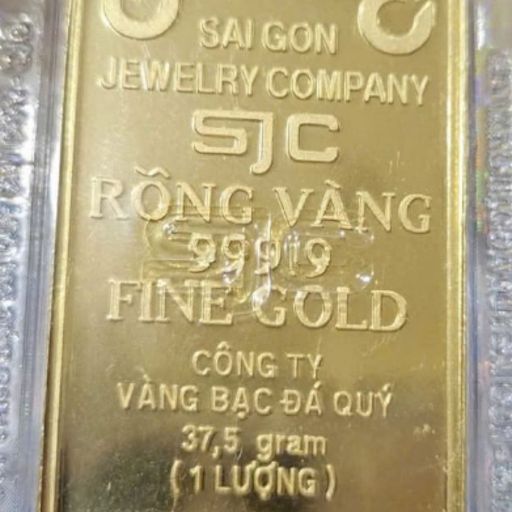
Gold’s math is straightforward: a stronger yen directly pressures the US Dollar Index (which includes a significant 13.6% yen weighting), weakening the dollar and lifting gold prices accordingly. Additionally, as global liquidity contracts, investors tend to flee volatile assets and seek the safety of gold—an asset with no counterparty risk and a centuries-long track record as a store of value. There’s also a structural argument: rising Japanese interest rates hint at a broader global trend toward tighter credit conditions and higher debt servicing costs across nations, making the stability and non-sovereign nature of gold increasingly attractive. The medium-to-long-term outlook appears constructive.
Bitcoin, by contrast, is among the most liquid risk assets globally. It trades around the clock and tracks closely with the Nasdaq. When carry trades unwind and global liquidity contracts, Bitcoin is often the first casualty—it’s the market’s “liquidity barometer,” hypersensitive to shifts in funding conditions. Current BTC pricing stands at $89.54K, yet this digital asset faces near-term pressure as capital dries up and risk appetite cools. However, the longer-term narrative differs. As nations face mounting fiscal pressures and global credit risks intensify, “non-sovereign” assets gain appeal. Just as gold benefits from systemic uncertainty, Bitcoin could eventually find support as a portfolio hedge against traditional credit risks and currency debasement, even if the near-term path involves volatility and downside moves.
The Broader Implication: A New Financial Era
The world has been living in an era subsidized by Japan’s monetary extremism. Whether you held stocks, gold, or Bitcoin, your investment thesis implicitly assumed access to the 100 million yen pipeline—that endless supply of near-free capital flowing from Tokyo into global risk assets. Those days are finished. Japan’s interest rates rising to 1% isn’t merely a policy adjustment; it’s a regime change. The easy-money environment that inflated asset prices across the globe is giving way to something harder and more real: higher funding costs, tighter liquidity, and capital that must prove its worth through returns rather than through the miracle of free borrowing.
Understanding these capital flow mechanics will be crucial in the months ahead. When the world’s largest source of subsidized capital shuts down, every asset must recalibrate. Historically, such transitions are turbulent but necessary—the most resilient investors are those who recognize the shift in the current.