

Trade
Basic
Futures
Futures
Hundreds of contracts settled in USDT or BTC
Options
HOT
Trade European-style vanilla options
Unified Account
Maximize your capital efficiency
Demo Trading
Futures Kickoff
Get prepared for your futures trading
Futures Events
Futures Mall
Participate in events to win generous rewards
Demo Trading
Use virtual funds to experience risk-free trading
Earn
Launch
CandyDrop
Collect candies to earn airdrops
Launchpool
Quick staking, earn potential new tokens
HODLer Airdrop
Hold GT and get massive airdrops for free
Launchpad
Be early to the next big token project
Alpha Points
NEW
Trade on-chain assets and enjoy airdrop rewards!
Futures Points
NEW
Earn futures points and claim airdrop rewards
Investment
Simple Earn
Earn interests with idle tokens
Auto-Invest
Auto-invest on a regular basis
Dual Investment
Buy low and sell high to take profits from price fluctuations
Soft Staking
Earn rewards with flexible staking
Crypto Loan
0 Fees
Pledge one crypto to borrow another
Lending Center
One-stop lending hub
VIP Wealth Hub
Customized wealth management empowers your assets growth
Private Wealth Management
Customized asset management to grow your digital assets
Quant Fund
Top asset management team helps you profit without hassle
Staking
Stake cryptos to earn in PoS products
Smart Leverage
NEW
No forced liquidation before maturity, worry-free leveraged gains
GUSD Minting
Use USDT/USDC to mint GUSD for treasury-level yields

More


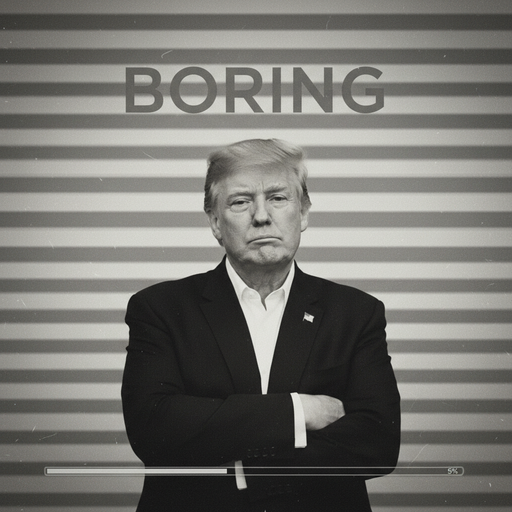




Yat Siu on Crypto's Post-Trump Era: From Political Hype to Structure-Driven Growth
According to CoinDesk reporting, Yat Siu, the executive chairman and co-founder of Animoca Brands, recently shared his perspective on the crypto market’s evolving dynamics. His analysis marks a critical inflection point in how the industry should think about value creation and growth drivers going forward.
The End of the “Trump Moment” and Political Narratives
The crypto market entered 2025 riding on substantial optimism surrounding Donald Trump’s return to office. Market participants had placed outsized bets on pro-crypto political tailwinds, expecting regulatory breakthroughs and favorable policy shifts. However, as the initial months unfolded, those inflated expectations failed to materialize at the pace many had anticipated. According to Yat’s assessment, this signals the conclusion of what could be termed the “politically driven” phase of recent crypto cycles—a period when sentiment and policy expectations dominated trading narratives. The market has exhausted the gains available from political momentum alone.
Institutional Capital Reshaping Market Hierarchy
As political narratives fade, institutional capital is playing an increasingly decisive role in determining market structure. Yat points out that major institutions have been systematically positioning Bitcoin toward the status of a gold-like reserve asset—an evolution that fundamentally reshapes how different cryptocurrencies are evaluated. This shift creates an asymmetry in the market: Bitcoin consolidates its reserve asset positioning, while alternative cryptocurrencies face mounting pressure to demonstrate tangible, real-world utility beyond speculation. Altcoins can no longer rely on narrative alone; they must prove their practical value proposition through adoption, technology, and problem-solving capability.
AI Convergence and Hong Kong’s Strategic Position
One of Yat’s most compelling observations concerns the rapid convergence between artificial intelligence and cryptocurrency technology. Rather than treating these as separate domains, he frames crypto as “a natural asset class proxy for AI”—suggesting that the technological and economic trajectories of these two fields are becoming increasingly intertwined. This convergence is already visible in the emergence of AI-powered blockchain applications, decentralized AI networks, and token-based incentive structures for machine learning models. Against this backdrop, Yat highlights that Hong Kong is positioning itself as a crucial global nexus where these forces intersect. The city’s regulatory sophistication, financial infrastructure, and openness to blockchain innovation create ideal conditions for becoming a hub where AI-crypto synergies develop at scale.
What’s Next: Structure Over Sentiment
The overarching message from Yat’s analysis is clear: the crypto market is transitioning from a sentiment and narrative-driven environment toward one governed by infrastructure, regulation, and genuine user adoption. This represents maturation—a shift away from cyclical hype toward sustainable foundations. Projects and assets that can articulate clear infrastructure benefits, navigate regulatory frameworks effectively, and build real user bases will outperform those relying on cycles of hope and fear. For investors and builders, the implication is straightforward: conduct deeper due diligence on technological fundamentals and utility, while remaining skeptical of purely political or speculative narratives.