


Futures
Access hundreds of perpetual contracts
TradFi
Gold
One platform for global traditional assets
Options
Hot
Trade European-style vanilla options
Unified Account
Maximize your capital efficiency
Demo Trading
Introduction to Futures Trading
Learn the basics of futures trading
Futures Events
Join events to earn rewards
Demo Trading
Use virtual funds to practice risk-free trading
Launch
CandyDrop
Collect candies to earn airdrops
Launchpool
Quick staking, earn potential new tokens
HODLer Airdrop
Hold GT and get massive airdrops for free
Launchpad
Be early to the next big token project
Alpha Points
Trade on-chain assets and earn airdrops
Futures Points
Earn futures points and claim airdrop rewards


More

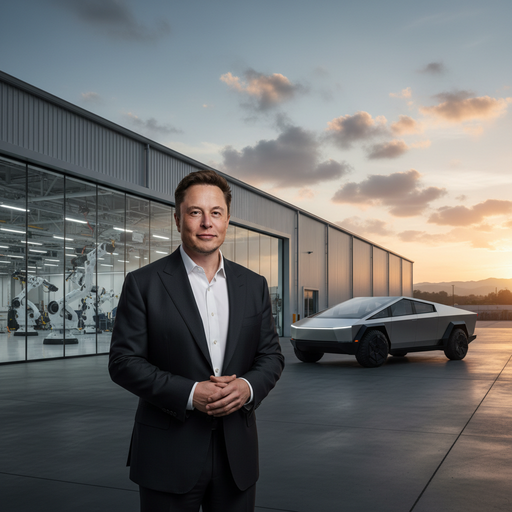




What Does Elon Musk Earn Every Second? Breaking Down Billionaire Income
The math behind Elon Musk’s per-second earnings reveals a financial reality that staggers the imagination. Based on calculations derived from his estimated net worth, Musk accumulates approximately $656 every single second. To contextualize this figure: while most people work an entire year to earn what the average American takes home annually, Musk generates this same amount—roughly $53,490—in just 80 seconds of existing wealth appreciation.
This extraordinary earnings rate isn’t tied to a traditional salary or bonus structure. Instead, it emerges from the fluctuating value of his stakes in world-changing companies like Tesla, SpaceX, X (formerly Twitter), Neuralink, and The Boring Company. His wealth operates in an entirely different economic dimension, one where time and money translate into each other at velocities most people cannot fathom.
The Per-Minute Perspective: Scaling the Numbers
Expanding the timeframe slightly reveals even more jarring proportions. In a single minute, Musk’s wealth grows by over $43,000—an amount that represents roughly 81% of what a full-time American worker earns in a full year. This disparity underscores not just Musk’s exceptional position, but also the yawning economic gap in modern capitalism.
Within seven days, his earnings surpass $100 million—a figure that feels almost science-fictional in its scale. To accumulate this much through traditional employment would require thousands of lifetimes for an ordinary worker. For Musk, it happens automatically through his ownership stakes, market valuations, and the compounding effect of asset appreciation.
The Wealth Behind the Calculation: $194 Billion and Beyond
As of recent reports, Musk maintains a net worth in the range of $170-195 billion, making him consistently one of the world’s three wealthiest individuals. His primary competitors for the top spot are Jeff Bezos (Amazon founder) and Bernard Arnault (LVMH chief), creating an elite tier of ultra-billionaires separated from the rest of humanity by orders of magnitude.
What amplifies this wealth narrative is its volatility. In November 2021, Musk’s net worth peaked at an eye-watering $340 billion—a level that would have generated even more staggering per-second earnings. His subsequent drop to current levels (partially following the X acquisition for $44 billion) demonstrates how rapidly these fortunes can shift, yet he remains unshakably positioned among the planet’s richest humans.
Understanding His Fortune: Stock Holdings Over Salary
The mechanism behind Musk’s earnings differs fundamentally from traditional executive compensation. His wealth isn’t primarily generated through salary checks or performance bonuses. Instead, it derives almost entirely from his controlling stakes in his companies.
This structure creates interesting tax implications. Stock-based wealth can afford certain advantages in capital gains tax treatment compared to earned income, though selling shares triggers regulatory disclosure requirements that can impact stock prices and investor sentiment. Musk cannot liquidate his holdings without pre-announcing transactions, a constraint designed to ensure market transparency but that also creates practical limitations on how quickly he can convert paper wealth into liquid cash.
The illiquidity factor is crucial to understanding billionaire wealth. While Musk’s net worth appears astronomical on balance sheets, much of it remains locked within company valuations. Converting billions into actual spendable cash involves navigating complex securities regulations, potential tax consequences, and risks of moving markets.
Global Ranking and Market Dynamics
Musk’s position among the world’s wealthiest fluctuates with market movements, particularly Tesla’s stock performance. When tech stocks surge, his ranking solidifies toward the top. During downturns, his relative position may slip, though rarely far. This dynamic ranking reflects how concentrated his wealth is in a few key equities rather than diversified across multiple asset classes like some billionaires prefer.
His third or sometimes second-place global ranking carries symbolic weight in discussions of extreme wealth concentration. That three individuals—Musk, Bezos, and Arnault—collectively control wealth exceeding the annual GDP of most nations, raises fundamental questions about economic structure and opportunity distribution.
The Philanthropic Contradiction: Promises Versus Action
Despite accumulating money at a rate of $656 per second, Musk’s philanthropic commitments have generated significant controversy. In 2022, he publicly pledged $6 billion toward addressing global hunger through UN initiatives, yet implementation proved complicated. Rather than directly transferring funds to international organizations, Musk instead contributed approximately $5.7 billion worth of Tesla shares into a donor-advised fund (DAF).
This strategy, while legal and tax-efficient, sparked debate about whether it genuinely addresses urgent humanitarian crises or primarily serves to reduce his tax liabilities on capital gains. Donor-advised funds allow wealthy individuals to claim immediate tax deductions while controlling the timing and target of actual charitable distributions—sometimes over years or decades.
The gap between announced intentions and tangible humanitarian impact reflects a broader tension in how ultra-wealthy individuals approach social responsibility. When someone generates $33 million daily through passive wealth appreciation, expectations for corresponding charitable impact naturally follow.
What This Income Pattern Reveals About Economic Inequality
Examining Musk’s per-second earnings forces uncomfortable reflection on modern economic structures. The speed at which his wealth compounds—$656 every second, $43,000 every minute, over $33 million per day—contrasts sharply with wage-earning possibilities for the global majority.
An average American worker earning $53,490 annually would need to work approximately 1,400 years to match what Musk accumulates in a single day. This mathematical reality extends beyond mere wealth comparison into questions about capital allocation, technological disruption, and whether contemporary economic systems distribute opportunity equitably.
The mechanism generating these earnings—ownership of innovative companies, stock market appreciation, and technological monopoly positions—differs fundamentally from traditional labor-based income. This distinction raises questions about whether earnings reflect proportional value creation or whether financial systems amplify advantage for those already positioned within wealth-generating asset classes.
The Complexity of Billionaire Economics
Ultimately, Musk’s $656-per-second earnings encapsulate both his genuine business achievements and the structural features of modern capitalism that enable such extreme wealth accumulation. His companies have legitimately disrupted industries and advanced technologies that might otherwise progress more slowly. Yet the financial returns concentrated in his hands also reflect market dynamics, stock valuations, and legal frameworks that may warrant periodic reexamination.
Understanding how much money Elon Musk makes per second becomes less about celebrity financial trivia and more about examining the mechanisms through which wealth concentrates, the limitations of billionaire philanthropy, and the economic realities underlying one of the modern era’s most visible fortunes. His earnings trajectory invites not just amazement at the numbers, but critical thinking about whether current economic arrangements serve broader societal interests.