- Stock Market Performance and Challenges in 2025
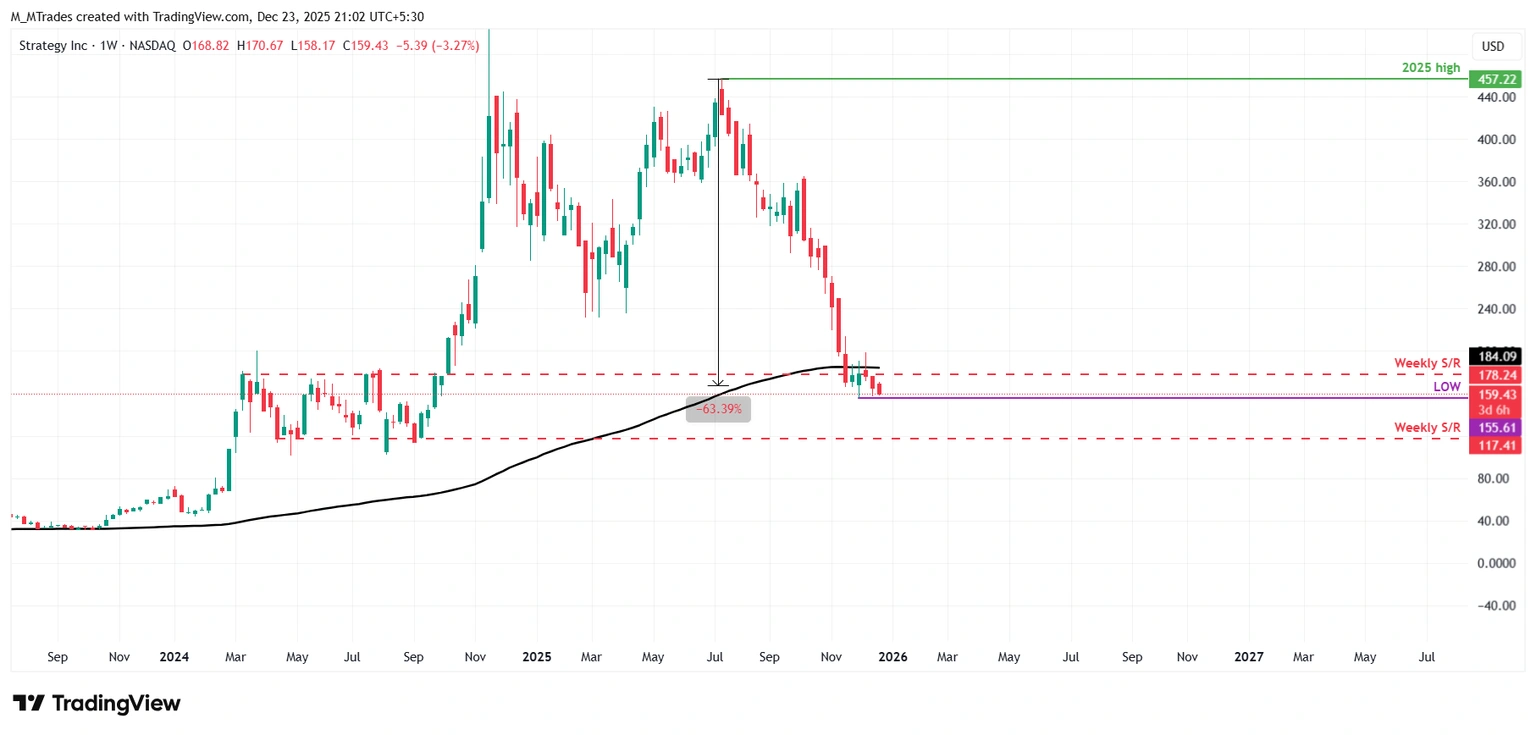
The share price of "Strategic" (MSTR) on the weekly chart has sharply declined from its yearly high of $457.22 on July 14 to its lowest point at $155.61 on December 1, a decrease of over 63%. The stock is currently trading near $160, approaching its lowest annual level and below the 200-week exponential moving average (EMA) at $184.09.
Weekly MSTR Chart
There are several reasons behind this correction in MSTR's price.
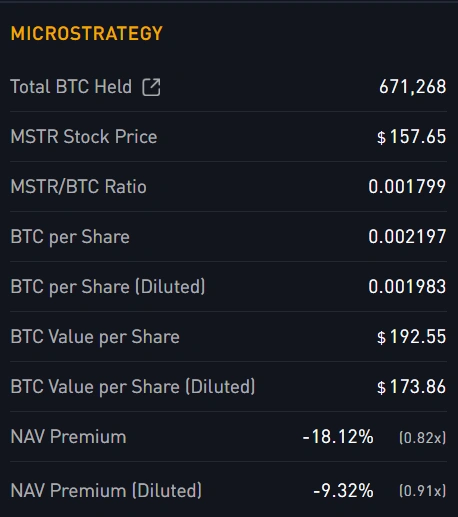
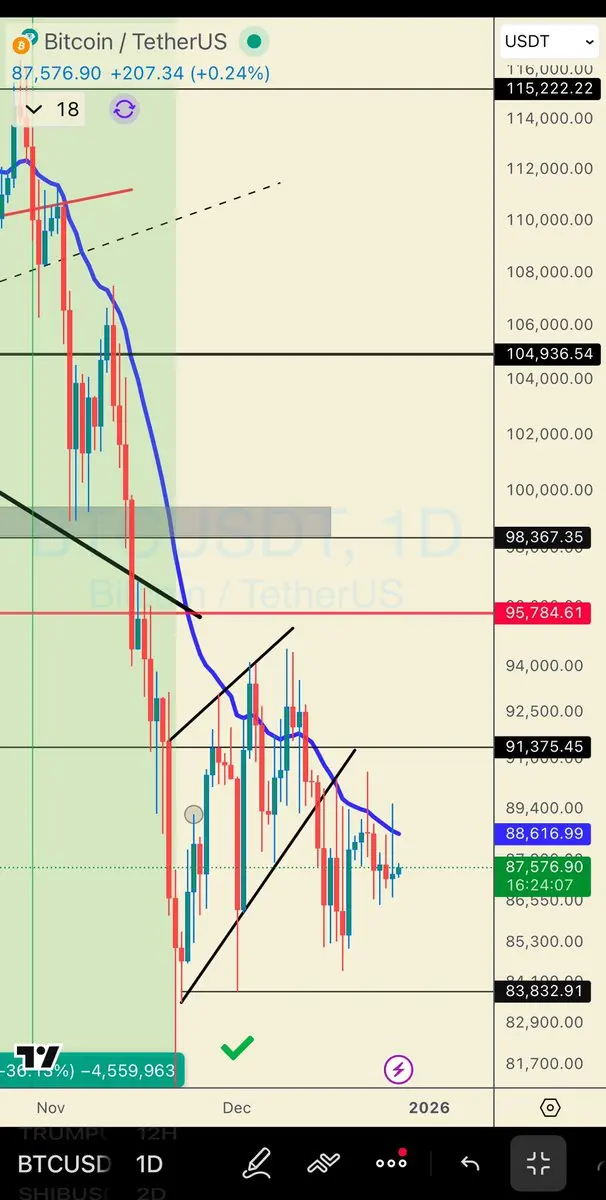
The sharp rise in Bitcoin's price to a record high of $126,199 on October 6, followed by a decline below the annual opening level of $93,576, and its current trend toward the lowest annual level at $74,508, have resulted in a weak or slightly negative performance in 2025 as the year approaches its end. Since MSTR is leveraged as a debt-funded bet on Bitcoin, its share price fluctuates more than Bitcoin's price, leading to significant losses for investors despite their holdings remaining steady.
Weekly BTC/USDT Pair Chart
Additionally, "Strategic" primarily finances its Bitcoin accumulation through convertible bonds, preferred shares, and stock offerings in the market, rather than selling Bitcoin. As a result, a large portion of its old debt is inexpensive. However, new borrowing and preferred shares carry much higher costs, leading to increased interest payments and annual profits.
Furthermore, repeated issuance of shares dilutes current investors' stakes, making each share represent a smaller slice of the company and its Bitcoin holdings. Consequently, in a strong and volatile 2025, characterized by notable quarterly fluctuations in the Bitcoin market, this has become a problem for "Strategic." The company can no longer easily raise cheap capital, while rising financing costs and shareholder dilution put pressure on cash flows and negatively impact the stock price, even if Bitcoin's price does not decline sharply.
Potential exclusion risks from indices, such as those caused by Morgan Stanley Capital International (MSCI), could lead to the removal of Bitcoin-dominated companies (more than 50% of assets) from major stock indices, thus treating them more as investment tools than operational companies.
If the Strategic index is excluded, passive funds and ETFs tracking these indices will be forced to sell MSTR shares, resulting in outflows worth billions of dollars. Additionally, investors are likely to redirect their capital from highly volatile assets, such as leveraged Bitcoin alternatives like MSTR, toward more stable assets. This development could lead to decreased liquidity and institutional demand, potentially triggering a downward spiral in MSTR stock prices.







 :
: