Yajing

vip
Age 0.8 Yıl
Peak Tier 0
No content yet
#ETHLongShortBattle ETH Futures Update: Liquidity Compression Before the Expansion Phase
Ethereum futures are no longer trading on simple directional bias — they are rotating around liquidity concentration and leverage imbalance. The real conflict is not bullish vs bearish opinion. It is positioning vs positioning.
At the center of this battle is psychological liquidity around the $2,000 region. Large clusters of short exposure have built repeatedly near this zone in recent sessions. When heavy leverage concentrates near a round number, price naturally gravitates toward it. The question is not
ETH-1,98%
BTC-0,77%
Peacefulheartvip
#ETHLongShortBattle ETH Futures Update: Liquidity Compression Before the Expansion Phase
Ethereum futures are no longer trading on simple directional bias — they are rotating around liquidity concentration and leverage imbalance. The real conflict is not bullish vs bearish opinion. It is positioning vs positioning.
At the center of this battle is psychological liquidity around the $2,000 region. Large clusters of short exposure have built repeatedly near this zone in recent sessions. When heavy leverage concentrates near a round number, price naturally gravitates toward it. The question is not whether ETH touches the level — it is whether the market accepts or rejects above it.
Current Futures Structure: Compression Under Pressure
ETH is currently rotating inside a tightening volatility range between major support and resistance. Volatility compression typically precedes expansion, especially when open interest remains elevated.
New developments in the derivatives landscape show:
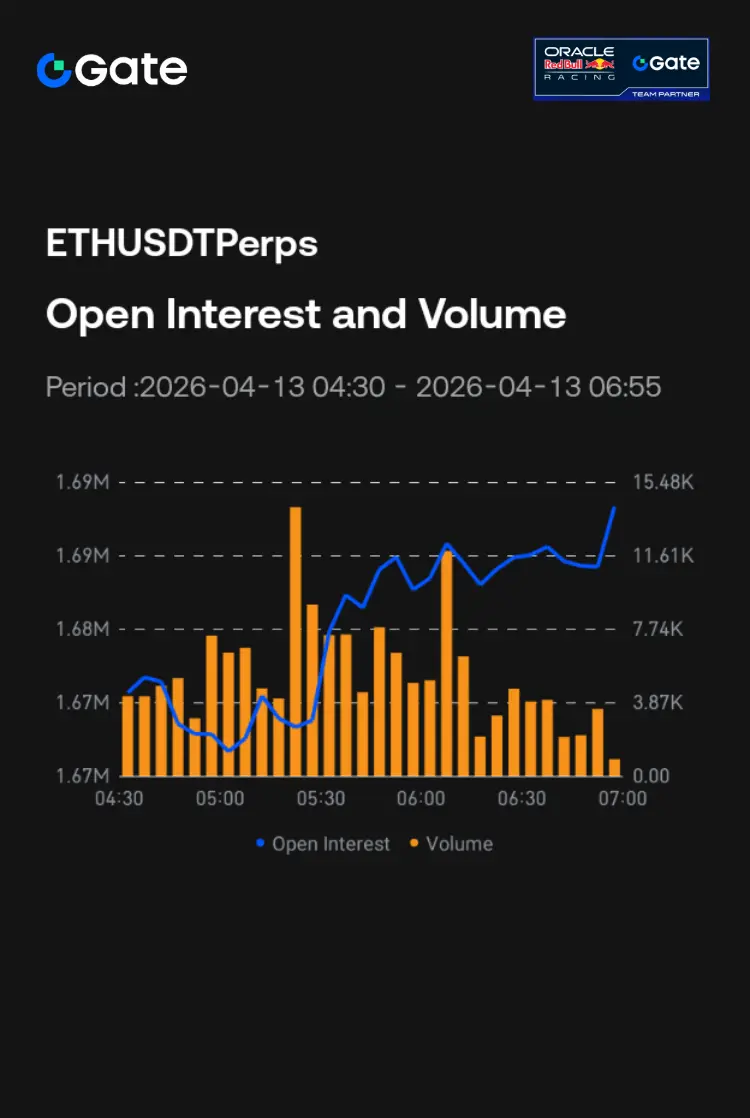
Open interest remains high relative to 7-day averages
Funding rates have fluctuated between neutral and slightly positive
Long/short ratios are close to equilibrium
Options positioning shows gamma concentration near round numbers
When positioning becomes balanced but leverage remains elevated, liquidation becomes the catalyst. The market is building energy — not direction.
Liquidity Map: Where the Market Wants to Go
Above price:
Short liquidation clusters above $2,000–$2,060
Thin liquidity pockets toward $2,120
Psychological magnet at $2,200
Below price:
Structural bids around $1,800
High-volume support node around $1,750
Leverage trigger zone near $1,600
Liquidity exists on both sides. Markets move toward areas where stops and forced orders accumulate. Right now, both sides are vulnerable.
Institutional Behavior & Spot vs Perpetual Divergence
An important shift is emerging between spot accumulation and futures positioning.
On-chain accumulation addresses continue scaling gradually, suggesting longer-term conviction. Meanwhile, some larger wallets appear to be reducing exposure during strength — likely risk-adjusting rather than fully exiting.
This divergence creates a dual-speed market:
Long-term participants quietly building exposure
Short-term leveraged traders fighting over resistance
Historically, this setup often leads to prolonged consolidation before a sharp repricing event.
Scenario Expansion: What Changes the Game?
1️⃣ Bullish Liquidity Squeeze
If ETH decisively reclaims $2,000 and sustains above it with expanding volume:
Shorts begin closing
Funding flips positive
Momentum traders enter
Acceleration toward $2,120–$2,200 becomes feasible
Upside moves in this context are often fast because they are driven by forced buying rather than organic demand.
But sustainability depends on holding above reclaimed liquidity. Acceptance matters more than breakout.
2️⃣ Controlled Distribution & Downside Sweep
If repeated rejections occur near resistance:
Momentum cools further
Leverage builds on longs expecting breakout
A drop below $1,800 opens a liquidity vacuum
Below $1,600, liquidation cascades could amplify downside significantly due to margin pressure.
In leveraged environments, breakdowns often travel faster than breakouts.
3️⃣ Extended Chop (The Patience Trap)
Markets sometimes remain inside defined liquidity boxes longer than expected. This traps breakout traders repeatedly.
In such cases:
Funding oscillates
Volatility contracts further
Open interest stays elevated
Emotional fatigue increases
When eventual expansion arrives, it typically surprises the majority.
Macro Overlay & Correlation Factors
Ethereum remains sensitive to macro liquidity conditions and Bitcoin correlation. If broader risk assets stabilize and capital rotates back into high-beta sectors, ETH tends to outperform.
However, if macro uncertainty rises, ETH’s leverage sensitivity can magnify downside moves relative to Bitcoin.
Traders should monitor:
Dollar strength
Treasury yield direction
Stablecoin supply growth
ETF and institutional flow trends
Liquidity drives everything in this phase.
Momentum & Behavioral Signals
Momentum indicators are cooling despite price stability. This often signals internal distribution or energy build-up before expansion.
Key warning:
Chasing impulsive candles in compression environments often leads to poor risk-reward entries. Confirmation-based trading remains statistically safer.
Markets reward patience in equilibrium phases.
Risk Framework for Futures Traders
In this environment:
Reduce position size during compression
Avoid over-leverage near round numbers
Wait for structure confirmation
Define invalidation clearly
Let volatility expansion confirm direction
Prediction without confirmation increases exposure to false breaks.
Final Assessment
Ethereum is not trending — it is preparing.
Current Conditions:
• Liquidity stacked above $2,000
• Structural support near $1,800
• High open interest
• Divided sentiment
• Volatility compression
This is a positioning war.
The next major move will likely be driven by forced unwinds — not opinions, not narratives, not social media conviction.
Above $2,000 with acceptance → squeeze potential
Below $1,800 → structural risk increases
Below $1,600 → liquidation acceleration zone
Until structure resolves, this remains a wait-and-react market.
Because in liquidity battles, the side that loses conviction first doesn’t just lose — it funds the move.
And when that unwind begins, it rarely moves slowly.
repost-content-media
  • Reward
  • 3
  • Repost
  • Share
Discoveryvip:
2026 GOGOGO 👊
View More
#ETHLongShortBattle
ETH/USDT Futures Outlook – Liquidity Compression Before Expansion
Ethereum futures are entering a decisive volatility phase following the completed sweep of the Previous Day High (PDH) at $2,148. The market has transitioned from expansion into compression, and historically, tight intraday Bollinger structures combined with elevated open interest tend to precede aggressive directional moves.
At the time of analysis, ETH is consolidating around the $2,050–$2,060 zone after rejecting premium liquidity above $2,140. This region now acts as a short-term equilibrium pocket where
ETH-1,98%
BTC-0,77%
Peacefulheartvip
#ETHLongShortBattle
ETH/USDT Futures Outlook – Liquidity Compression Before Expansion
Ethereum futures are entering a decisive volatility phase following the completed sweep of the Previous Day High (PDH) at $2,148. The market has transitioned from expansion into compression, and historically, tight intraday Bollinger structures combined with elevated open interest tend to precede aggressive directional moves.
At the time of analysis, ETH is consolidating around the $2,050–$2,060 zone after rejecting premium liquidity above $2,140. This region now acts as a short-term equilibrium pocket where both longs and shorts are building exposure ahead of a likely breakout.
Higher Timeframe Context – Liquidity Map
On the daily structure, price remains positioned in the upper half of the prior session’s range, preserving macro bullish structure despite the rejection from PDH. The key structural low remains $1,878 (PDL), which has not yet been swept in the current rotation.
Important structural observations:
Daily structure still shows higher lows.
Price remains above the daily mid-Bollinger mean (dynamic support zone).
The prior liquidity grab above $2,148 suggests engineered buy-side liquidity has already been cleared.
If price fails to reclaim $2,100 soon, distribution risk increases.
From a futures perspective, this creates asymmetry. Upside liquidity above $2,090–$2,125 remains thinner compared to downside liquidity resting below $2,022 and toward $1,995.
Derivatives Positioning & Open Interest Dynamics
New data indicates:
Open interest remains elevated relative to the weekly average.
Funding rates have normalized after turning slightly positive during the PDH sweep.
Long-short ratio is near equilibrium but tilting marginally long.
This is critical.
When price consolidates under resistance with elevated open interest, liquidation potential builds on both sides. The side that loses structure first typically accelerates sharply due to forced unwinds.
If funding flips aggressively positive while price stalls, downside squeeze probability increases.
If funding remains neutral while price reclaims $2,060 with volume expansion, upside ignition becomes statistically favored.
Microstructure – 5M Compression Phase
The 5-minute chart shows:
Extremely tight Bollinger squeeze
High volume node around $2,045–$2,055
Decreasing volume during consolidation
Lower highs forming intraday
Compression under resistance is usually distribution unless reclaimed quickly.
Key trigger levels:
Bullish trigger: Sustained break and hold above $2,060 with strong volume
Bearish trigger: Clean break below $2,045 followed by failed retest
Neutral zone remains $2,045–$2,060. This is chop territory and not optimal for positioning.
Expanded Scenario Modeling
Scenario 1 – Bullish Expansion (Liquidity Reversal)
If ETH holds above $2,045 and generates a confirmed Market Structure Shift above $2,060:
Short liquidity above $2,075 gets targeted.
Momentum algorithms likely flip long.
Acceleration toward $2,090 → $2,125 → $2,148 becomes viable.
If $2,148 breaks with volume, extension toward $2,180–$2,220 becomes possible.
However, upside requires volume expansion. Without volume, breakouts risk becoming traps.
Probability: Moderate but dependent on reclaim strength.
Scenario 2 – Bearish Continuation (Distribution Confirmation)
If $2,045 fails:
Liquidity pocket opens toward $2,022.
Below $2,022, air pocket down to $1,995.
Sweep of daily mean around $1,995 likely triggers volatility spike.
Extended move toward $1,950–$1,920 possible if derivatives cascade.
Given higher timeframe SAR bearish flip and PDH rejection, this scenario carries slightly higher probability unless buyers show aggressive defense.
Probability: Elevated.
Scenario 3 – False Breakout Trap (Silver Bullet Classic)
A grind toward $2,075–$2,090 followed by sharp rejection would:
Create fresh buy-side liquidity.
Trap breakout longs.
Trigger MSS below $2,045.
Open pathway toward deeper daily liquidity zones.
This pattern aligns with typical NY open volatility engineering behavior.
Probability: Moderate during high-liquidity sessions.
Macro Overlay & Correlation Risk
Bitcoin correlation remains a major variable. If BTC stabilizes above its own key intraday support, ETH has room for upside attempt. If BTC loses structure, ETH downside acceleration increases due to beta sensitivity.
Additionally:
U.S. session liquidity inflows can temporarily override structure.
Options gamma positioning near round numbers may magnetize price toward $2,100 before resolution.
Stablecoin inflows/outflows should be monitored for spot confirmation.
Risk Management Framework
Professional futures positioning in this environment requires:
Reduced size inside compression zones.
Confirmation-based entries (not anticipation).
Strict invalidation levels.
Avoiding overexposure before volatility expansion.
The market is signaling expansion is near — but direction remains conditional.
Final Assessment
Current Conditions:
• PDH liquidity sweep completed
• Intraday compression under resistance
• Elevated open interest
• 5M Bollinger squeeze
• Higher timeframe mixed signals
Market State: Pre-expansion equilibrium.
Directional bias: Slight bearish tilt unless $2,060 is reclaimed with authority.
Immediate focus:
🟢 Bullish above $2,060 with volume
🔴 Bearish below $2,045 with failed retest
⚪ No trade inside range
Volatility is not gone — it is being stored.
Liquidity is concentrated.
The expansion phase is approaching.
repost-content-media
  • Reward
  • 3
  • Repost
  • Share
Discoveryvip:
LFG 🔥
View More
#DeepCreationCamp
深度创作营
2026 Market Structure and Capital Flow Dynamics in Digital Asset Ecosystems
The 2026 digital asset landscape is operating inside a structurally selective liquidity regime. Unlike prior expansion cycles dominated by retail-driven momentum, current price behavior across major crypto assets reflects institutional capital positioning, derivatives leverage concentration, and macro-policy sensitivity. Volatility has not disappeared — it has become conditional. Expansion now follows liquidity catalysts, not social media narratives.
Monetary Policy as the Primary Volatility Fi
BTC-0,77%
ETH-1,98%
Peacefulheartvip
#DeepCreationCamp
深度创作营
2026 Market Structure and Capital Flow Dynamics in Digital Asset Ecosystems
The 2026 digital asset landscape is operating inside a structurally selective liquidity regime. Unlike prior expansion cycles dominated by retail-driven momentum, current price behavior across major crypto assets reflects institutional capital positioning, derivatives leverage concentration, and macro-policy sensitivity. Volatility has not disappeared — it has become conditional. Expansion now follows liquidity catalysts, not social media narratives.
Monetary Policy as the Primary Volatility Filter
A defining feature of this cycle is the influence of the Federal Reserve. Interest rate trajectories, balance sheet policies, and forward guidance now directly shape risk appetite across equities and digital assets.
When tightening conditions persist:
Liquidity compresses
Breakouts fail more frequently
Volatility clusters inside defined ranges
Leverage becomes fragile
Compressed volatility environments reward liquidity awareness, not aggression. Traders who monitor funding rates, open interest concentration, and macro-event timing outperform those relying purely on directional conviction.
Bitcoin as a Liquidity Barometer
Bitcoin has increasingly behaved as a macro-liquidity barometer rather than a standalone speculative instrument. Institutional exposure through ETFs, structured products, and treasury allocations has deepened its correlation to broader financial conditions.
Price structure in 2026 often reflects:
ETF flow imbalances
Derivatives liquidation clusters
Cross-asset risk rotation
Dollar strength fluctuations
Instead of parabolic expansions, markets are forming accumulation-distribution ranges that resolve only when liquidity regimes shift meaningfully.
AI Infrastructure: The Capital Magnet
Artificial intelligence infrastructure has become the dominant capital absorption sector. Hardware bottlenecks and compute scalability now command premium valuations.
Companies like NVIDIA sit at the center of this transformation. GPU demand, high-performance chip manufacturing, and hyperscale data center expansion are redefining valuation frameworks in global markets.
This matters for digital assets because AI-driven applications increasingly rely on:
Decentralized storage
Blockchain settlement layers
Tokenized compute marketplaces
Cross-border digital payment rails
Capital is not flowing randomly — it is flowing toward productivity-enhancing infrastructure.
Ethereum’s Structural Evolution
Ethereum continues evolving from speculative narrative asset to application-layer infrastructure. Network upgrades, Layer-2 scaling adoption, staking participation, and decentralized application growth are strengthening structural fundamentals.
Key focus areas in 2026 include:
Staking-based supply reduction
Smart contract revenue generation
Cross-chain interoperability
Institutional staking integration
Price volatility remains, but long-term valuation discussions increasingly revolve around network utility, transaction throughput, and ecosystem sustainability.
Stablecoin Liquidity and Market Plumbing
Stablecoin infrastructure plays a foundational role in global crypto liquidity. Tether, as the issuer of USDT, acts as a major digital dollar liquidity provider across exchanges and DeFi platforms.
Stablecoin supply expansion or contraction often precedes broader market volatility. When stablecoin liquidity increases, it can fuel spot demand and derivatives margin expansion. When circulation slows, market activity compresses.
Understanding this “market plumbing” layer is essential for forecasting short-term capital flows.
Derivatives Dominance and Risk Architecture
Perpetual futures and options markets now heavily influence price discovery. Open interest concentration at key levels can trigger rapid liquidation cascades. In leveraged ecosystems, failed breakouts often move faster than successful rallies.
Professional capital management in 2026 prioritizes:
Position sizing discipline
Scenario-based planning
Funding rate monitoring
Correlation risk assessment
Drawdown containment
Directional prediction without risk control has become structurally fragile.
Layered Capital Deployment Strategy
Successful investors increasingly apply a layered capital model:
Core structural holdings (macro-aligned assets)
Tactical volatility trades during expansion phases
Liquidity dislocation entries during stress events
This approach balances survivability with opportunity capture. Long-term sustainability depends less on predicting every move and more on maintaining adaptability across liquidity cycles.
Conclusion: Discipline Over Speculation
The 2026 digital asset cycle reflects maturation. Institutional positioning, AI infrastructure growth, monetary policy sensitivity, and derivatives concentration define the environment.
Capital discipline now outweighs narrative enthusiasm.
Liquidity awareness outweighs impulsive leverage.
Infrastructure durability outweighs hype momentum.
In this selective liquidity era, those who integrate macro insight, structural research, and disciplined execution stand positioned not just to participate — but to endure and compound across cycles.
repost-content-media
  • Reward
  • 4
  • Repost
  • Share
Discoveryvip:
LFG 🔥
View More
#DeepCreationCamp
深度创作营
The Structured Capital Cycle of 2026: Liquidity Architecture, AI Infrastructure, and Institutional Discipline
The 2026 financial landscape is no longer defined by indiscriminate risk appetite. It is shaped by precision. Capital allocation has become selective, liquidity-sensitive, and increasingly tied to infrastructure durability rather than speculative acceleration. Investors are operating in an environment where macro policy, derivatives positioning, and technological productivity cycles intersect more tightly than in previous expansions.
Unlike the retail-dominated
Peacefulheartvip
#DeepCreationCamp
深度创作营
The Structured Capital Cycle of 2026: Liquidity Architecture, AI Infrastructure, and Institutional Discipline
The 2026 financial landscape is no longer defined by indiscriminate risk appetite. It is shaped by precision. Capital allocation has become selective, liquidity-sensitive, and increasingly tied to infrastructure durability rather than speculative acceleration. Investors are operating in an environment where macro policy, derivatives positioning, and technological productivity cycles intersect more tightly than in previous expansions.
Unlike the retail-dominated surges of earlier crypto cycles, today’s capital flow reflects institutional frameworks. Hedge funds, sovereign vehicles, structured product desks, and corporate treasuries are influencing price discovery. Digital assets are no longer evaluated in isolation; they are assessed relative to AI infrastructure growth, semiconductor supply chains, energy capacity, and global liquidity conditions. Speed still matters — but structured insight now determines survivability.
Liquidity Architecture: The Core Market Driver
In 2026, liquidity conditions dictate opportunity sets. Monetary policy expectations, real yield direction, and global dollar funding conditions shape volatility regimes across technology and digital assets.
Markets are now highly responsive to:
Central bank forward guidance
Real interest rate expectations
Balance sheet expansion or contraction
Cross-border capital flow adjustments
Liquidity expansion phases tend to amplify high-growth technology sectors and digital infrastructure platforms. Tightening cycles compress valuation multiples, reduce leverage appetite, and increase dispersion between fundamentally strong and weak projects.
Derivatives markets have also gained structural dominance. Open interest concentration, options gamma positioning, and funding rate imbalances can temporarily override spot fundamentals. As a result, short-term volatility forecasting now requires understanding leverage distribution, not just chart patterns.
AI & Advanced Computing: The Infrastructure Premium
Artificial intelligence infrastructure has emerged as a central capital magnet. Unlike speculative AI narratives of earlier years, the 2026 cycle emphasizes compute scalability, energy efficiency, and semiconductor production capacity.
Capital is rotating toward:
High-performance chip manufacturers
Data center expansion firms
Cloud infrastructure platforms
Energy grid optimization technologies
Edge computing systems
The valuation framework here is productivity-linked. Investors assess revenue scalability, hardware bottleneck risks, geopolitical supply exposure, and long-term demand elasticity. Infrastructure durability commands premium multiples when combined with recurring enterprise adoption.
Importantly, blockchain settlement systems and decentralized storage networks are increasingly integrated into enterprise AI workflows. This convergence between distributed computing and smart contract systems strengthens the long-term structural case for digital infrastructure assets.
Trade Reviews as Performance Engineering
Professional trading in 2026 resembles performance engineering rather than speculation. Post-trade reviews now analyze:
Liquidity context at entry
Volatility regime classification
Funding rate environment
Macro alignment at execution
Risk-to-reward asymmetry
Emotional deviation from plan
Drawdown containment is treated as a primary metric. Capital preservation efficiency often determines long-term compounding more than isolated high-return trades.
Elite traders track expectancy models across dozens of trades, refining execution discipline rather than reacting emotionally to outcomes. The objective is repeatable decision architecture — not episodic gains.
Sector Rotation & Structural Necessity
Capital rotation in 2026 favors sectors combining innovation with structural necessity. These include:
Semiconductor fabrication
AI infrastructure
Energy grid modernization
Blockchain-based settlement layers
Decentralized data storage
Tokenized real-world asset platforms
What differentiates this cycle is revenue visibility. Institutional capital increasingly demands measurable adoption metrics and operational cash flow potential. Narrative momentum without measurable traction struggles to attract durable allocation.
Regulatory clarity in several jurisdictions has further reduced uncertainty premiums for compliant digital asset platforms. Projects demonstrating governance transparency and enterprise integration enjoy stronger valuation stability compared to purely speculative ecosystems.
Project-Level Research: Beyond Token Price
Institutional-style research frameworks now examine:
Leadership credibility and governance track record
Developer ecosystem growth
On-chain activity sustainability
Token supply emission schedules
Treasury management transparency
Real-world integration pipelines
On-chain analytics have matured significantly. Analysts evaluate wallet concentration trends, staking ratios, transaction fee revenue, and smart contract utilization rates to determine ecosystem health.
Sustainable tokenomics — particularly balanced emission schedules and deflationary mechanics tied to network usage — are now critical in long-term valuation modeling.
Risk Frameworks & Layered Deployment
The dominant capital strategy of 2026 is layered deployment. Investors typically combine:
Core structural holdings (long-term infrastructure exposure)
Tactical volatility trades (derivatives or short-term rotations)
Opportunistic dislocation entries during liquidity stress
Position sizing discipline, scenario mapping, and macro contingency planning are central pillars.
Rather than “all-in” directional conviction, capital managers emphasize optionality — maintaining flexibility to adapt as liquidity regimes shift.
Volatility Cycles & Behavioral Discipline
Volatility in 2026 tends to cluster around liquidity inflection points. Compression phases frequently precede expansion. The catalysts are often macro signals, regulatory announcements, or derivatives imbalances rather than purely technical breakouts.
Emotional discipline is now a competitive advantage. Markets reward structured patience and punish reactive leverage. In leveraged ecosystems, failed breakouts can accelerate rapidly due to forced liquidation mechanics.
Professional growth, therefore, depends less on predicting every move and more on maintaining capital integrity through regime shifts.
Conclusion: The Era of Structured Capital
The 2026 cycle marks a maturation phase for digital and technology markets. Capital is no longer flowing indiscriminately toward hype; it is allocating toward infrastructure durability, measurable adoption, and liquidity-aware execution strategies.
Success in this environment requires:
Deep research capability
Macro-liquidity awareness
Sector rotation insight
Risk discipline
Emotional stability
In a structured capital era, survivability precedes scalability. Those who integrate macro logic, infrastructure evaluation, and disciplined capital deployment stand positioned not merely to participate — but to compound sustainably.
repost-content-media
  • Reward
  • 3
  • Repost
  • Share
Discoveryvip:
LFG 🔥
View More
#ETHLongShortBattle Future Outlook: Liquidity Warfare and Structural Positioning in the Ethereum Market
The long-short confrontation surrounding Ethereum is evolving into a structural liquidity war rather than a simple directional price debate. Market participants are increasingly positioning based on leverage exposure, institutional flow behavior, and macro-driven risk appetite. The February accumulation pattern, where more than 2.5 million ETH reportedly moved against short-term trend pressure, suggests that strategic capital is preparing for volatility expansion rather than immediate breako
ETH-1,98%
BTC-0,77%
Peacefulheartvip
#ETHLongShortBattle Future Outlook: Liquidity Warfare and Structural Positioning in the Ethereum Market
The long-short confrontation surrounding Ethereum is evolving into a structural liquidity war rather than a simple directional price debate. Market participants are increasingly positioning based on leverage exposure, institutional flow behavior, and macro-driven risk appetite. The February accumulation pattern, where more than 2.5 million ETH reportedly moved against short-term trend pressure, suggests that strategic capital is preparing for volatility expansion rather than immediate breakout confirmation.
At the same time, large wallet behavior indicates partial risk reduction among some whale cohorts, possibly reflecting hedging strategies rather than outright distribution. This dual movement creates a complex environment where long-term accumulators continue scaling exposure while short-term leveraged participants rotate aggressively around resistance zones.
Liquidity Structure: Where the Real Battle Is Fought
The psychological and derivative concentration around the $2,000 region has transformed this level into a strategic battlefield. Short positioning above this zone is estimated to exceed multi-billion dollar exposure, making it a potential catalyst zone for squeeze-driven price expansion.
If buying pressure forces price acceptance above $2,000 with sustained volume, liquidation mechanics could accelerate upward momentum. However, breakout sustainability matters more than breakout appearance. False breakouts are common in high-leverage compression phases.
Downside liquidity remains anchored near the $1,800 structural zone, which has historically acted as a demand absorption region. Below this level, market sensitivity increases significantly as leveraged positions become vulnerable to forced unwinding.
Institutional Capital Flow and On-Chain Behavior
Institutional participation continues to reshape ETH price dynamics. Monitoring flow signals from large staking wallets, exchange reserves, and stablecoin movement is becoming more important than traditional retail sentiment indicators.
In particular, inflow expansion of stable digital liquidity tokens acts as a leading indicator of potential market expansion. When trading capital supply increases while price compresses, volatility often follows.
Funding rate behavior across perpetual futures exchanges also provides early insight into directional pressure. Neutral or slightly positive funding during compression phases often precedes squeeze setups if spot demand begins to absorb sell pressure.
Macro Correlation and Risk Transmission
The price trajectory of Ethereum is also influenced by broader risk asset behavior, including the movement of major technology equities and macro liquidity expectations. Among digital assets, correlation with Bitcoin remains significant, especially during high-uncertainty regimes.
If macro sentiment stabilizes and capital rotation toward high-beta technology infrastructure accelerates, Ethereum tends to outperform due to its ecosystem utility and smart contract dominance.
Scenario Expansion: Future Price Pathways
Bullish Expansion Scenario
If ETH successfully reclaims and holds above the $2,000 psychological barrier with strong volume participation, the next liquidity targets could shift toward the $2,200–$2,400 structural zone. This move would likely be driven more by forced short covering than organic retail demand.
Bearish Stress Scenario
Failure to defend the $1,800 region could expose ETH to accelerated downside momentum. The $1,600–$1,650 zone represents a leverage-sensitive area where liquidation cascades could amplify selling pressure.
Market behavior in leveraged derivatives ecosystems often shows faster downward velocity during structural breakdowns compared to upward breakout speed.
Behavioral Market Psychology: Conviction vs. Fear
This phase is characterized by divided market conviction. Bullish participants are viewing compression as a precursor to expansion, while bearish traders interpret resistance rejection as distribution risk.
Historically, markets in such states punish premature prediction. The optimal strategy in this environment is structure-based reaction rather than emotional positioning.
Extreme consensus is usually easier to trade than divided sentiment because mixed conviction often leads to liquidity traps on both sides.
Future Strategic Outlook
The next major Ethereum price movement will likely be determined by leveraged positioning unwinds rather than narrative-driven speculation.
Key technical decision zones remain:
Above $2,000 → squeeze probability increases
Below $1,800 → structural risk escalates
Below $1,600 → high liquidation acceleration zone
Volatility compression suggests that expansion is approaching, but the direction is still conditional on liquidity absorption behavior.
Final Interpretation
Ethereum is currently operating inside a strategic positioning war between long and short capital. The market is storing energy inside a compressed volatility structure rather than displaying strong directional momentum.
Patience and structure recognition are becoming more valuable than aggressive forecasting. The coming expansion phase will likely be sharp, and the move that follows may be driven more by forced positioning adjustments than by gradual demand shifts.
In this cycle, liquidity wins — not opinion.
repost-content-media
  • Reward
  • 3
  • Repost
  • Share
Discoveryvip:
LFG 🔥
View More
#深度创作营 The 2026 global financial landscape is evolving into a highly structured capital environment where liquidity intelligence plays a more important role than simple market speculation. Investors are shifting from momentum chasing toward research-driven positioning and macro-aware portfolio construction. Risk markets are becoming selective, rewarding technological innovation, infrastructure dominance, and long-term utility economics rather than short-term narrative hype. This transformation is redefining how institutional and retail participants interact with modern financial ecosystems.
Mo
BTC-0,77%
ETH-1,98%
MrFlower_XingChenvip
#深度创作营 The 2026 global financial landscape is evolving into a highly structured capital environment where liquidity intelligence plays a more important role than simple market speculation. Investors are shifting from momentum chasing toward research-driven positioning and macro-aware portfolio construction. Risk markets are becoming selective, rewarding technological innovation, infrastructure dominance, and long-term utility economics rather than short-term narrative hype. This transformation is redefining how institutional and retail participants interact with modern financial ecosystems.
Monetary policy remains one of the strongest drivers of global capital flow. Decisions and forward guidance from Federal Reserve continue to influence international risk sentiment. When tightening pressure persists, high-leverage speculative assets tend to experience capital compression while technology infrastructure sectors attract defensive investment positioning. Market participants are now focusing more on policy expectation cycles rather than reacting only to executed policy changes.
The role of digital scarcity assets is also strengthening within institutional portfolios. Bitcoin is gradually being treated as a macro reserve-style asset rather than purely a speculative trading instrument. Accumulation behavior is often observed during low volatility phases when market sentiment is neutral. Large participants prefer building positions quietly inside liquidity zones rather than entering during public breakout excitement.
Artificial intelligence computing power is becoming the central battlefield of technological competition. Semiconductor innovation is driving global productivity transformation, and companies such as NVIDIA are maintaining leadership through advanced GPU architecture and machine learning acceleration hardware. Future economic dominance may depend on the ability to scale neural computation networks while optimizing energy consumption efficiency.
Enterprise-level artificial intelligence integration is expanding rapidly across productivity ecosystems. Platforms developed by Microsoft are demonstrating how AI automation can transform corporate workflow management, cloud intelligence services, and business analytics systems. The next productivity revolution is expected to emerge from cognitive software architecture rather than traditional industrial manufacturing models.
Blockchain network utility is gradually replacing pure speculative token valuation. The development of Ethereum reflects the transition toward application-driven decentralized finance, programmable digital settlement systems, and cross-chain interoperability expansion. Layer-2 scalability protocols are playing a critical role in improving transaction speed while reducing network congestion costs.
Stable digital liquidity channels are becoming the backbone of global crypto trading circulation. Ecosystems supported by Tether are expanding financial accessibility in emerging markets where traditional banking infrastructure is less efficient. Stablecoin liquidity pools also act as transitional risk buffers during high volatility trading periods, allowing capital to move dynamically between market conditions.
Derivative market structures are now dominating price discovery mechanisms in digital asset markets. Futures and options trading create reflexive feedback loops where leveraged positioning influences short-term volatility behavior. Monitoring open interest expansion, funding rate imbalance, and liquidation heatmap clusters has become essential for professional-level market analysis and strategic trade timing.
The rapid expansion of AI-driven computation is creating unprecedented demand for advanced energy infrastructure. Massive data centers require stable electricity supply, efficient cooling architecture, and sustainable power generation systems. Future investment opportunities may emerge in smart grid technology, high-density storage solutions, and renewable energy integration that supports large-scale digital computation.
Cross-border digital financial integration is accelerating global economic connectivity. Blockchain-based settlement channels are reducing remittance costs and transaction settlement delays across international markets. Digital liquidity networks are particularly important for developing economies seeking faster financial participation and improved trade efficiency.
Investor behavior in the current cycle is shifting toward disciplined capital layering strategies. Successful participants are combining long-term structural holdings with tactical volatility exposure rather than relying on aggressive leverage trading. Emotional decision-making is being replaced by research-based positioning models that prioritize survivability and portfolio stability.
Future market expansion could be triggered by global liquidity easing signals or rapid commercialization of artificial intelligence technologies. Regulatory clarity across major economic regions may also encourage institutional capital participation in digital asset ecosystems. The next financial supercycle is likely to emerge from the convergence of intelligent automation, technological infrastructure, and digital finance evolution.
#深度创作营
repost-content-media
  • Reward
  • 1
  • Repost
  • Share
Yunnavip:
Ape In 🚀
#深度创作营 The global financial system is entering a new generation of capital evolution where technology-driven productivity and liquidity intelligence are becoming the primary determinants of asset valuation. Markets are transitioning from speculation-centered trading behavior toward infrastructure-oriented investment models. In this environment, capital is flowing toward assets that demonstrate long-term utility, network dominance, and sustainable economic contribution rather than short-term narrative momentum.
Institutional participation continues to reshape digital asset markets. Major assets
BTC-0,77%
ETH-1,98%
MrFlower_XingChenvip
#深度创作营 The global financial system is entering a new generation of capital evolution where technology-driven productivity and liquidity intelligence are becoming the primary determinants of asset valuation. Markets are transitioning from speculation-centered trading behavior toward infrastructure-oriented investment models. In this environment, capital is flowing toward assets that demonstrate long-term utility, network dominance, and sustainable economic contribution rather than short-term narrative momentum.
Institutional participation continues to reshape digital asset markets. Major assets such as Bitcoin are increasingly viewed as strategic macro diversification instruments by financial institutions. Corporate treasury adoption and portfolio hedging integration are reducing extreme volatility patterns while creating compressed price structures. In such conditions, significant breakouts usually require strong liquidity expansion or major macroeconomic catalyst events.
Monetary policy dynamics remain a dominant force in global capital allocation. The forward guidance strategies of the Federal Reserve influence international investment sentiment through expectations about interest rate trajectory and monetary supply circulation. When policy signals lean toward tightening cycles, defensive capital typically migrates toward high-quality technological infrastructure and productivity-driven assets.
The semiconductor industry is becoming the strategic backbone of modern economic competition. Companies such as NVIDIA are not only technology manufacturers but also core enablers of global artificial intelligence computation. The explosive demand for machine learning training, autonomous systems, and large-scale neural architecture processing is driving unprecedented GPU supply chain expansion.
Artificial intelligence commercialization is moving beyond consumer applications into enterprise-scale operational intelligence systems. Platforms developed by Microsoft are leading the transformation of business productivity through generative AI integration, cloud automation, and knowledge processing algorithms. Future economic value creation is expected to emerge from cognitive infrastructure services rather than traditional software licensing models.
Blockchain technology is gradually evolving toward high-efficiency application ecosystems. The development trajectory of Ethereum demonstrates the shift from speculative token trading to functional programmable finance networks. Layer-2 scalability architecture and cross-chain interoperability protocols are expected to play a major role in reducing transaction latency and improving global decentralized application performance.
Stable digital liquidity circulation is becoming essential for international market connectivity. The ecosystem operated by Tether is expanding financial accessibility in regions where traditional banking infrastructure remains fragmented. Stablecoin settlement channels are increasingly used for remittance processing, e-commerce integration, and global trading liquidity movement.
Derivative market dominance is accelerating price discovery reflexivity. Open interest expansion in perpetual futures markets often acts as a precursor to volatility compression breakouts. Professional traders are now analyzing liquidation probability clusters, funding rate imbalance zones, and leveraged position concentration data to anticipate directional momentum shifts.
Energy technology is emerging as a hidden competitive factor in the AI computation revolution. Massive data center networks require advanced cooling systems, optimized electricity distribution, and sustainable power generation solutions. Future investment opportunities may arise in smart grid engineering, high-density energy storage, and low-loss transmission infrastructure.
Cross-border digital economic integration is becoming a major global trend. Blockchain settlement systems are reducing international transaction costs and improving financial transparency across supply chains. Developing economies may experience accelerated financial inclusion through digital payment network adoption and decentralized liquidity channels.
Investor psychology is also undergoing structural transformation. High-performance market participants are shifting from emotion-based trading toward research-driven capital deployment models. Portfolio strategies are increasingly emphasizing survivability, technological moat protection, and adaptive risk exposure management.
Looking forward, the next major market acceleration phase may occur if global liquidity policy transitions toward expansionary guidance or if artificial intelligence monetization reaches large-scale enterprise penetration. The convergence of digital finance, intelligent automation, and infrastructure technology will likely define the next global economic supercycle.
repost-content-media
  • Reward
  • 1
  • Repost
  • Share
Yunnavip:
Ape In 🚀
#深度创作营 2026 Global Capital Environment and Structural Market Behavior
The global financial ecosystem in 2026 is entering a phase that can be described as a capital efficiency competition era. Unlike previous speculative cycles where price momentum alone could drive asset appreciation, the current environment rewards technological utility, liquidity depth, and institutional alignment. Risk assets are no longer moving uniformly; instead, capital is concentrating into sectors that demonstrate sustainable economic contribution and long-term infrastructure value. This structural shift is reshaping
BTC-0,77%
ETH-1,98%
post-image
  • Reward
  • 8
  • Repost
  • Share
StylishKurivip:
To The Moon 🌕
View More
#深度创作营 2026 Market Structure and Capital Flow Dynamics in Digital Asset Ecosystems
Global digital asset markets are currently transitioning into a structurally selective liquidity environment. The behavior of Bitcoin and other major crypto assets shows that markets are no longer driven by simple speculative momentum but by institutional positioning, derivative leverage cycles, and macroeconomic policy signals.
One of the dominant trends in 2026 is the increasing influence of centralized financial policy decisions from institutions such as the Federal Reserve. When monetary tightening persists,
BTC-0,77%
ETH-1,98%
post-image
  • Reward
  • 13
  • Repost
  • Share
Peacefulheartvip:
1000x VIbes 🤑
View More
#ETHLongShortBattle
The current behavior of Ethereum (ETH) shows a tightly compressed price structure around the 1900 zone, suggesting that volatility is building beneath the surface rather than disappearing. Market liquidity has been gradually thinning as traders wait for a clear directional catalyst. The 2000–2050 region remains the key psychological and technical battlefield because large short interest is reportedly positioned there. If bullish momentum manages to push ETH above this resistance cluster, a short-squeeze effect could trigger aggressive buy-back pressure, potentially acceler
ETH-1,98%
MrFlower_XingChenvip
#ETHLongShortBattle
The current behavior of Ethereum (ETH) shows a tightly compressed price structure around the 1900 zone, suggesting that volatility is building beneath the surface rather than disappearing. Market liquidity has been gradually thinning as traders wait for a clear directional catalyst. The 2000–2050 region remains the key psychological and technical battlefield because large short interest is reportedly positioned there. If bullish momentum manages to push ETH above this resistance cluster, a short-squeeze effect could trigger aggressive buy-back pressure, potentially accelerating price movement in a sharp upward spike rather than a slow grind.
On the fundamental side, institutional positioning appears cautious. Large holders have been trimming exposure to reduce macro risk, especially amid uncertainty surrounding global liquidity conditions and risk asset sentiment. Some on-chain activity suggests that long-term holders are continuing accumulation in the 1750–1850 region, treating it as a value zone rather than a bearish signal. This divergence between whale distribution and hodler accumulation is creating a tug-of-war structure where short-term capital is exiting while strategic investors are quietly building positions for the next cycle.
The downside risk remains serious if ETH fails to defend the 1600–1700 support corridor. A breakdown below that zone could open the path toward a deeper liquidity vacuum where stop-loss cascades may accelerate selling pressure. Traders should avoid emotional holding during panic expansions and instead focus on capital preservation. The market is currently rewarding disciplined risk management more than aggressive leverage plays, as high leverage positions are increasingly vulnerable to sudden macro-driven volatility shocks.
Looking forward, a sustainable bullish reversal would likely require ETH to stabilize above 2050 first and then consolidate before attempting a move toward the 2300–2500 zone. A rapid vertical surge directly toward 3000 is unlikely under the present liquidity and macro uncertainty environment. Smart positioning strategy would be to partially reduce exposure near 2100 and wait for confirmation bases before re-entering. Overall, the market is approaching a decisive phase where the next major breakout or breakdown will shape Ethereum’s medium-term trajectory.
repost-content-media
  • Reward
  • 1
  • Repost
  • Share
Discoveryvip:
To The Moon 🌕
#ETHLongShortBattle Ethereum Market Structure — Compression Before Expansion (Updated Feb 2026)
Ethereum is not simply ranging — it is sitting inside a high-tension technical zone where volatility is compressing and both supply and demand are coiling for a potential breakout or breakdown. Price behavior has recently been oscillating around the psychologically important $1,900–$2,000 region, and broader crypto sentiment has remained fragile under macro uncertainty.
This compression near the $2,000 level is important because round numbers tend to act as liquidity magnets in derivatives markets.
ETH-1,98%
MrFlower_XingChenvip
#ETHLongShortBattle Ethereum Market Structure — Compression Before Expansion (Updated Feb 2026)
Ethereum is not simply ranging — it is sitting inside a high-tension technical zone where volatility is compressing and both supply and demand are coiling for a potential breakout or breakdown. Price behavior has recently been oscillating around the psychologically important $1,900–$2,000 region, and broader crypto sentiment has remained fragile under macro uncertainty.
This compression near the $2,000 level is important because round numbers tend to act as liquidity magnets in derivatives markets. When price stabilizes around such zones, stop orders and leveraged positioning often cluster on both sides, increasing the probability of a sharp expansion once imbalance resolves.
Liquidity, Positioning & Market Behavior
The current structure shows a divergence between large capital positioning and smaller conviction-style accumulation flows. Some large holders appear to be trimming exposure or hedging risk rather than aggressively distributing assets, while accumulation-focused participants continue defending lower demand zones.
Liquidity stacking is visible above price near resistance clusters, while stop-loss liquidity is believed to be concentrated below support levels. This setup creates a pressure environment where breakout moves are often driven more by forced position adjustments than organic retail momentum.
Exchange flow patterns have also shown signs of cooling selling pressure. Outflow strength that was seen during earlier bullish phases has moderated, suggesting that aggressive panic selling is not dominating current market behavior.
Key Structural Zones to Watch
Liquidity Resistance Zone — $2,000 to $2,050
This is the most critical short-term battlefield. A strong daily close above this region with expanding volume could trigger short-covering cascades and momentum chasing from systematic traders.
If derivatives funding flips strongly positive and bullish positioning accelerates, momentum extensions could push price toward $2,200–$2,300 initially, with volatility overshoots potentially reaching higher extension targets near $2,500 under extreme squeeze conditions.
Demand Defense Zone — $1,800 to $1,850
This area has repeatedly attracted buyers and is acting as a structural floor rather than a temporary bounce point.
As long as price holds above this shelf on meaningful volume, short-term order flow slightly favors bullish stabilization. However, conviction must be confirmed through price structure — not assumed based on historical defense alone.
Scenario Mapping
Bullish Expansion Scenario
Reclaim and sustain above $2,000
Short positioning begins unwinding
Forced liquidation cascade fuels upside momentum
Targets: $2,200 → $2,300 → volatility extension beyond $2,500
In this case, scaling out profits into strength is usually safer than holding full exposure into euphoric spikes.
Bearish Breakdown Scenario
Failure to reclaim $2,000 resistance
Loss of $1,800–$1,780 support with heavy volume
Downside liquidity pocket opens near $1,600–$1,650
If this happens, long liquidation pressure may accelerate price decline velocity.
Whales vs Accumulation Capital
Reduction in whale exposure does not automatically mean bearish distribution. Large capital often hedges risk rather than exiting positions completely.
More important is the behavior near structural support. If accumulation continues around the $1,800 zone while exchange inflows stay muted, it suggests positioning rather than capitulation.
Strategic Bias Under Current Structure
Primary outlook: Neutral-to-slightly bullish while $1,800 holds
Entry philosophy: Prefer scaling near defended support zones rather than chasing breakouts
Invalidation level: Clean breakdown below $1,780–$1,760
Short-term upside cluster: $2,000–$2,050
Momentum extension zone: Above $2,250 if short covering intensifies
Trading Philosophy Reminder
Markets reward patience and structural positioning, not impulsive entries. When liquidity builds on both sides of price, the eventual breakout is often sharp but requires confirmation.
This is a phase where precision matters more than noise. Structure should dominate emotion, and confirmation should always precede aggressive conviction.
repost-content-media
  • Reward
  • 3
  • Repost
  • Share
Peacefulheartvip:
good information
View More
#DeepDiveCreatorCamp Macro Liquidity Transition and Global Economic Structure
The 2026 global economy is moving through a structural transition phase where monetary tightening, geopolitical uncertainty, and technological disruption are jointly shaping capital behavior. Central banks in major economies are maintaining cautious interest-rate policies to control inflation while avoiding systemic financial stress. This balancing act is creating a fragmented investment environment where capital does not flow evenly but instead concentrates into high-innovation sectors.
Risk assets remain highly sen
BTC-0,77%
ETH-1,98%
MrFlower_XingChenvip
#DeepDiveCreatorCamp Macro Liquidity Transition and Global Economic Structure
The 2026 global economy is moving through a structural transition phase where monetary tightening, geopolitical uncertainty, and technological disruption are jointly shaping capital behavior. Central banks in major economies are maintaining cautious interest-rate policies to control inflation while avoiding systemic financial stress. This balancing act is creating a fragmented investment environment where capital does not flow evenly but instead concentrates into high-innovation sectors.
Risk assets remain highly sensitive to policy signals and global trade developments. Institutional investors are increasingly adopting adaptive allocation strategies that respond dynamically to macro data releases rather than maintaining fixed long-term exposure. The dominant market philosophy is shifting toward tactical positioning combined with long-term technological conviction.
Digital Asset Market Structure and Institutional Accumulation
The cryptocurrency ecosystem is entering a maturity phase where institutional participation is replacing purely speculative retail momentum. Bitcoin continues to serve as the primary global risk sentiment benchmark within digital finance markets.
Current price structure analysis suggests that Bitcoin is operating inside a large-scale liquidity compression zone. Historical cycle studies indicate that such consolidation phases often precede major directional expansion, although breakout timing depends heavily on macro liquidity conditions and derivative market positioning.
Exchange-traded investment products and corporate treasury allocations are playing an increasingly important role in demand stability. Large capital participants tend to accumulate gradually during low-volatility environments rather than executing aggressive market entries.
Meanwhile, Ethereum is progressing toward becoming a foundational programmable financial infrastructure rather than functioning purely as a digital store of speculative value. Network adoption metrics are being evaluated across multiple dimensions including smart contract deployment frequency, decentralized exchange settlement volume, and institutional staking participation.
Layer-2 scaling ecosystems are expected to dominate transaction throughput expansion. These networks aim to reduce congestion, lower transaction costs, and improve real-time settlement capability for decentralized financial applications.
Artificial Intelligence Capital Revolution
Artificial intelligence infrastructure is becoming the primary engine of technological economic growth.
The semiconductor supply chain is emerging as a strategic geopolitical asset because advanced computation hardware determines AI training capability and cloud intelligence performance. Nvidia Corporation remains one of the central companies driving this transformation due to its dominance in GPU-based parallel processing architecture.
Market analysts are closely monitoring enterprise AI adoption revenue conversion rates. While AI model development is accelerating rapidly, long-term valuation sustainability depends on whether businesses can translate computational intelligence into measurable productivity improvement.
The global competition between private technology corporations and national research programs is intensifying. Autonomous analytics systems, generative knowledge models, and decision-support algorithms are expected to reshape employment structures across finance, healthcare, logistics, and manufacturing.
Regulatory Competition and Digital Sovereignty
Governments are accelerating digital financial governance frameworks to maintain monetary stability in the era of decentralized innovation.
The primary challenge is balancing technological freedom with systemic risk control. Policy makers are studying classification frameworks that separate commodity-like digital assets from securities-like investment instruments.
Several countries are exploring sovereign digital payment architecture designed to enhance cross-border transaction efficiency and strengthen national monetary independence. State-backed digital currency experiments are becoming more common as global trade digitization expands.
Market Microstructure Intelligence and Professional Trading Behavior
Modern trading ecosystems are increasingly dominated by algorithmic execution systems and liquidity-aware strategies.
Derivatives markets play a crucial role in short-term price volatility amplification. Funding rate compression during sideways price movement often indicates overcrowded leverage positioning. When leverage concentration reaches critical thresholds, liquidation cascades can trigger rapid market expansion or contraction.
Professional market participants are now prioritizing order-book depth analysis rather than focusing only on visible price levels. Whale accumulation regions, options open interest clusters, and stop-loss liquidity pools are becoming important predictive signals.
Portfolio risk philosophy is also evolving toward statistical resilience rather than aggressive directional speculation. Institutional funds are diversifying across digital assets, technology equities, commodity exposure, and macro derivatives.
Emerging Technological Convergence: AI + Decentralized Finance
One of the most important long-term structural themes of the 2020s is the convergence of artificial intelligence computing and decentralized financial architecture.
Future financial systems may integrate autonomous trading agents, real-time compliance verification, and tokenized asset settlement layers. Blockchain-based infrastructure could enable programmable economic contracts that operate with minimal human intervention.
The combination of machine learning decision engines and distributed ledger settlement protocols may redefine how value transfer networks operate globally.
Scenario-Based Market Projection
The market outlook for the near term remains catalyst-dependent rather than trending smoothly.
Bullish Expansion Scenario:
This requires sustained institutional capital inflow, improving global liquidity conditions, and strong technology earnings cycles. Positive AI sector performance could indirectly strengthen innovation-driven risk appetite.
Neutral Accumulation Scenario:
Large investors may continue building long-term positions while volatility remains compressed. This phase is historically associated with infrastructure development and ecosystem strengthening.
Risk Correction Scenario:
Unexpected monetary tightening, geopolitical conflict escalation, or derivative market leverage imbalance could trigger sharp downside volatility.
Investment Strategy Framework for the New Cycle
The emerging market structure favors research-based capital deployment rather than momentum speculation.
Assets with strong developer ecosystems, real-world utility integration, and institutional compatibility are statistically more likely to sustain long-term growth.
High-leverage trading during volatility expansion phases is considered risky because liquidity shocks can produce rapid price displacement.
Disciplined multi-timeframe analysis, macro awareness, and probabilistic risk modeling are becoming essential skills for professional participants.
Long-Term Vision of the Digital Economy
The future global economy is likely to be defined by three interconnected forces:
Computational intelligence expansion
Decentralized financial infrastructure
Tokenized real-world economic representation
Market participants who focus on fundamental technological adoption rather than short-term narrative cycles are expected to gain stronger strategic positioning in the evolving 2026 investment landscape.
#DeepDiveCreatorCamp
repost-content-media
  • Reward
  • 1
  • Repost
  • Share
Discoveryvip:
To The Moon 🌕
#DeepDiveCreatorCamp Digital Asset Capital Structure in the 2026 Cycle
The 2026 cryptocurrency market is entering a complex maturity phase where institutional participation is becoming the dominant force behind price discovery. Market liquidity is increasingly controlled by large-scale investment entities rather than retail speculative momentum. Bitcoin continues to function as the primary global risk sentiment barometer, reflecting broader macroeconomic confidence levels.
Current blockchain market behavior suggests that accumulation activity is occurring during extended consolidation zones. H
BTC-0,77%
ETH-1,98%
MrFlower_XingChenvip
#DeepDiveCreatorCamp Digital Asset Capital Structure in the 2026 Cycle
The 2026 cryptocurrency market is entering a complex maturity phase where institutional participation is becoming the dominant force behind price discovery. Market liquidity is increasingly controlled by large-scale investment entities rather than retail speculative momentum. Bitcoin continues to function as the primary global risk sentiment barometer, reflecting broader macroeconomic confidence levels.
Current blockchain market behavior suggests that accumulation activity is occurring during extended consolidation zones. Historical liquidity cycle studies indicate that major bullish expansion phases often follow periods of low volatility compression rather than immediate breakout attempts. Traders are observing mid-range institutional liquidity zones as potential structural turning points rather than focusing on short-term price noise.
Meanwhile, Ethereum is strengthening its position as the core programmable settlement infrastructure of decentralized finance. The network’s strategic value is shifting from speculative price perception toward functional economic utility. Layer-2 rollup ecosystems are expected to dominate transaction scaling because they allow high-speed settlement while maintaining decentralized security architecture.
AI Economy Dominance and Hardware Infrastructure Competition
The global technology investment cycle is increasingly driven by artificial intelligence computation demand. Semiconductor supply capacity is becoming a strategic economic asset because modern AI models require massive parallel processing infrastructure.
The performance trajectory of Nvidia Corporation continues to influence global speculative capital rotation into high-growth technology sectors. GPU architecture is currently the backbone of large-scale neural network training, cloud intelligence processing, and automated decision engine development.
Market analysts are watching enterprise AI monetization efficiency rather than model development speed alone. The sustainability of AI-driven valuation depends on whether businesses can convert computational intelligence into measurable productivity and revenue expansion.
Global Regulatory Competition and Financial Sovereignty
Governments are accelerating digital asset governance frameworks as blockchain technology becomes more integrated into international financial systems.
Regulatory policy trends are moving toward structured classification systems that distinguish between utility-based digital tokens and investment-oriented securities instruments. This clarity is expected to attract pension funds, sovereign wealth capital, and long-term institutional investors into compliant digital markets.
At the same time, several geopolitical economies are researching sovereign digital payment architectures designed to reduce dependency on traditional correspondent banking systems and enhance cross-border trade settlement efficiency.
Market Microstructure Intelligence and Professional Positioning
Modern trading systems are increasingly dominated by quantitative execution algorithms. Order-flow analytics, liquidity heat mapping, and derivative positioning data are becoming essential professional tools.
Funding rate normalization during sideways market structure often indicates that leveraged speculative positioning is reaching equilibrium. When leverage concentration becomes excessive, even small macro triggers can generate cascading liquidation events across derivative platforms.
Professional capital allocators are shifting from aggressive directional speculation toward statistical risk-balanced portfolio engineering. Multi-asset exposure across digital finance, technology equities, and macro commodities is becoming a preferred institutional strategy.
Future Technological Economic Convergence
The long-term global investment narrative is centered on the fusion of artificial intelligence, decentralized finance, and autonomous digital settlement networks.
Future financial ecosystems may rely on machine-assisted economic coordination where intelligent algorithms optimize trading, compliance verification, and capital allocation processes in real time. Tokenized real-world assets are expected to play a significant role in bridging traditional finance with blockchain-based infrastructure.
Strategic Market Outlook
The most probable market environment for the near future is volatility-driven expansion rather than smooth trend continuation.
Three structural paths are being monitored:
Institutional Bull Expansion: Requires sustained liquidity injection and positive technology earnings cycles.
Sideways Accumulation Structure: Large investors gradually build long-term exposure under compressed volatility conditions.
Shock Risk Correction Phase: Triggered by unexpected policy tightening, geopolitical escalation, or derivative market leverage imbalance.
Investment Philosophy for the Emerging Digital Economy
The emerging cycle favors analytical discipline over emotional trading behavior.
Projects with strong developer ecosystems, real-world financial integration, and institutional compliance readiness are statistically more likely to survive long-term market competition.
Excessive leverage during uncertainty phases remains a major wealth destruction factor in high-volatility digital markets. Professional participants are advised to prioritize macro awareness, multi-timeframe confirmation, and probability-based risk management.
#DeepDiveCreatorCamp
repost-content-media
  • Reward
  • 2
  • Repost
  • Share
ybaservip:
Happy New Year 🧨
View More
#CelebratingNewYearOnGateSquare #CLARITYActAdvances 🇺🇸📜
The Digital Asset Market CLARITY Act has entered its most critical phase in Washington. As of late February 2026, the bill is on the verge of finalization — but negotiations remain tense. What happens in the coming days could define the regulatory structure of U.S. crypto markets for the next decade.
This is no longer just a policy debate — it is a structural turning point for digital finance.
📌 Current Legislative Status
House of Representatives
The bill passed in July 2025 with a decisive bipartisan vote (294–134), signaling broad p
DOGE-5,15%
SUI-5,06%
BTC-0,77%
ETH-1,98%
MrFlower_XingChenvip
#CelebratingNewYearOnGateSquare #CLARITYActAdvances 🇺🇸📜
The Digital Asset Market CLARITY Act has entered its most critical phase in Washington. As of late February 2026, the bill is on the verge of finalization — but negotiations remain tense. What happens in the coming days could define the regulatory structure of U.S. crypto markets for the next decade.
This is no longer just a policy debate — it is a structural turning point for digital finance.
📌 Current Legislative Status
House of Representatives
The bill passed in July 2025 with a decisive bipartisan vote (294–134), signaling broad political recognition that crypto market structure requires clarity.
Senate Progress
The legislation has cleared the United States Senate Committee on Agriculture, Nutrition, and Forestry, but advancement through the United States Senate Committee on Banking, Housing, and Urban Affairs has stalled.
The key obstacle? Stablecoin yield provisions.
White House Timeline
The The White House has reportedly set a March 1, 2026 soft deadline to broker a compromise. If negotiations hold, analysts estimate a strong probability of final passage by April 2026.
⚖️ The Three Major Sticking Points
1️⃣ Stablecoin Yield Battle — Wall Street vs Crypto
This is the core conflict.
Traditional banks argue that allowing stablecoins to offer yield would create unregulated competition with savings accounts. Their concern centers on:
Deposit flight from banks
Shadow banking risk
Monetary transmission disruption
Crypto advocates counter that banning yield would:
Limit innovation
Reduce consumer benefit
Entrench traditional financial monopolies
The resolution of this debate will determine whether stablecoins evolve into passive settlement tools — or yield-bearing financial products.
2️⃣ DeFi Liability Framework
Lawmakers are debating how responsibility should be distributed between:
Software developers
DAO contributors
Centralized intermediaries
Front-end operators
The outcome could either protect open-source innovation or impose compliance burdens that reshape decentralized finance architecture.
3️⃣ The “Nihilist” Rhetoric
Treasury Secretary Scott Bessent recently urged industry holdouts to accept compromise terms, warning that failure to pass the bill before the 2026 midterms could stall regulatory clarity for years.
This reflects political urgency: delay could mean uncertainty through another election cycle.
🔮 What Happens Next?
Watch the March 1 deadline closely.
If a deal is reached on stablecoin yield language:
The bill likely advances to a full Senate floor vote.
Market structure clarity becomes imminent.
Institutional onboarding accelerates.
If negotiations fail:
Regulatory uncertainty extends.
Market volatility may increase.
Stablecoin frameworks remain fragmented.
📊 Market Implications
If passed, the CLARITY Act could:
• Define SEC vs CFTC jurisdiction lines
• Establish clearer token classification rules
• Provide compliance pathways for exchanges
• Encourage institutional capital inflows
• Accelerate ETF and structured product approvals
Regulatory clarity historically reduces long-term volatility while increasing capital efficiency.
🪙 Impact on $DOGE and $SUI
🐶 Dogecoin
Likely benefits from broader exchange clarity.
Meme coins may still face higher scrutiny depending on token classification rules.
Retail sentiment-driven assets could see renewed liquidity if regulatory fear decreases.
🌊 Sui
Layer-1 networks stand to gain from clearer compliance frameworks.
Developer ecosystems may expand under reduced legal uncertainty.
Institutional experimentation on emerging chains could accelerate.
🚀 Bigger Picture
The CLARITY Act is not just about compliance. It represents the institutionalization phase of crypto’s lifecycle.
If finalized:
Bitcoin solidifies as regulated digital collateral.
Ethereum and smart contract platforms operate under defined oversight.
Stablecoins become formal components of the financial system.
DeFi enters a new accountability era.
Celebrating the New Year on Gate Square while watching this legislation unfold feels symbolic — a transition from speculative adolescence to structural maturity.
The next few days could quietly shape the next decade of crypto.
Stay alert. The clock is ticking. ⏳
repost-content-media
  • Reward
  • 2
  • Repost
  • Share
Discoveryvip:
To The Moon 🌕
View More
#VitalikSells21.7KETH A new wave of on-chain activity has placed Vitalik Buterin back in the spotlight after substantial ETH sales were detected throughout February 2026. While large token movements from founders often trigger speculation, the broader context suggests this is part of a structured and strategic allocation plan rather than an emotional market reaction.
🔍 What Happened
Blockchain tracking data indicates that approximately 10,723 ETH (~$21.74 million) has been sold since early February. Notably, around 3,765 ETH (~$7.08 million) was liquidated within just the past few days, showi
ETH-1,98%
MrFlower_XingChenvip
#VitalikSells21.7KETH A new wave of on-chain activity has placed Vitalik Buterin back in the spotlight after substantial ETH sales were detected throughout February 2026. While large token movements from founders often trigger speculation, the broader context suggests this is part of a structured and strategic allocation plan rather than an emotional market reaction.
🔍 What Happened
Blockchain tracking data indicates that approximately 10,723 ETH (~$21.74 million) has been sold since early February. Notably, around 3,765 ETH (~$7.08 million) was liquidated within just the past few days, showing that the distribution has been ongoing rather than a single transaction event.
The average selling price across these transfers was close to $2,027 per ETH, aligning with recent market consolidation levels. The structured nature of the transactions suggests pre-planned treasury management rather than reactive selling during volatility spikes.
🧠 Strategic Context Behind the Sales
As co-founder of Ethereum, Vitalik has historically allocated portions of his holdings toward:
Ecosystem grants
Open-source development funding
Research initiatives
Public goods infrastructure
Philanthropic causes
Previous disclosures have indicated that portions of his ETH holdings are periodically liquidated to fund long-term development programs. Analysts monitoring the wallets suggest this month’s activity aligns with that pattern.
This distinction is critical:
✔ There is no evidence of panic selling.
✔ There is no signal of abandonment of the network.
✔ The transactions appear programmatic and structured.
📉 Market Reaction & Sentiment Impact
Despite the strategic framing, markets are psychological.
Large holder sales — especially from a founder — often create short-term pressure due to trader interpretation rather than fundamentals. Key sentiment shifts observed:
Exchange inflows have increased, which traders often interpret as potential sell-side supply.
Social media engagement around ETH volatility has surged.
Derivatives markets show heightened short-term hedging activity.
However, institutional positioning tells a more balanced story. Some major staking providers and long-term holders continue to accumulate ETH, suggesting that supply absorption may counterbalance distribution pressure.
📊 Broader Market Implications
Short-Term Outlook: Expect continued volatility. High-profile on-chain movements often trigger algorithmic and retail-driven reactions. Price swings may persist until liquidity stabilizes.
Medium-to-Long Term Outlook: Founder distributions for ecosystem funding are not inherently bearish. Historically, similar events have created temporary dips rather than structural breakdowns.
What matters more is:
Network activity growth
Staking participation rates
Layer 2 expansion
Institutional allocation trends
If development momentum remains strong, strategic funding deployments could ultimately reinforce ecosystem value.
🚦 Key Takeaways for Traders & Investors
Insider sales do not automatically equal loss of confidence.
Context matters more than headlines.
Structured treasury management differs from capitulation.
Market overreactions often create both risk and opportunity.
🧠 Final Thought
When a high-profile figure like Vitalik moves significant capital, the market listens — but smart participants look deeper than surface-level numbers. This appears to be a calculated redistribution aligned with long-term ecosystem goals rather than a bearish signal.
In the near term, sentiment may remain fragile. But over the longer horizon, how effectively those funds strengthen development will likely matter far more than the sale itself.
Stay analytical. Monitor on-chain flows. Watch liquidity conditions. And most importantly — separate narrative from data before making strategic decisions.
repost-content-media
  • Reward
  • 1
  • Repost
  • Share
Yunnavip:
Happy New Year 🧨
#MyViewOnWeb4.0’sOutlook The concept of Web 4.0 represents the next major evolution of the internet — one that will go beyond today’s Web 3.0 focus on decentralization and blockchain to include deeper connectivity between people, machines, artificial intelligence, and real-world systems. Below is a clear, forward-looking view of what Web 4.0’s outlook might realistically look like over the coming years:
🔮 1. Smarter, More Contextual AI Everywhere
Web 4.0 will be driven by advanced artificial intelligence frameworks that understand context — not just keywords, but intent, emotion, and real-tim
MrFlower_XingChenvip
#MyViewOnWeb4.0’sOutlook The concept of Web 4.0 represents the next major evolution of the internet — one that will go beyond today’s Web 3.0 focus on decentralization and blockchain to include deeper connectivity between people, machines, artificial intelligence, and real-world systems. Below is a clear, forward-looking view of what Web 4.0’s outlook might realistically look like over the coming years:
🔮 1. Smarter, More Contextual AI Everywhere
Web 4.0 will be driven by advanced artificial intelligence frameworks that understand context — not just keywords, but intent, emotion, and real-time needs. Unlike current AI that can answer questions or generate content, Web 4.0 AI will:
Anticipate needs before users ask
Personalize experiences dynamically
Facilitate seamless human-machine collaboration
Integrate with real-world devices and environments
This means search engines, apps, and digital assistants will feel more human-like and predictive. The internet won’t just respond — it will reason.
🔗 2. The Hyper-Connected Metaverse & Digital Twins
Web 4.0 will see virtual and physical worlds converge more tightly:
Digital twins — virtual replicas of physical systems — will be common for cities, factories, and infrastructure.
The metaverse will shift from gaming experiments to real-world use cases like education, remote collaboration, and healthcare.
Identity across digital spaces will become unified, secure, and portable.
This new layer of reality means interactions online have real-world impact and vice versa.
🧠 3. Decentralization, But Integrated
Unlike Web 3.0’s early vision of everything fully decentralized, Web 4.0 will find balance. Important truths emerging include:
✔ Decentralized systems will remain vital for security and trust.
✔ Centralized systems will still play roles where efficiency and compliance matter (e.g., financial systems, enterprise services).
✔ Smart contracts and blockchain will integrate behind the scenes rather than be a constant focal point for users.
Users won’t need to know they’re using decentralized tech — it will just work.
🔐 4. Privacy-First But Not Anonymity-Only
Privacy in Web 4.0 won’t just be about hiding data — it will be about user intent control:
Users decide how data is shared and for what purposes
AI agents will negotiate access in real time
Identity systems will confirm authenticity without exposing sensitive information
This is privacy with agency, not privacy as a vague promise.
⚙️ 5. IoT & Real-World Automation Integration
The Internet of Things (IoT) will become far more autonomous and intelligent:
Smart homes will predict needs, not just respond to commands
Autonomous vehicles will communicate with cities and infrastructure
Industrial systems will self-optimize with predictive AI
Web 4.0 is essentially the connective tissue between digital intention and real-world action.
📈 6. Economic and Market Impacts
Web 4.0 will reshape how value is created:
Micro-transactions and programmable money will be embedded everywhere
AI-mediated commerce will tailor offers to individuals in real time
New job ecosystems will emerge around AI supervision, ethics, and digital-physical integration
Traditional internet business models (ads, subscriptions) will evolve or fade
It’s not just a tech upgrade — it’s a new economic layer.
⚠️ 7. Challenges & Risks
Every powerful wave has turbulence. Web 4.0 faces:
🔹 Ethical questions about AI autonomy
🔹 Security risks from hyper-connected systems
🔹 Governance issues about data ownership
🔹 Inequality in access and benefit distribution
These aren’t blockers — but they will shape adoption and regulation.
📌 Final Outlook
Web 4.0 is not a single technology — it’s a fusion of:
✔ Predictive AI
✔ Fluid digital identity
✔ Real-physical world integration
✔ Seamless decentralized systems
✔ Dynamic economic interactions
It represents the shift from an internet that serves information to one that serves understanding and action.
In simple terms:
Web 1.0 was read,
Web 2.0 was interact,
Web 3.0 was own,
Web 4.0 will be live.
The internet won’t just be something you use — it will become something that understands you and the world around you.
repost-content-media
  • Reward
  • 2
  • Repost
  • Share
Discoveryvip:
To The Moon 🌕
View More
#GoldTops$5,190
#GoldTops$5,190
Gold has climbed above $5,190 per ounce, marking a major milestone in the global commodities market. The surge reflects growing investor demand for safe-haven assets as uncertainty increases across financial markets. When economic risks rise, gold often becomes a preferred store of value.
One of the key drivers behind this rally is global instability. Ongoing geopolitical tensions and trade concerns have made investors more cautious. Instead of holding riskier assets like stocks or cryptocurrencies, many are shifting funds into gold to protect their wealth.
Ano
MrFlower_XingChenvip
#GoldTops$5,190
#GoldTops$5,190
Gold has climbed above $5,190 per ounce, marking a major milestone in the global commodities market. The surge reflects growing investor demand for safe-haven assets as uncertainty increases across financial markets. When economic risks rise, gold often becomes a preferred store of value.
One of the key drivers behind this rally is global instability. Ongoing geopolitical tensions and trade concerns have made investors more cautious. Instead of holding riskier assets like stocks or cryptocurrencies, many are shifting funds into gold to protect their wealth.
Another important factor is monetary policy. When interest rates are expected to slow down or decline, gold becomes more attractive because it does not offer interest but holds value during inflation or currency weakness. A softer U.S. dollar has also supported the upward move in gold prices.
Market sentiment is currently bullish. Strong institutional demand and continued central bank buying are adding support to the price trend. While short-term pullbacks are always possible, the broader outlook remains positive as long as uncertainty and economic pressures continue.
In simple terms, gold crossing $5,190 shows that investors are prioritizing safety and stability. The next direction will largely depend on global economic conditions, central bank decisions, and overall market confidence.
repost-content-media
  • Reward
  • 2
  • Repost
  • Share
Discoveryvip:
To The Moon 🌕
View More
#SpotBTCETFsLogFiveWeekOutflows Spot Bitcoin ETFs have recorded five straight weeks of net outflows, marking a notable shift in market behavior for one of the crypto world’s most closely watched investment products. Instead of new money flowing into Bitcoin via these funds, investors have been withdrawing capital over several consecutive weeks — a trend that reflects changing sentiment and positioning among institutional and retail players.
Outflows typically signal a reduction in demand for exposure to Bitcoin through regulated investment vehicles. This can happen for several reasons. First,
BTC-0,77%
MrFlower_XingChenvip
#SpotBTCETFsLogFiveWeekOutflows Spot Bitcoin ETFs have recorded five straight weeks of net outflows, marking a notable shift in market behavior for one of the crypto world’s most closely watched investment products. Instead of new money flowing into Bitcoin via these funds, investors have been withdrawing capital over several consecutive weeks — a trend that reflects changing sentiment and positioning among institutional and retail players.
Outflows typically signal a reduction in demand for exposure to Bitcoin through regulated investment vehicles. This can happen for several reasons. First, traders may be reallocating into other assets amid short-term volatility or uncertainty in the crypto market. When prices wobble, ETFs often feel the impact quickly because they are easy for large investors to enter or exit.
Another factor behind sustained outflows could be profit-taking. After periods of price appreciation, some holders choose to realize gains, especially if they believe near-term growth may stall. This rotation can lead to capital leaving Bitcoin ETFs and moving into cash, stablecoins, or alternative investments.
Market psychology also plays a role. Five weeks of outflows can create a feedback loop: as headlines report continued withdrawals, other investors may become cautious or defensive, prompting further outflows. This doesn’t always mean the market is entering a deep bearish phase, but it does highlight that confidence has softened compared with earlier periods of strong inflows.
It’s important to remember that ETF outflows do not necessarily equate to a drop in Bitcoin’s price — though they often correlate. The broader crypto ecosystem, on-chain metrics, miner behavior, and macroeconomic trends all factor into price direction. Still, sustained ETF outflows are a key signal that institutional appetite has temporarily pulled back.
In the coming days and weeks, watch for changes in fund flows, macroeconomic news, and Bitcoin price action. A shift back toward inflows could signal renewed confidence, while continued outflows might reflect ongoing caution among investors.
repost-content-media
  • Reward
  • 2
  • Repost
  • Share
Discoveryvip:
LFG 🔥
View More
#TrumpGroupMullsGazaStablecoin A U.S. government-linked group chaired by Donald Trump is reportedly exploring the creation of a U.S. dollar-pegged stablecoin for the Gaza Strip as part of post-war reconstruction discussions. The idea is being reviewed by members of a newly formed advisory initiative often referred to as a “Board of Peace,” focused on humanitarian and economic rebuilding efforts in the region.
The proposed stablecoin would not replace any existing currency. Instead, it would function as a digital payment tool to help facilitate transactions in an environment where traditional b
TOKEN-6,1%
MrFlower_XingChenvip
#TrumpGroupMullsGazaStablecoin A U.S. government-linked group chaired by Donald Trump is reportedly exploring the creation of a U.S. dollar-pegged stablecoin for the Gaza Strip as part of post-war reconstruction discussions. The idea is being reviewed by members of a newly formed advisory initiative often referred to as a “Board of Peace,” focused on humanitarian and economic rebuilding efforts in the region.
The proposed stablecoin would not replace any existing currency. Instead, it would function as a digital payment tool to help facilitate transactions in an environment where traditional banking infrastructure has been heavily disrupted. With damaged financial systems, limited access to cash, and restricted banking operations, a blockchain-based dollar token could potentially provide an alternative channel for commerce and aid distribution.
Supporters of the idea argue that a stablecoin could:
Enable faster digital transactions without relying on physical cash
Improve transparency in aid and reconstruction payments
Support small businesses operating without functioning banks
Reduce reliance on informal or unregulated financial networks
However, the concept faces major practical and political challenges. Gaza’s infrastructure limitations — including electricity shortages and limited high-speed internet coverage — could restrict large-scale digital payment adoption. There are also governance questions regarding who would issue the token, how reserves would be managed, and what regulatory framework would apply.
Critics have also raised concerns that introducing a localized digital currency system could complicate broader regional economic coordination. The legal, geopolitical, and financial implications would need careful structuring to avoid unintended consequences.
At this stage, the stablecoin idea remains exploratory. No confirmed issuance plan, launch timeline, or finalized structure has been announced. Still, the proposal highlights how stablecoins are increasingly being considered not only as financial instruments but also as potential tools for reconstruction, humanitarian finance, and economic stabilization.
If developed responsibly, such a project could mark a significant moment where blockchain technology intersects directly with geopolitical recovery efforts.
repost-content-media
  • Reward
  • 2
  • Repost
  • Share
Discoveryvip:
LFG 🔥
View More
#AIFearsSendIBMDown11% Shares of IBM recently dropped about 11%, reflecting growing investor concern over the company’s ability to compete in the rapidly evolving artificial intelligence (AI) landscape. This decline is one of the most significant pullbacks in IBM’s stock in months and underscores how sensitive markets have become to AI leadership and growth expectations.
Investors and analysts have pointed to several key factors behind the sell-off. First, despite IBM’s long history in enterprise technology and early investments in AI through its Watson platform, the company has struggled to g
MrFlower_XingChenvip
#AIFearsSendIBMDown11% Shares of IBM recently dropped about 11%, reflecting growing investor concern over the company’s ability to compete in the rapidly evolving artificial intelligence (AI) landscape. This decline is one of the most significant pullbacks in IBM’s stock in months and underscores how sensitive markets have become to AI leadership and growth expectations.
Investors and analysts have pointed to several key factors behind the sell-off. First, despite IBM’s long history in enterprise technology and early investments in AI through its Watson platform, the company has struggled to gain the same level of momentum as newer competitors. Tech giants focused deeply on AI-native products — especially in generative models and cloud services — have captured a disproportionate share of investor enthusiasm and spending.
Market fears intensified after IBM’s latest earnings report revealed that AI-related revenue growth did not meet some analyst forecasts. While IBM continues to generate consistent income from legacy businesses like mainframes, consulting, and traditional software, investors are watching closely for stronger signs of traction in high-growth AI segments such as large language models, autonomous systems, and AI-powered analytics.
Compounding the situation, announcements from rival companies about new AI products, partnerships, or platform advances have amplified concerns that IBM may be lagging in innovation. When competitors demonstrate rapid enhancements or widely adopted AI tools, expectations rise across the sector — putting additional pressure on companies perceived as slower to evolve.
This 11% shift also reflects broader market dynamics where tech stocks are increasingly valued based on future growth potential rather than near-term profits alone. In this environment, hesitation in presenting a clear AI dominance strategy can quickly lead to sharp share-price reactions.
Despite the recent sell-off, IBM still maintains substantial assets, global enterprise relationships, and a significant installed customer base. However, the near-term outlook now hinges on how convincingly IBM can articulate and execute its AI strategy, attract developer and enterprise adoption, and compete with faster-moving rivals.
For investors, this drop serves as a reminder that AI leadership beliefs are now deeply embedded in stock valuations. Any sign of lagging behind can translate into significant market moves — whether fair or emotional — as traders reprice expectations for future growth.
repost-content-media
  • Reward
  • 1
  • Repost
  • Share
Yunnavip:
To The Moon 🌕
  • Pin

Trade Crypto Anywhere Anytime
qrCode
Scan to download Gate App
Community
  • 简体中文
  • English
  • Tiếng Việt
  • 繁體中文
  • Español
  • Русский язык
  • Français
  • Deutsch
  • Português (Portugal)
  • ภาษาไทย
  • Indonesia
  • 日本語
  • بالعربية
  • Українська
  • Português (Brasil)