
YamahaBlue

vip
Age 2.4 Yıl
Peak Tier 5
No content yet
  • Reward
  • Comment
  • Repost
  • Share
  • Reward
  • 3
  • Repost
  • Share
EagleEyevip:
To The Moon 🌕
View More
The Crude Oil Futures Trading Challenge is now live on Gate. Check in daily and share 200,000 USDT in total rewards. https://www.gate.com/campaigns/4442?ref=AwBFBl5c&ref_type=132
post-image
  • Reward
  • 1
  • Repost
  • Share
discoveryvip:
2026 GOGOGO 👊
Gate has officially launched the "ETF Lucky Draw" campaign, helping you easily seize opportunities in global financial markets, including US stocks, commodities, and market indices. During the event period, users who trade eligible ETFs can enjoy multiple exclusive rewards: complete daily trading check-ins to draw a Standard Mystery Box; reach the required accumulated trading days to unlock a Premium Mystery Box (100% guaranteed win); and join the trading volume leaderboard to share a massive 20,000 USDT prize pool. https://www.gate.com/campaigns/4374?ref=AwBFBl5c&ref_type=132
post-image
  • Reward
  • 1
  • Repost
  • Share
discoveryvip:
To The Moon 🌕
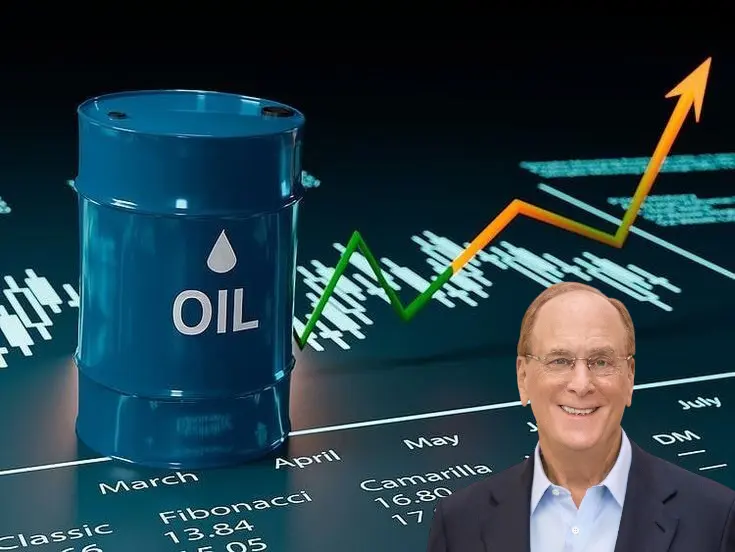
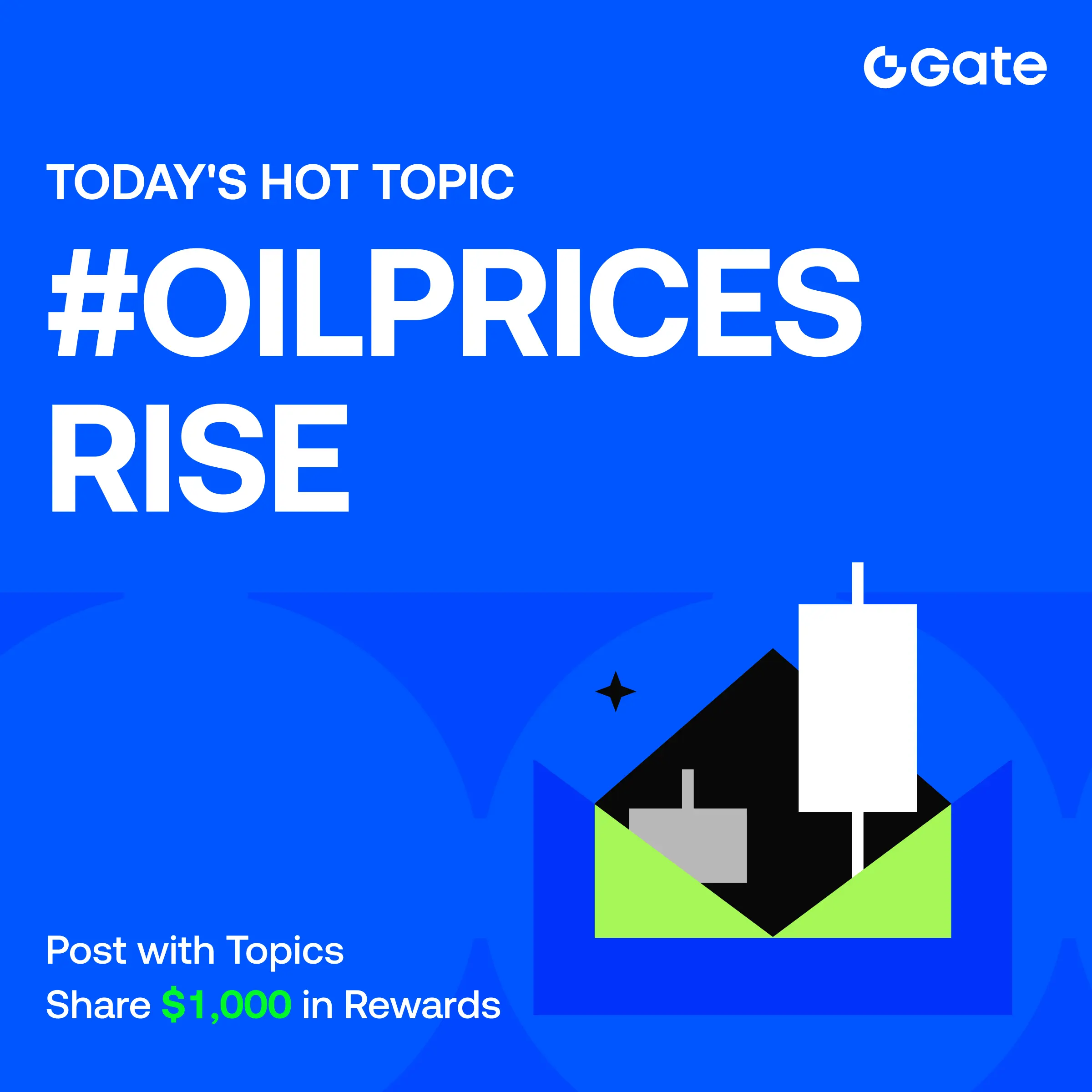
#OilPricesRise
Thanks good sharing about #OilPricesRise
post-image
User_anyvip
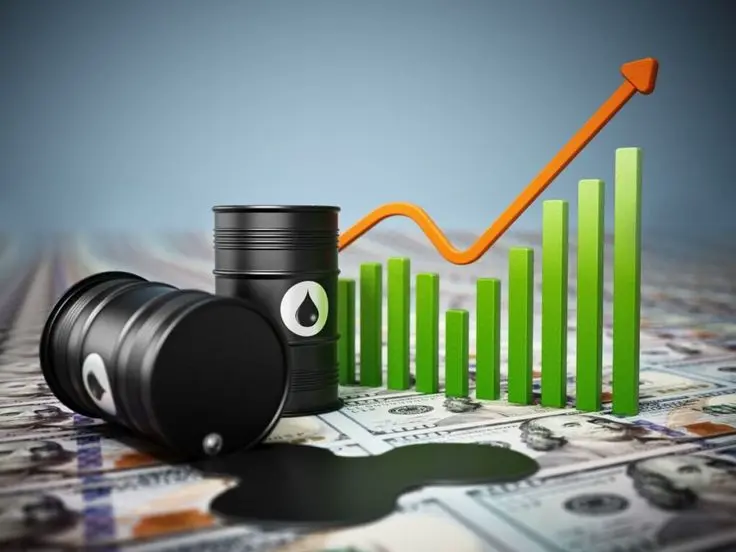
Everyone is debating whether the Strait of Hormuz will close. But that's not what the markets are actually pricing in.
The real change is how the strait is effectively controlled and under what rules trade flows.
Let me explain:
The Strait of Hormuz is the most critical energy corridor through which approximately 20% of global oil trade passes.
Any tension here directly impacts prices.
Recently, Iran's increased military and operational control in the region has created a new layer of risk in the market.
This risk isn't just about "will the strait close?"
👉 The real question is:
What happens if the conditions for passage through the strait change?
🔍 New Risk from the Market's Perspective
There are three main factors pushing oil prices up today:
1. Geopolitical Risk Premium is Increasing
As Iran's influence in the region increases, tanker passages carry more security and political risks.
2. Insurance and Logistics Costs Are Rising
Tanker insurance (war risk premiums) are increasing significantly.
This is directly reflected in the price per barrel.
3. Politicization of Trade
Energy is now priced not only by supply and demand balance, but also by geopolitical alignment.
💱 The Non-Dollar Trade Debate
In recent years, especially:
China
Russia
Iran
Increased energy trade in local currencies between these countries,
is questioning the long-term strength of the petrodollar system.
However, let's clarify this:
👉 The majority of global oil trade is still dollar-based.
👉 Trade in Yuan is increasing, but the system has not yet changed.
⚠️ Where is the Real Breaking Point?
If these scenarios occur, then the markets will truly change:
Permanent transit restrictions in the Strait of Hormuz
De facto access restrictions to certain countries
The mandatory adoption of non-dollar payment systems
At this point:
➡️ Oil prices will not only rise
➡️ They will also shift to a new pricing regime
📊 Market Impact (Short-Term)
Brent oil: upward pressure
Volatility: trending upward
Energy stocks: remain strong
Safe-haven demand: increasing
🧠 Conclusion
Today, the markets see one thing very clearly:
The risk is no longer just supply disruption.
It's the possibility of a change in the rules of energy flow.
And this possibility alone is enough to push oil prices higher.
#OilPricesRise
#CryptoMarketSeesVolatility
#CeasefireExpectationsRise
#GateSquareAprilPostingChallenge
#CreatorLeaderboard
repost-content-media
  • Reward
  • Comment
  • Repost
  • Share
post-image
User_anyvip
BlackRock CEO Larry Fink, in an interview on the BBC's Big Boss Interview podcast, warned that if oil prices reach $150 per barrel, the global economy could be dragged into a "harsh and steep recession."
$XTIUSD $XBRUSD
Fink heads BlackRock, the world's largest asset manager (managing approximately $14 trillion in assets), a scale that gives him a privileged perspective on global markets. The interview was published at a time when the ongoing war between the US-Israel and Iran is shaking energy markets.
Two extreme scenarios
Fink emphasized that the outcome of the war "will not be somewhere in the middle," but will evolve into one of two extremes:
1. De-escalation scenario: If the conflict ends and Iran is once again accepted by the international community, oil prices could fall below pre-war levels, to $40/barrel. Fink describes this as a picture of "abundance and growth."
2. Threat Scenario: Even if a ceasefire is achieved, if Iran continues to pose a threat to "trade, the Strait of Hormuz, and the peaceful coexistence of the Gulf Cooperation Council (GCC) region," he predicts that oil prices could remain above $100, near $150, for years. He used the phrase "we will experience a global recession" directly in response to this scenario.
Strait of Hormuz and Supply Shock
At the heart of the crisis, which the International Energy Agency has described as "the largest oil supply disruption to date," is the Strait of Hormuz. The strait carries approximately one-fifth of the world's gas and crude oil supply, and due to the war, oil and LNG shipments have almost come to a standstill.
Fink described the high energy prices as a "regressive tax," noting that the increase in costs disproportionately affects the poor. He stated that $150 oil would rapidly spread inflation through fuel, transportation, production costs, and food prices, forcing central banks to intervene.
Market Reaction
On the day the interview was published, oil prices fell by approximately 4% following news that the US had sent Iran a 15-point proposal to end the war. However, Fink emphasized that the decisive factor was not the duration of the war, but its ultimate outcome.
Fink also stated that if oil remains expensive, countries may reduce their reliance on oil and gas and accelerate investment in renewable energy sources such as solar and wind.
#OilPricesRise
#CeasefireExpectationsRise
#GateSquareAprilPostingChallenge
#CryptoSurvivalGuide
#CreatorLeaderboard
repost-content-media
  • Reward
  • Comment
  • Repost
  • Share
post-image
Gate_Squarevip
📢 Gate Square | Apr 3 Hot Topic: #OilPricesRise
🚨 Oil settles above $110 as Middle East tensions escalate
US–Iran tensions intensify. On Apr 3, a major bridge in Karaj was attacked, prompting Iran’s response. WTI surged 15%, with settlement prices topping $110 for the first time since 2022.
🎁 Share your views to split $1,000 in trading vouchers (5 winners)!
💬 Discussion Topics:
1️⃣ Is the conflict becoming uncontrollable?
2️⃣ Did you catch this oil rally? Share your oil trading strategy.
3️⃣ How could the conflict impact the crypto market?
Share your thoughts 👉 https://www.gate.com/post
Gate TradFi 👉 https://www.gate.com/tradfi
📅 Apr 3, 07:00 – Apr 5, 10:00 UTC
repost-content-media
  • Reward
  • Comment
  • Repost
  • Share
User_anyvip
📢 Gate Square | Apr 3 Hot Topic: #OilPricesRise
🚨 Oil settles above $110 as Middle East tensions escalate
US–Iran tensions intensify. On Apr 3, a major bridge in Karaj was attacked, prompting Iran’s response. WTI surged 15%, with settlement prices topping $110 for the first time since 2022.
🎁 Share your views to split $1,000 in trading vouchers (5 winners)!
💬 Discussion Topics:
1️⃣ Is the conflict becoming uncontrollable?
2️⃣ Did you catch this oil rally? Share your oil trading strategy.
3️⃣ How could the conflict impact the crypto market?
Share your thoughts 👉 https://www.gate.com/post
Gate TradFi 👉 https://www.gate.com/tradfi
📅 Apr 3, 07:00 – Apr 5, 10:00 UTC
#OilPricesRise
repost-content-media
  • Reward
  • Comment
  • Repost
  • Share
  • Reward
  • Comment
  • Repost
  • Share
  • Reward
  • Comment
  • Repost
  • Share
About the Economic factor 🤔 good, thanks sir 🙋
#OilPricesRise
User_anyvip
The economic impacts of the conflict are felt across a wide range globally, primarily affecting energy markets and creating a chain reaction. With the de facto closure of the Strait of Hormuz, Middle Eastern oil production has suffered a loss of around ten million barrels per day, Brent crude oil prices have reached $110 per barrel, and physical delivery prices are even higher. This supply shock is described by the International Energy Agency as the largest oil supply disruption in history, and according to the International Monetary Fund, every 10% sustained increase in oil prices raises global inflation by 40 basis points while reducing economic growth by 0.1 to 0.2 percentage points. In developed economies, inflation rates risk climbing to 4.2%, while developing countries, particularly major energy importers in Asia and Europe, face widening current account deficits, dwindling foreign exchange reserves, and currency depreciation.
The transportation, logistics, and airline sectors are directly affected by cost increases; sea freight rates have reached record levels, while the prices of inputs critical to food production, such as fertilizers and ammonia, have risen by fifteen to twenty percent, threatening global food security. The surge in industrial production costs is suppressing consumer spending, narrowing corporate profit margins, and generally increasing the likelihood of a stagflation-like environment. While some oil-exporting countries are experiencing short-term increases in budget revenues, the contraction in global demand and infrastructure damage are limiting these gains, and in the long term, permanent damage to energy facilities is pushing repair costs to trillions of dollars. Volatility in financial markets has sharply increased, stock indices are declining in non-energy sectors, bond yields are rising, and central banks are being forced to reconsider their interest rate policies in the fight against inflation.
Consequently, if the conflict continues, global gross domestic product growth forecasts are being revised downwards, trade routes are being reshaped, and investment decisions are being postponed due to uncertainty. These dynamics have the potential to leave long-term damage, particularly in energy-dependent economies, prompting governments to take measures such as fuel subsidies, emergency stockpile releases, and fiscal stimulus packages.
#OilPricesRise
#GateSquareAprilPostingChallenge
#CreatorLeaderboard
#CryptoMarketSeesVolatility
#AreYouBullishOrBearishToday? $XTIUSD $XTIUSD20
repost-content-media
  • Reward
  • Comment
  • Repost
  • Share
User_anyvip
The inflationary effects of the conflict are manifesting rapidly and widely in the global economy, creating broad-based price pressures, primarily through sharp increases in energy costs. With the de facto closure of the Strait of Hormuz and a loss of approximately twenty million barrels of oil supply per day, Brent crude oil prices have risen to $109 per barrel. According to International Monetary Fund models, every sustained ten percent increase in oil prices raises global headline inflation by forty basis points while reducing global production by 0.1 to 0.2 percentage points. The energy shock directly triggers transportation, logistics, and production costs, leading to a fifteen to twenty percent increase in food prices, particularly in fertilizer and fuel inputs, threatening global food security and significantly pushing consumer inflation upwards in import-dependent regions.
While core inflation in advanced economies is gaining momentum through wage adjustments due to second-round effects, developing countries, especially energy importers like those in Asia, Europe, and Turkey, face the risk of annual inflation rates exceeding five to seven percent due to the amplification of import inflation as a result of local currency depreciation against the dollar. Central banks are forced to keep interest rate policies tight or increase them to anchor inflation expectations, but this slows economic growth, increasing the likelihood of a stagflation-like environment. The duration of the conflict is critical; in a short-term scenario, inflationary pressure remains temporary, while in a long-term scenario, supply chains are disrupted, geopolitical risk premiums become permanent, and medium-term price stability is seriously threatened.
Consequently, these dynamics are leading governments to take measures such as fuel subsidies, emergency stockpile releases, and fiscal support packages, but a reduction in inflationary pressures globally seems possible only through diplomatic de-escalation of the conflict.
#OilPricesRise
#CryptoMarketSeesVolatility
#CreatorLeaderboard
#GateSquareAprilPostingChallenge
#AreYouBullishOrBearishToday?
$XBRUSD $XTIUSD20
repost-content-media
  • Reward
  • Comment
  • Repost
  • Share
User_anyvip
Central banks' interest rate responses are shaping up quickly but cautiously in response to the energy shock and inflationary pressures created by the conflict, and are diverging due to a lack of global coordination. The Federal Reserve is delaying its rate-cutting cycle, and even signaling further tightening of up to 25 basis points if necessary, as sustained oil prices push headline inflation by 40 basis points or more, because the second round of core inflation risks triggering a wage spiral, and Fed models estimate a growth loss of 0.5 percentage points in a stagflation scenario. The European Central Bank is holding its deposit rate at 3.25 percent and signaling no cuts in the next six months, as import inflation in energy-importing Eurozone economies rises to 5.5 percent, as the weakening euro-dollar parity and rising logistics costs make core inflation sticky, highlighting the ECB's mandate of price stability.
The People's Bank of China, while taking steps to support the yuan as the oil shock hits Asian supply chains, is keeping its policy interest rate at 3.5% and injecting liquidity by lowering reserve requirements. However, due to inflation remaining below its target, it is pursuing a balanced policy to support growth rather than aggressive tightening. The Central Bank of the Republic of Turkey, on the other hand, is keeping its policy interest rate at 50% due to the current account deficit pressure created by its status as an energy importer and the depreciation of the Turkish lira. It is also sending signals of further tightening against the risk of inflation exceeding 60%, as the amplification of imported inflation and a 20% increase in food prices are disrupting local inflation expectations. The TCMB's priority is to protect its foreign exchange reserves and continue the fight against inflation.
In other developing countries, such as Brazil, India, and Indonesia, central banks are showing a tendency to raise interest rates by 25 to 50 basis points in response to sharp currency depreciation, further restricting global capital flows and increasing borrowing costs. While central banks generally act proactively in combating inflation, they maintain data-driven and flexible interest rate policies due to the uncertain duration of the conflict. However, analyses by the International Monetary Fund and the Bank for International Settlements emphasize that in a long-term energy crisis scenario, a simultaneous wave of tightening has the potential to drag global growth down by one percentage point. In this context, achieving de-escalation through diplomacy is considered the most critical element in alleviating interest rate pressure.
$XTIUSD $XBRUSD #OilPricesRise
#国际油价走高
#CreatorLeaderboard
#CryptoMarketSeesVolatility
#GateSquareAprilPostingChallenge
repost-content-media
  • Reward
  • Comment
  • Repost
  • Share
#OilPricesRise
thank you teacher for beatiful information 👍
User_anyvip
The stagflation scenario, a direct consequence of the oil supply shock created by the conflict, is becoming one of the most serious risk scenarios for the global economy, simultaneously triggering high inflation, stagnant growth, and rising unemployment. The de facto closure of the Strait of Hormuz, resulting in a loss of twenty million barrels of oil per day, has fixed Brent crude oil prices at $19 per barrel, increasing energy costs by more than thirty percent. This fuels cost inflation in production chains while simultaneously suppressing consumer demand. According to International Monetary Fund models, this shock reduces global gross domestic product growth by 0.5 to 1 percentage point, while pushing headline inflation up by 40 to 60 basis points. Particularly in developing countries, the classic signs of stagflation—sticky prices, slowing industrial production, and rising unemployment rates—are observed.
In advanced economies, institutions like the Federal Reserve and the European Central Bank are forced to keep interest rates high to combat inflation, but this policy further slows growth and deepens the stagflation trap because a 15 to 25 percent jump in logistics and food costs for energy importers shrinks consumer spending, erodes corporate profit margins, and delays investments due to uncertainty. In emerging markets, in energy-dependent economies like Turkey, the depreciation of the Turkish lira amplifies import inflation, and maintaining the policy interest rate at 50 percent slows growth, while the current account deficit and depletion of foreign exchange reserves further exacerbate the risk of stagflation. In major importers like China and India, supply chain disruptions drag down industrial production indices, and rising food prices threaten social stability.
In the long term, if a stagflation scenario materializes, global trade volume will shrink, borrowing costs will rise, and a cycle of low productivity lasting for decades, similar to the oil crises of the 1970s, could occur. This dynamic leaves central banks in a dilemma regarding classical monetary policy tools, as it seems impossible to simultaneously implement both tight and loose policies to both reduce inflation and support growth. Consequently, the severity and duration of stagflation depend on the diplomatic de-escalation of the conflict, because only when supply returns to normal can both inflationary pressure and growth loss be brought under control.
$XTIUSD $BTC $XAUUSD #OilPricesRise
#CryptoMarketSeesVolatility
#AreYouBullishOrBearishToday?
#CreatorLeaderboard

#GateSquareAprilPostingChallenge
repost-content-media
  • Reward
  • Comment
  • Repost
  • Share
Gate广场_Officialvip
🔥Flash Swap Lucky Draw Phase 11
Trade $1 to participate in the lottery and unlock XRP and $200

100% win, immediately start your flash swap journey: https://www.gate.com/campaigns/4391
✅Trade $1 to enter the lottery and instantly receive XRP
✅ Daily flash swap check-in, receive an exclusive lucky gift bag
✅ Advance trading to receive a 200 USDT cash reward
Announcement link: https://www.gate.com/announcements/article/50474
#Gate #闪兑 #0手续费 #USDT
repost-content-media
  • Reward
  • Comment
  • Repost
  • Share
User_anyvip
The Convert Lucky Draw event is officially live. Complete a trade of just $1 to enter the draw—every draw is a winner. https://www.gate.com/campaigns/4391?ref=BVVEVQ9c&ref_type=132&utm_cmp=U3p36Lhk
repost-content-media
  • Reward
  • Comment
  • Repost
  • Share
The Convert Lucky Draw event is officially live. Complete a trade of just $1 to enter the draw—every draw is a winner. https://www.gate.com/campaigns/4391?ref=AwBFBl5c&ref_type=132&utm_cmp=U3p36Lhk
post-image
  • Reward
  • Comment
  • Repost
  • Share
Smart Leverage Challenge: Subscribe for $100, Get $100, Unlock Up to $1,200 https://www.gate.com/campaigns/4397?ch=1716&ref=AwBFBl5c&ref_type=132
post-image
  • Reward
  • Comment
  • Repost
  • Share
I absolutely agree with you.
#USIranWarMayEscalateToGroundWar
post-image
User_anyvip
#USIranWarMayEscalateToGroundWar
Ground War is on the Horizon: Because War Isn't Damaging the Economy, the Economy Is Waking Up War
The five-week-long US-Iran war has now gone beyond being a "tension limited to airstrikes." The Pentagon is planning weeks of ground operations. The USS Tripoli has landed in the region with 3,500 Marines. Officials speaking to the Washington Post say that Special Forces and infantry units are preparing to raid the Strait of Hormuz and Harg Island, through which 90% of Iranian oil flows.
Tehran's response is clear: "If American soldiers set foot on land, we will unleash fire upon them." Parliament Speaker Ghalibaf accuses the US of "publicly discussing, secretly planning an invasion." Twelve American soldiers have already been wounded in Saudi Arabia when an E-3 Sentry spy plane was shot down.
And we are still talking about "war affecting the economy."
Wrong. The economy isn't affecting war, the economy is calling for war.
The Math of the Strait of Hormuz
One-fifth of the world's oil passes through the Strait of Hormuz. The strait is effectively closed, tankers cannot pass through, and the Riyadh-Washington line is on edge. By allowing 20 Pakistani-flagged ships "two passages per day," Iran is essentially saying: I'm holding the valve.
The first point of the US's 15-point "ceasefire plan" is the opening of the strait. This is no coincidence. Because the issue is not the nuclear program, the issue is the flow of gas. Seizing Harg Island is described as "cutting off Iran's economic lifeline." In other words, the target is not the regime, but the income.
Trump is threatening to strike Iranian energy infrastructure if the strait is not opened. Tehran, on the other hand, says it will "boldly strike" US bases in the Gulf. Two missiles that hit the Ras Laffan gas facility in Qatar caused "limited damage" but created a shockwave in the markets. The message was received: If the next missile hits the desalination plant, the Gulf will run out of water.
The Price of the “Final Blow”
The White House is marketing the ground operation as the “final blow.” Not a full-scale invasion, but “just raids lasting weeks.” How wonderful. Iraq and Afghanistan also started as “weeks,” and as the Turkish Foreign Ministry reminded us, the result was “more radicalization and terrorism.”
The Pentagon says it has to “offer the commander-in-chief maximum options.” Translation: There’s a war on the table, and we’re preparing the menu. Rubio says “we’re not currently deployed for a ground operation,” but adds in the same sentence, “objectives can be achieved without them.” So the door is ajar.
Meanwhile, 13 US soldiers have been killed and more than 300 wounded in the last month. Trump was saying as early as March 20th, “I’m not sending troops, it’s a waste of time.” He changed his mind when Iran rejected the offers. So what was considered a “waste of time” was actually a “bargaining chip.”
The Real Front: The Balance Sheets
Iran says it will make US soldiers “food for sharks in the Persian Gulf.” Ghalibaf shouts, “Our missiles are in place, our resolve has increased.” This isn’t rhetoric, it’s insurance. Because Tehran knows: the US’s concern isn’t exporting democracy, but supply security.
War ruins the economy, yes. The stock market experienced its “worst day” of the war on March 27th. But let’s be more honest: war comes because the economy is ruined. Inflation, energy prices, the election cycle… An “external enemy” is always the cleanest way to make the domestic price be paid.
And the most painful part is this: Egypt, Pakistan, Saudi Arabia, and Turkey are talking about peace in Islamabad. Neither the US nor Iran is at the table. Because both sides actually want Harg Island, not the table. One to cut it off, the other to protect it.
The possibility of a ground war is no longer a “threat,” but an “option.” And this option is triggered not by ideology, but by a valve.
repost-content-media
  • Reward
  • 6
  • Repost
  • Share
ybaservip:
To The Moon 🌕
View More
  • Pin